Water scarcity in the American Southwest poses a threat to national security
What's this about?
People disagree about whether less water in the American Southwest could harm the nation's safety.
The risk mostly involves cities, farms, power, and armed forces, not a near war or national ruin.
What supporters say
- The Colorado River area faces long droughts, low river flow, and less water in lakes behind dams.
- Hotter weather makes water vanish faster and puts more stress on rivers, farms, and towns.
- Wells can help in dry times, but low ground water leaves fewer backup water sources.
- Water cuts can disrupt power plants, town services, and armed forces bases.
What critics say
- Water trouble alone does not mean the country will soon face war or fall apart.
- Farmers can switch crops, use less water, or find other ways to limit some harm.
- Power firms can move toward power types that need less water, though some may add more air pollution.
- We still do not know how fast water use, weather, and new plans will change future risks.
The bottom line
Less water in the Southwest creates a real and major risk to the nation's safety.
It could strain key systems over time, but the facts do not show a near armed fight or national collapse.
Water scarcity in the American Southwest is a significant national-security concern, but mainly because it could strain infrastructure, food and energy systems, military support and public institutions—not because it is likely to trigger an imminent armed conflict or national collapse.
The case for
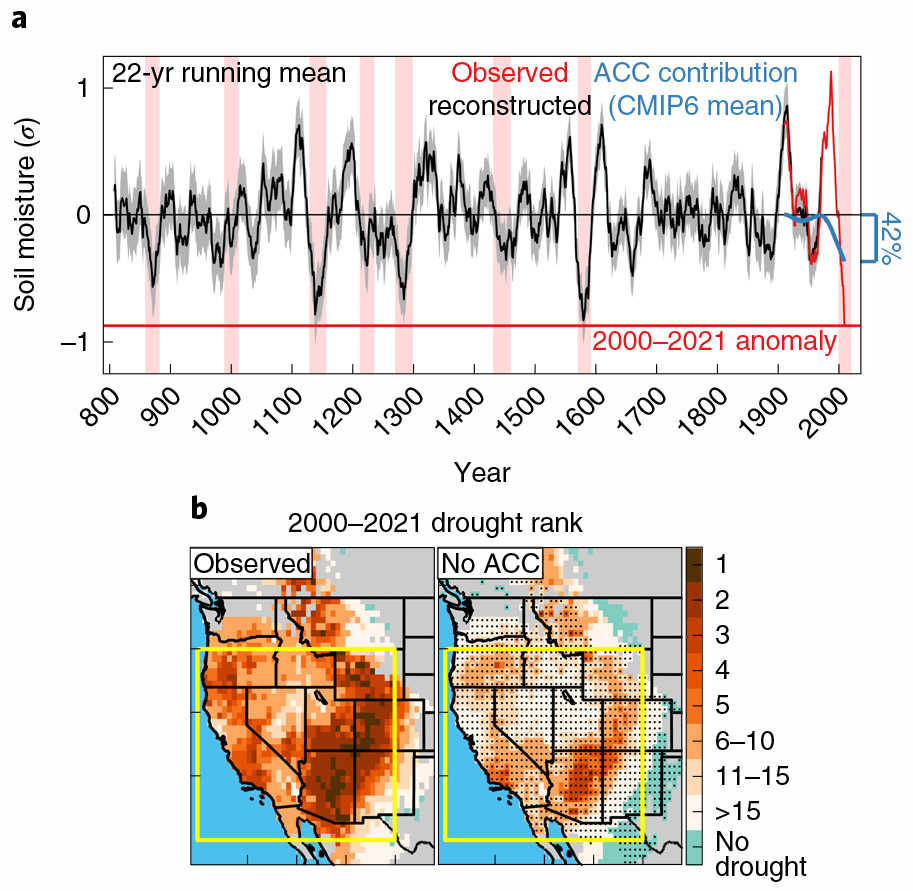
The Southwest’s water problems are serious and persistent. The Colorado River basin supports cities, farms, industry and ecosystems, yet drought, low streamflows and weak reservoir inflows have put its supplies under sustained pressure. Tree-ring records suggest the drought of the early 21st century ranks among the most severe in the basin’s long history, while rising temperatures are worsening water losses (see Figure 1). Federal water managers have also projected a major gap between available supply and demand under a range of future conditions. 1
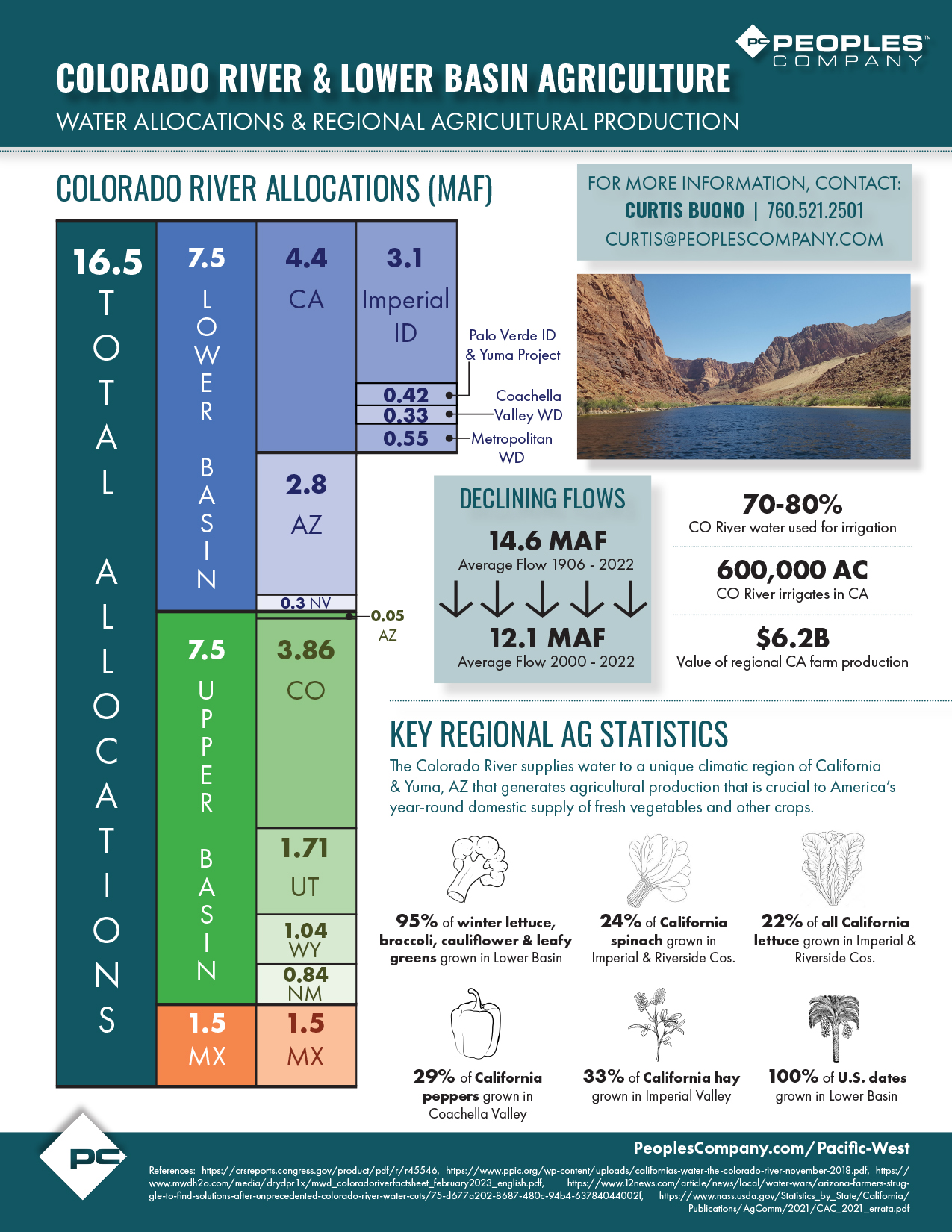
That pressure reaches beyond local water bills or farm fields. Reduced reliability could affect municipal services, agriculture, environmental protections and industrial activity across a region that is economically important to the country. Groundwater depletion is especially troubling because it removes a backup when rivers and reservoirs run low. USGS research indicates that declining aquifers can weaken the long-term productivity and reliability of irrigated farming, although farmers may be able to offset some of the damage through substitution and other adjustments (see Figure 2). 3
The risks also extend to energy and defense. Research links water scarcity to changes in electricity generation, including shifts toward power sources that use less water but may produce more emissions. At military installations, water disruptions can interfere with facilities, logistics and operations. The Government Accountability Office found that the Defense Department had not consistently used leading practices to assess and manage water-scarcity risks at individual bases, leaving a potential weak point in military readiness. 2
Water shortages can also act as a “risk multiplier.” They do not automatically cause political instability, but they can worsen existing strains such as inequality, weak governance, food insecurity, migration and economic disruption. U.S. intelligence assessments have identified resource pressures as factors that can contribute to humanitarian emergencies, instability and heavier demands on diplomatic and military resources. That supports viewing Southwestern scarcity as an indirect security issue, rather than simply an environmental one. 4
The case against
The strongest objection is that the claim can overstate what the evidence shows. There is no proof that Southwestern water scarcity has already caused a major military failure, a nationwide breakdown of essential services or a domestic conflict. Nor does the evidence suggest that water shortages alone are likely to produce a crisis comparable to armed conflict, state failure or institutional collapse. 5
Much of the security evidence comes from international settings, where water stress often combines with fragile institutions and severe political instability. Those pathways cannot simply be assumed to apply in the United States, which has stronger public institutions and more capacity to manage disputes. Water stress matters, but it is rarely the sole cause of conflict or disorder.
There is also evidence that adaptation works. Some Southwestern states have reduced or stabilized water use even as their populations grew, through conservation, efficiency measures and changes in economic activity. Water managers have used scenario planning and adaptive management to respond to uncertainty. These examples do not erase the threat, but they undermine the idea that drought must inevitably lead to systemic failure. 6
The future will depend heavily on political and management choices. Federal studies emphasize uncertainty in climate, hydrology, demand and policy. Research on the Colorado River’s post-2026 operations likewise finds that allocation rules and governance decisions will strongly shape whether shortages are contained or spread across dependent systems.
The bottom line
The claim is supported with high confidence if national security means protecting resilience, military readiness and the reliable functioning of food, energy, infrastructure and government systems. Southwestern water scarcity is a real and growing threat in that broader sense.
But the evidence does not support treating it as a forecast of imminent domestic violence, armed conflict or national institutional collapse. The central question is whether governments can manage demand, allocate water fairly and adapt quickly enough to prevent hydrological stress from cascading into wider failures.
Pros — Supporting Arguments
Cons — Opposing Arguments
Figures & data
All contributions are reviewed for clarity, balance, and evidence. The strongest insights are elevated into the argument graph — with credit to you.
Help improve this analysis →