A six-month Strait of Hormuz closure would cause a 30% oil-price rise and major recessions
What's this about?
People disagree about whether a six-month closure of the Strait of Hormuz would sharply raise oil prices and cause major recessions.
This narrow sea route carries about one-fifth of the world's oil use.
What supporters say
- Closing the route would block a huge amount of oil from normal world trade.
- Oil firms cannot quickly make more oil, and people cannot quickly stop using it.
- This shortfall could make oil prices jump by 30% or more, especially early on.
- Higher fuel costs could leave families and firms with less money to spend.
What critics say
- Oil prices would depend on how much oil gets blocked and how long the block lasts.
- Other oil makers might add oil, and stored oil could help reduce the shock.
- The facts do not prove oil prices would stay 30% above normal for all six months.
- The facts also do not prove that three major oil-buying countries would each lose 2% of GDP.
The bottom line
A long Hormuz closure would very likely hurt oil markets and the world economy badly.
But we cannot say for sure that prices would stay 30% higher for six months or cause the exact GDP losses claimed.
A six-month closure of the Strait of Hormuz would very likely deliver a severe shock to oil markets and the global economy. But the evidence does not prove that it would keep oil prices at least 30% above normal for six months and cause GDP declines of 2% or more in three of the five biggest oil-importing economies.
The case for
The Strait of Hormuz is one of the world’s most important energy chokepoints. Roughly one-fifth of global petroleum-liquids consumption has passed through it, according to the U.S. Energy Information Administration. A prolonged shutdown would therefore remove a large share of oil from normal international trade routes and could create an acute shortage (see Figure 1). 1
Oil markets are especially vulnerable to sudden disruptions because neither producers nor consumers can adjust quickly. Federal Reserve research finds that oil supply and demand are relatively unresponsive in the short run: producers cannot rapidly add output, while drivers, airlines and industry cannot immediately cut use. That means a physical shortfall can produce an outsized jump in prices. 1
A 30% rise in crude prices is economically plausible, particularly at the start of a crisis. Market analysis from Goldman Sachs, reported in the evidence bundle, considered a rise of roughly that size if Iran blocked Hormuz. The scale of any increase would depend on how much supply was lost, available spare production capacity, the state of global demand and the market’s expectations. 2
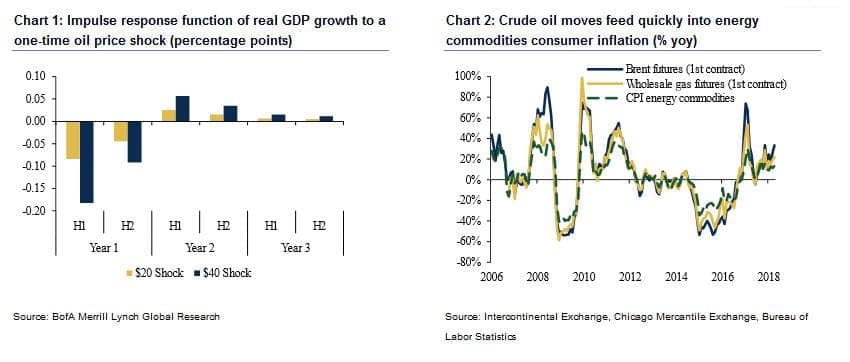
Higher oil prices would also hit importing economies through several routes. Fuel and production costs would rise, leaving households with less money for other spending. Inflation could accelerate, potentially prompting tighter monetary policy, while businesses might cut investment and trade could weaken. Research from the Federal Reserve and peer-reviewed studies identifies these channels as reasons oil shocks can reduce economic activity (see Figure 3). 3
In a long, poorly managed disruption, those pressures could be substantial. The evidence supports the possibility of weaker growth, a broader global slowdown, higher inflation and major financial and trade spillovers.
The case against
The claim’s specific numbers are much harder to establish. The available evidence supports a 30% oil-price increase as a possible initial market reaction, not as a demonstrated minimum that would persist throughout a six-month closure. The directly cited estimate is a market forecast reported through a news account, rather than a full six-month model of prices and supply. 4
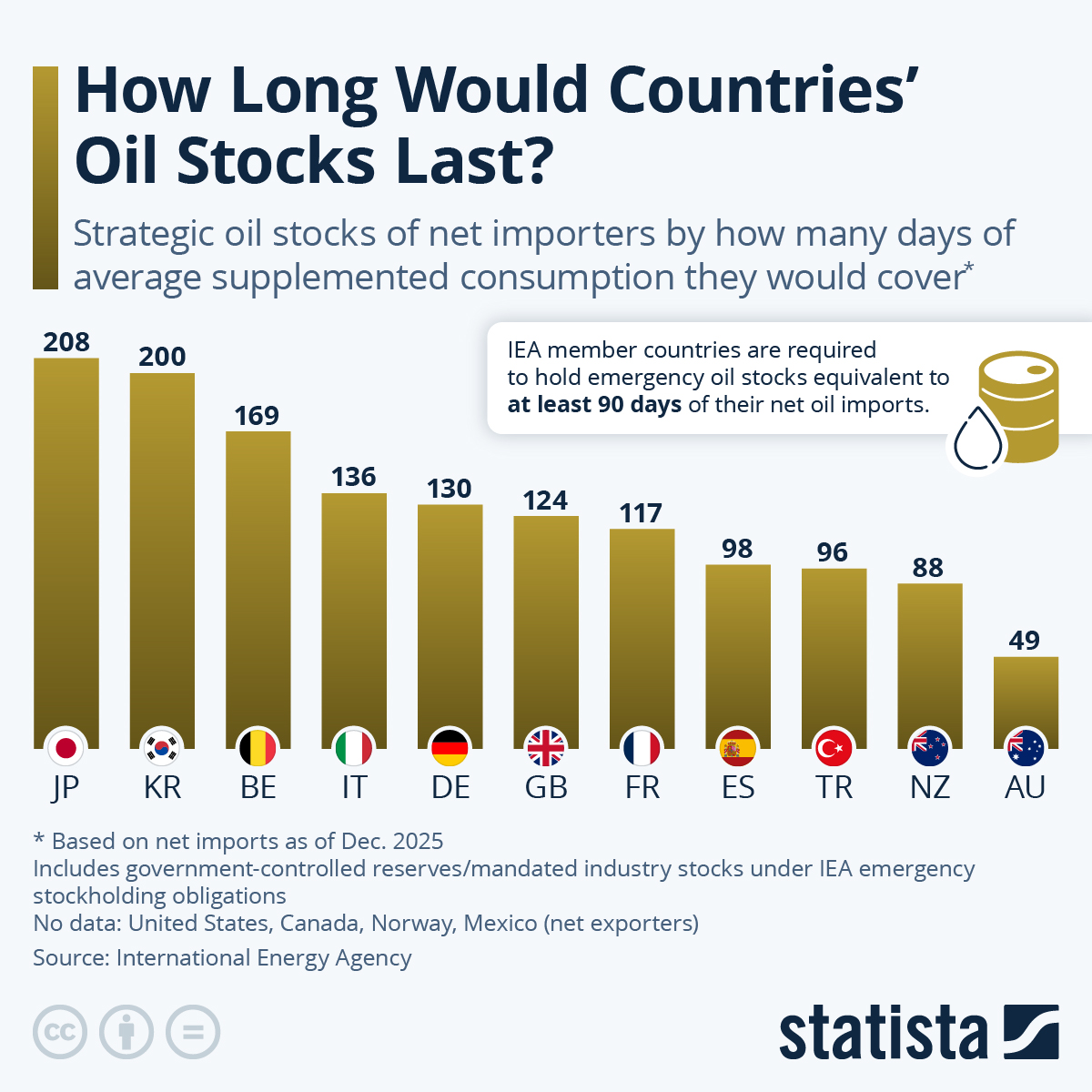
Crucially, a closure would not necessarily translate into a full, one-for-one loss of oil supply. International Energy Agency emergency arrangements allow countries to release strategic petroleum stocks. Alternative pipelines and shipping routes, as well as other policy responses, could move some oil around the strait or soften the impact (see Figure 2). 5
These measures could not permanently replace the flow through Hormuz. Still, they create a credible reason why a sharp price spike could ease over time. Supply adjustments, reduced demand, rerouting and government action could all change the final outcome.
The evidence is also less certain on the recession test. Studies generally find that oil-importing countries suffer from higher inflation and weaker output after oil shocks. But they do not show that three of the five largest importers would each lose at least 2% of GDP in this particular scenario. 6
Countries respond differently depending on their energy dependence, exchange rates, fiscal support, central-bank decisions and economic conditions before the shock. The damage would also depend on how long the disruption lasted after emergency measures, and on whether global demand was already weak or resilient.
The bottom line
A six-month Hormuz closure would very likely be a severe oil and economic shock. The strait carries enough oil to make a major supply disruption highly consequential, and a 30% early rise in oil prices is plausible. Importing economies would face real risks of weaker output, higher inflation and financial stress. 123
But the evidence is not direct enough to confirm the claim’s combined numerical thresholds: a sustained 30% oil-price rise and GDP contractions of at least 2% in three of the five largest importing economies. Emergency stock releases, alternative routes, market conditions and country-specific policies could materially change both prices and growth. The strongest conclusion is that the scenario would be damaging and potentially extreme—not that the stated price and recession outcomes are assured.
Figures & data

All contributions are reviewed for clarity, balance, and evidence. The strongest insights are elevated into the argument graph — with credit to you.
Help improve this analysis →