Insurance companies should withdraw from climate-vulnerable regions to mitigate financial risks
What's this about?
People disagree about whether insurance companies should leave places with high climate danger. The key question is how to limit money losses without hurting people too much.
What supporters say
- Big storms, fires, and floods can cost insurers more money than they can safely pay.
- Climate risks change fast, so insurers may struggle to set fair prices for some homes.
- Low-cost insurance in very risky places may lead more people to build there.
- Insurers can use flood maps and home-by-home risk checks instead of leaving whole regions.
What critics say
- When insurers leave, floods, fires, and storms do not disappear.
- Families may face huge repair bills or lose access to home loans without insurance.
- A broad exit can hurt safer homes in the same town or coast area.
- The costs may shift to people, banks, or the government instead of the insurers.
The bottom line
Insurers have good reasons to limit coverage where danger is very high and hard to price. But the evidence supports careful, home-by-home choices, not a broad retreat from all climate-vulnerable regions.
Insurance companies facing rising climate losses have a legitimate reason to limit coverage in some high-risk places. But the evidence does not support a broad retreat from all climate-vulnerable regions: it favors a more targeted approach based on the risk of individual properties and hazards.
The case for
The strongest argument for insurers pulling back is financial survival. Repeated disasters, growing uncertainty and premiums that do not match the true level of danger can leave insurers with losses they cannot sustain. In the most exposed areas, especially where risk is concentrated and hard to spread across a wider customer base, continuing to offer coverage may threaten an insurer’s ability to pay future claims 1.
Climate change makes this calculation harder. Hazards are worsening, while insurers must make long-term bets about risks that are changing and difficult to predict. A selective exit can therefore be economically rational where there is no credible way to price coverage accurately, reduce exposure or diversify the company’s risk 3.
Limiting new policies can also affect where people build. If cheap or subsidized insurance remains readily available in areas facing severe floods or other hazards, it may encourage more development there. Restricting coverage in the riskiest locations could help prevent the growth of future losses, particularly when federal flood maps and risk tools identify dangers at the local or property level rather than treating an entire region as equally exposed 2.
This does not necessarily mean abandoning whole states or coastlines. Flood risk, for example, differs sharply from one neighborhood to another. Insurers can use hazard maps, pricing and mitigation requirements to distinguish between properties that can still be covered and those with risks too extreme to insure.
The case against
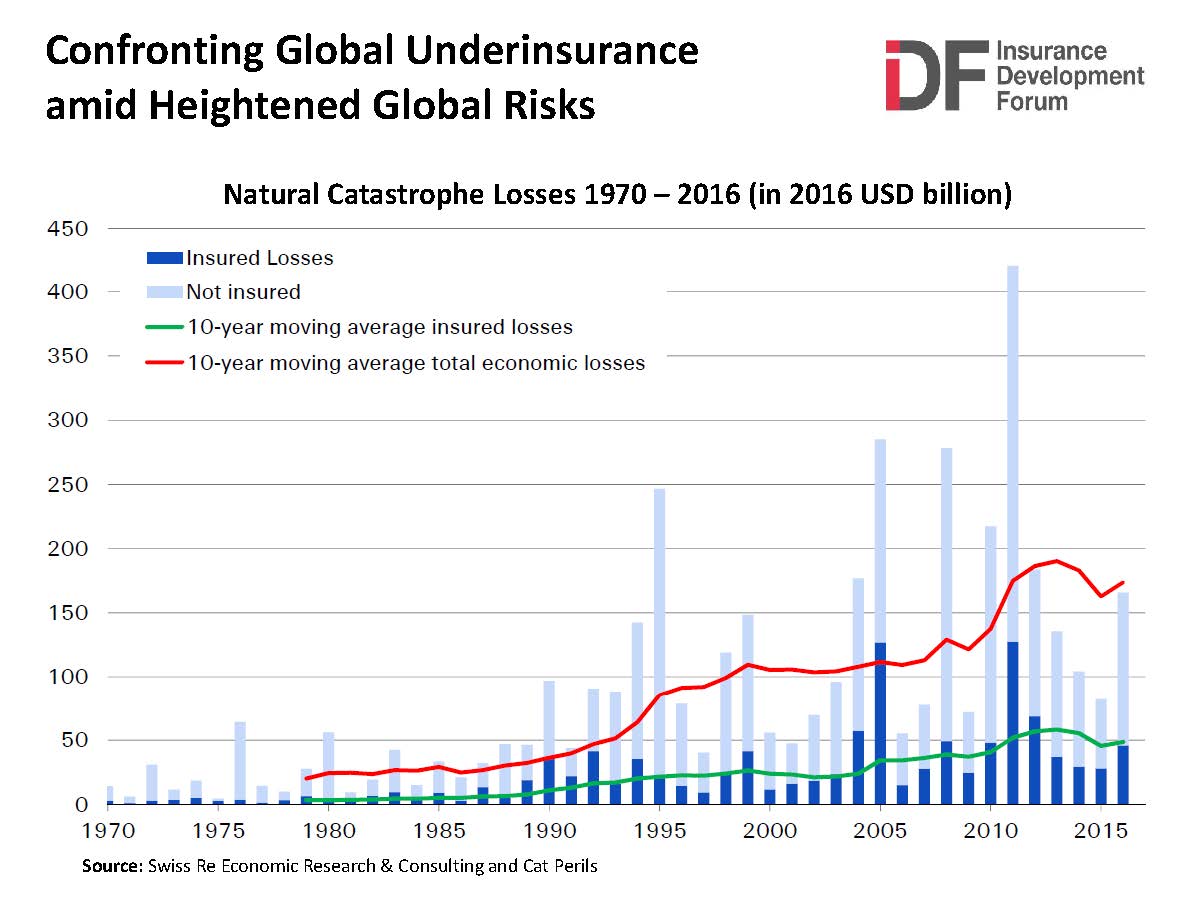
The central problem is that insurers leaving an area does not make the climate danger disappear. It simply shifts the burden from insurance companies to homeowners, businesses, lenders and government. Properties can remain exposed even after private coverage vanishes, leaving families to absorb losses that insurance would once have covered (see Figure 1) 4.
Research on the U.S. homeowners market links rising premiums, policy nonrenewals and insurer exits to widening insurance gaps. Those gaps can extend beyond individual households: when homes are uninsured or underinsured, mortgage lenders and local housing markets can also come under pressure. The evidence does not prove the full scale of these effects in every case, but it shows that a market exit can create wider financial strain.
Insurance also plays an important role after disasters. It can provide money for repairs and rebuilding, helping communities recover more quickly. When properly designed, coverage can encourage homeowners to reduce risks before disaster strikes, such as by strengthening buildings or taking other protective steps 5.
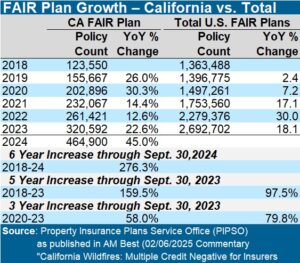
A broad pullback could also leave taxpayers carrying more of the burden. Governments may face greater demands for emergency aid, public insurance programs and regulatory intervention. In that sense, private insurers can reduce their own exposure while society’s total climate risk remains—and may become more concentrated in public finances (see Figure 2) 6.
There is a difficult trade-off. Premiums high enough to reflect danger may make insurance unaffordable, but underpriced coverage can undermine insurers’ finances and encourage people to remain in hazardous places. Risk maps are useful, but they also have limits: they may not be fully up to date, capture every hazard or reflect future climate changes.
The bottom line
The evidence supports selective limits or withdrawal from clearly uninsurable, highly concentrated risks, where continued coverage could endanger an insurer’s solvency. But it does not support blanket withdrawal from climate-vulnerable regions as a general policy.
A better response would combine property- and hazard-specific underwriting with stronger mitigation rules, targeted help for households that cannot afford coverage, and public risk-sharing where necessary. The key unresolved question is who will bear the remaining losses when private insurers pull back—and whether those alternatives can reduce exposure rather than merely move costs elsewhere.
Figures & data
All contributions are reviewed for clarity, balance, and evidence. The strongest insights are elevated into the argument graph — with credit to you.
Help improve this analysis →