The DOJ’s upcoming immigration rule will replicate Trump-era mass deportations
What's this about?
People disagree about whether a new Justice Dept. court rule will cause Trump-era levels of forced removals. The rule may make court cases move faster, but we do not yet know its full effect.
What supporters say
- Fewer chances to appeal could make judges’ removal orders final sooner.
- Faster court cases could lead to more people getting final removal orders.
- Courts have a huge pile of waiting cases, so small speed gains could affect many people.
- The White House wants high removal numbers, so court changes may work with police efforts.
What critics say
- Faster court cases do not prove that more people will leave the United States.
- Reports on quick hearings show higher short-term risk, but they do not show a whole-country result.
- A final removal order does not always lead to someone leaving right away.
- The White House’s goals do not show how much this one court rule will matter.
The bottom line
This rule could speed up cases and create more final removal orders. But the facts do not yet show that it will copy Trump-era levels of people forced to leave.
The question is whether a coming Justice Department rule for immigration courts could produce deportation levels resembling those of the Trump administration. The evidence suggests it could speed up court cases, but it does not yet show that it will lead to a comparable rise in people physically removed from the United States.
The case for
The strongest argument is that limiting or automatically dismissing administrative appeals could make removal orders final more quickly. If people have fewer chances to appeal, immigration judges’ decisions may become enforceable sooner, potentially moving more cases through the system. That is a credible path from a court-rule change to more final deportation orders. 1
There is evidence that faster proceedings can affect outcomes. Reporting on compressed immigration hearings has found that quicker case processing coincided with faster resolutions and a greater immediate risk of deportation for people in those cases. That does not prove a nationwide effect, but it supports the idea that court procedures can influence deportation-related throughput. 2
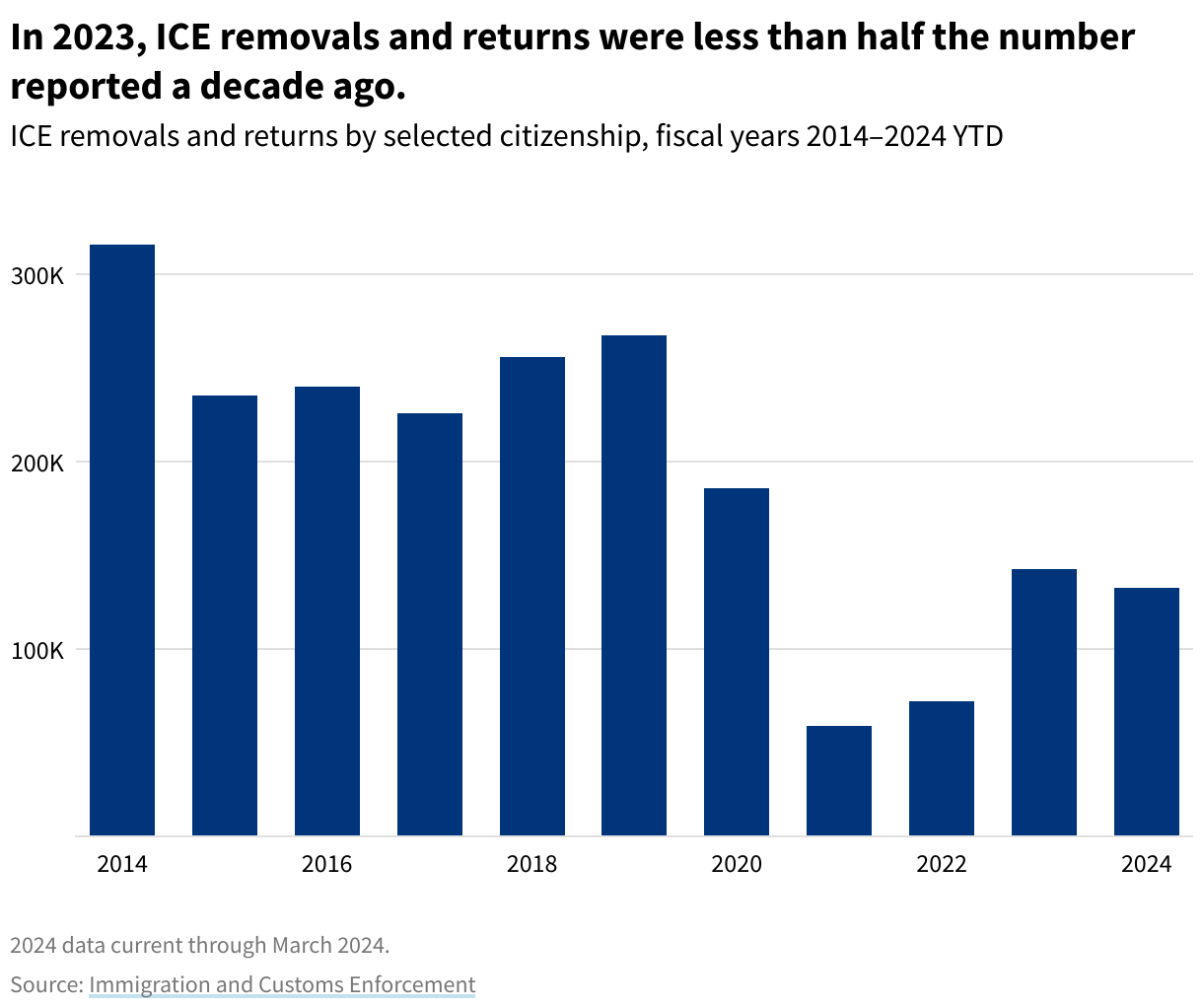
The immigration-court backlog is another reason the proposal could matter. With a large number of cases waiting to be decided, even a modest improvement in processing speed could produce a significant number of additional completed cases and final removal orders (see Figure 1). Congressional and independent research has documented both the size of the backlog and the courts’ continuing performance problems. 3
The proposed rule would also arrive in an administration that has publicly sought high levels of removals. That wider policy setting makes it plausible that the Justice Department’s court changes could be paired with Department of Homeland Security enforcement efforts. Still, broader administration goals do not show how much effect this particular rule would have on its own. 4
The case against
The central obstacle is that the Justice Department does not itself carry out deportations. Its immigration courts decide cases and issue removal orders, but physical removals are mainly an ICE and DHS function. Whether a final order results in a person leaving the country depends on detention space, staffing, transportation, enforcement priorities, cooperation from destination countries and other DHS operations. 5
There is also no verified final rule, implementation date or reliable estimate of its likely effect. Available material describes an initiative or proposal, rather than a completed and tested policy. Until a final version is published and put into practice, it is not possible to know how broadly it will apply—or to measure whether it changes court decisions or deportation totals. 6
Faster procedures may not translate quickly into a major national increase. Immigration courts face limits involving staffing, case management, legal representation and other resources. Those problems can restrict sustained gains in case completions even when procedural rules are changed. And DHS has separate tools, such as expedited removal, that can affect deportation numbers independently of immigration-court decisions. 7
There are also due-process concerns. Case reporting and advocacy analysis suggest that rushed hearings or reduced review may affect whether people receive notice, find legal counsel or have a fair chance to present defenses. Such concerns do not establish a national deportation effect, and their legal importance would depend on the final rule and any court challenges that follow.
Finally, calling the outcome a replication of Trump-era “mass deportations” requires a careful comparison that is not yet available. Removal orders, physical removals, returns and expedited removals are different measures. Comparing current policy with fiscal-year 2017 or other Trump-era data would require matching categories, time periods and reporting methods—not simply comparing headline totals. 8
The bottom line
The claim is partly supported, but not established. A broad restriction on appeals could accelerate immigration-court decisions and lead to more final removal orders. But there is insufficient evidence to conclude that it will significantly raise physical deportations or reproduce Trump-era deportation totals.
The key missing evidence is a final, implemented rule followed by comparable data on court completions, final orders and actual ICE removals. For now, the most defensible conclusion is that the proposal may speed the legal process, while its effect on physical deportations remains uncertain.
Figures & data

All contributions are reviewed for clarity, balance, and evidence. The strongest insights are elevated into the argument graph — with credit to you.
Help improve this analysis →