Bipartisan agreement on border security is sufficient to overcome policy gridlock
What's this about?
People disagree about whether both parties backing border safety can end gridlock in Washington.
The facts show that shared support can help, but it cannot ensure a bill will pass or work well.
What supporters say
- Border safety can give both parties a base for a deal, with each side gaining some goals.
- A team from both parties can help move a bill that once seemed stuck.
What critics say
- Deal makers can agree, yet other lawmakers may still vote against the bill.
- A bill must pass many more tests, like votes in both the House and Senate.
- Lawmakers may fear that voters will punish them for making a deal with the other party.
How to read this
The number of points on each side does not show who is right; the key is how strong each point’s proof is.
The bottom line
Support from both parties can build drive and open a path for a border bill.
But it is not enough by itself, so the claim goes too far.
The claim is that bipartisan agreement on border security can break through Washington’s policy gridlock. The evidence suggests a narrower conclusion: agreement can help build momentum, but it is not enough by itself to guarantee passage or effective implementation.
The case for
Bipartisan agreement can make legislation possible by expanding the coalition available to congressional leaders. When lawmakers from both parties support a proposal, it may overcome some of the ideological resistance that normally blocks action and supply enough votes to clear an important legislative hurdle. Cross-party coalitions have, at times, unlocked bills that otherwise appeared stalled. 1
The 2013 Senate immigration bill is one example. It passed by a vote of 68 to 32, showing that a broad bipartisan coalition could overcome major disagreement and win approval in one chamber. But the bill never became law, limiting what the example can prove (see Figure 3).
Border security can also give negotiators a basis for trading support. One party may seek stronger enforcement and resources, while the other seeks changes to asylum rules, legal status or broader immigration policy. Linking these priorities can make compromise more attractive and help negotiators assemble a coalition. 2
The 1986 Immigration Reform and Control Act shows that bipartisan support can coincide with enactment when several conditions line up: a workable legislative coalition, cooperation from the president and a favorable political moment. These examples support the idea that bipartisan agreement is a facilitating condition. It can reduce opposition and create a route through some of the obstacles to passing a bill.
The case against
The stronger problem is that agreement among negotiators does not ensure that a bill will pass. Legislation must survive several further stages, including committee and floor votes, agreement between the House and Senate, presidential approval and conflicts among party leaders and constituencies. 3
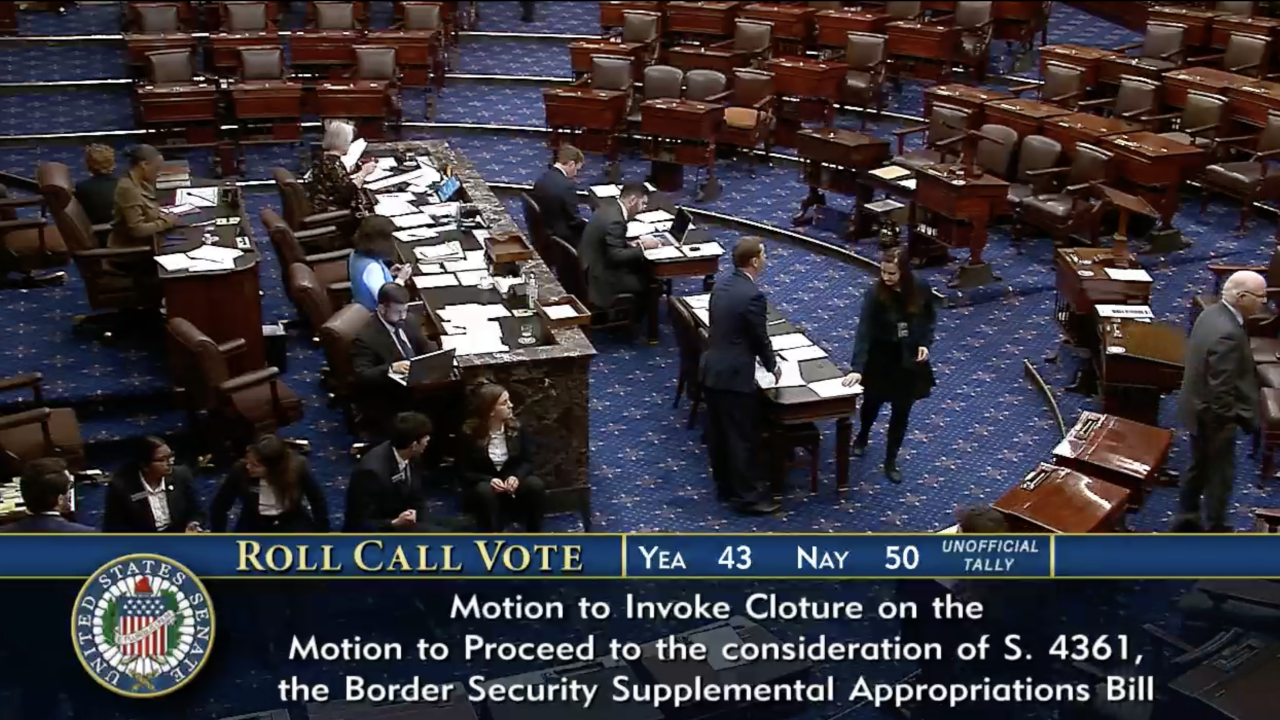
The 2024 Senate border proposal provides a direct counterexample. It was negotiated across party lines but failed to become law (see Figure 3). Reports attributed its collapse in part to opposition from influential party leaders and presidential candidates. That suggests electoral strategy can override the preferences of the bipartisan lawmakers who negotiated the deal.
Congress also contains multiple veto points beyond the initial agreement. Party control, agenda-setting power, ideological divisions and the number of lawmakers able to block action all influence whether a proposal receives a vote and passes. A deal can therefore fail because leaders will not schedule it, because one chamber rejects it, or because the two chambers cannot agree on final terms. 4
Electoral incentives create another barrier. Lawmakers from safe districts may face pressure from primary voters, party organizations and political networks to avoid compromise. A negotiated package that might appeal to voters in a general election can still be dangerous for a legislator seeking renomination. 5 The result is that public support for compromise does not always translate into votes in Congress.
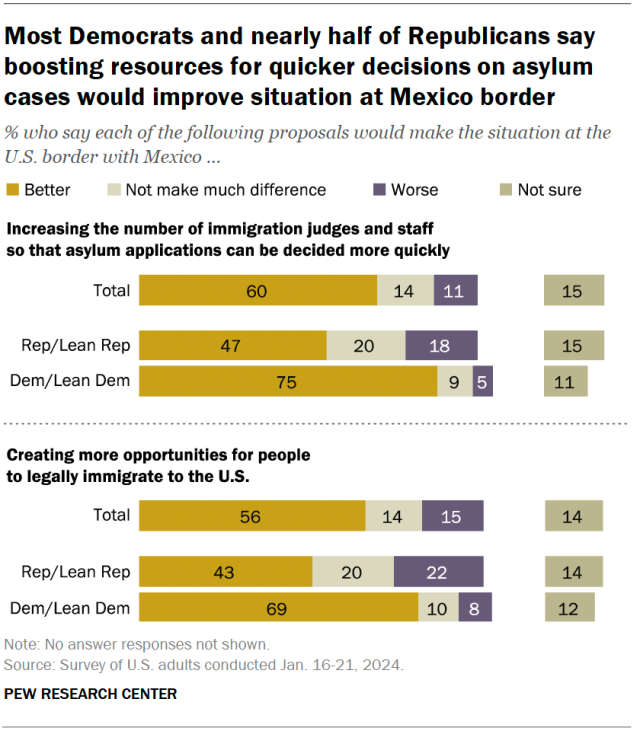
There is also a difference between passing a law and making it work. Even enacted legislation can run into problems involving agency authority, staffing, funding, management and operations. The phrase “bipartisan agreement” may also hide unresolved disputes over the details. Surveys show broad concern about conditions at the border, but continuing partisan differences over enforcement, asylum, legal status and the government’s role. Fiscal and resource demands can further complicate coalition-building (see Figure 2).
The bottom line
Bipartisan agreement on border security is helpful, but not sufficient to overcome policy gridlock. The evidence favors this conclusion with moderate confidence.
The case for agreement is real but relatively weak: bipartisan coalitions have sometimes cleared major hurdles, and the 1986 law shows that agreement can coincide with enactment. But the opposing evidence is stronger. The 2024 proposal failed despite cross-party negotiations, while institutional research shows that leaders, chambers, electoral pressures, the president and implementing agencies can all block or weaken a deal.
The key uncertainty is not whether bipartisan agreement matters. It is how broadly that agreement must extend—across party leaders, both chambers, the White House, funding decisions and the agencies responsible for carrying out the policy—before it can overcome gridlock in a particular case.
Figures & data
All contributions are reviewed for clarity, balance, and evidence. The strongest insights are elevated into the argument graph — with credit to you.
Help improve this analysis →