Immigration strengthens rather than weakens national economies
What's this about?
People disagree about whether immigration (people moving to a new land) makes a country’s money and jobs stronger. The best research says it usually helps over time.
What supporters say
- Newcomers add workers, shoppers, and people who make goods or give help.
- More workers and shoppers can help a country make and sell more.
- Some newcomers bring rare skills, start firms, and create new ideas.
- Most research finds only small changes in pay for people born in the country.
What critics say
- Some workers may face harder job hunts or lower pay for a short time.
- Some towns and cities may need to spend more on public help quickly.
- These costs do not fall evenly, so some places may feel more strain.
- Not every firm started by a newcomer will grow well or add many jobs.
The bottom line
The evidence shows that immigration usually makes a country’s economy stronger over many years. Still, leaders should help workers and places that face short-term costs.
Immigration generally strengthens a country’s economic capacity, increasing the workforce, total output and, in some cases, innovation. But the gains are not automatic or evenly shared: some workers, cities and public services can face real short-term costs.
The case for
The strongest evidence is that immigration expands the number of people working, spending and producing goods and services. Major institutional reviews have found that immigration tends to support long-run economic growth. The U.S. National Academies concluded that it has an overall positive effect on long-term growth, while the Congressional Budget Office has projected that recent immigration would raise the U.S. labor force, real GDP and federal revenues over the coming decade. The World Bank also points to workers moving into more productive jobs as a way migration can lift output in destination countries and worldwide. More workers and consumers generally mean a larger economy. 1
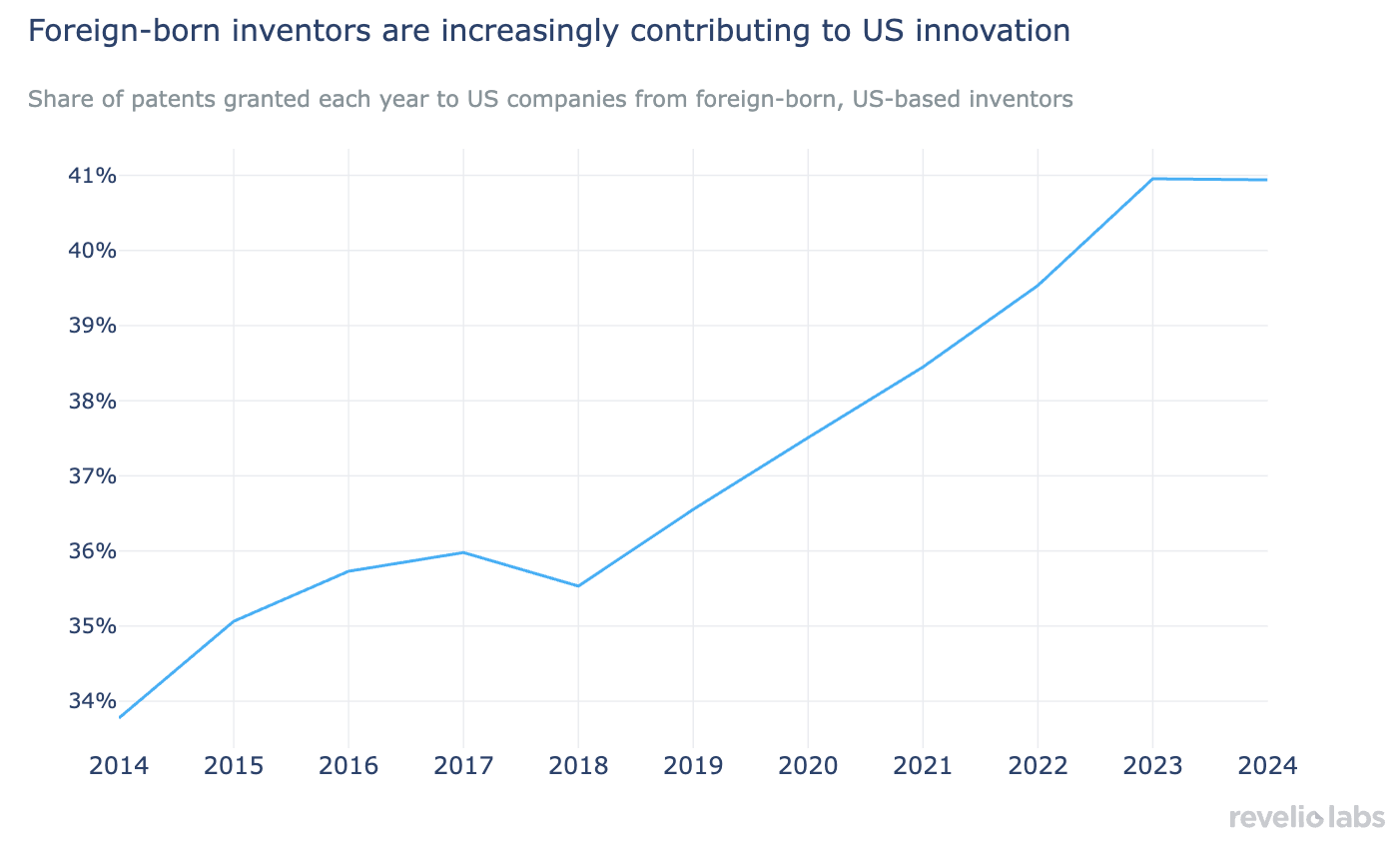
Immigration can also increase productivity, especially when newcomers bring scarce skills or become inventors and business founders. Research has linked skilled immigration to innovation and long-run growth, and high-skilled immigrants have made a substantial contribution to U.S. patents and inventive activity (see Figure 2). Census research finds that immigrants participate heavily in starting businesses and are disproportionately involved in innovative entrepreneurship. That does not mean every immigrant-founded company creates many jobs or becomes highly productive, but it is an important channel through which immigration can add to economic dynamism. 2 3
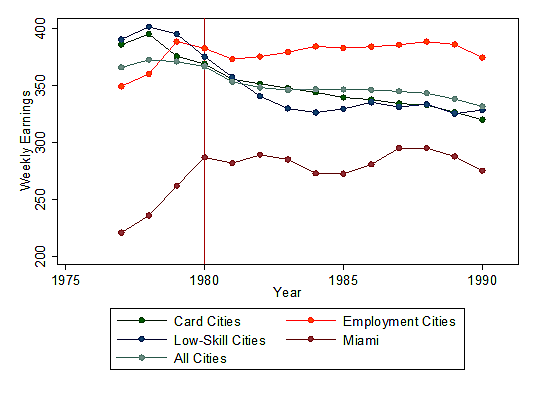
Fears that immigrants broadly drive down native-born workers’ wages are not strongly supported by the average findings. Studies generally find small average wage effects, and some find modest positive effects over time, as new workers create demand and are not perfect substitutes for existing workers. A re-examination of the Mariel Boatlift, often cited as evidence of wage losses, found that its negative estimate depended heavily on choices about data and comparison groups. More recent work also tends to find limited average effects (see Figure 1). 4
There is qualified fiscal support as well. Some immigrant groups make favorable net contributions to public finances, particularly when they are employed and have favorable age, education and family profiles. UK research found more favorable average net contributions from European Economic Area immigrants during the period studied. But OECD comparisons suggest that fiscal effects are usually modest overall and vary substantially between groups. 5
The case against
A larger national economy does not necessarily mean more output or higher living standards for every person. GDP can rise simply because the population is larger, while GDP per capita and productivity depend on the skills of migrants, how well they find suitable work and how quickly the economy adjusts. OECD research and a broader meta-analysis find positive average effects but wide variation across countries, migrant groups and methods. 6
Average wage results can also hide losses for particular workers. Native workers with similar skills to newcomers, especially in weak local labor markets, may face more competition than national averages suggest. The continuing dispute over the Mariel Boatlift underlines that these localized effects are difficult to measure and that adverse effects for exposed groups cannot be ruled out. 7
Public budgets can face a similar split between national benefits and local strain. Federal revenues may increase over time, but municipalities may have to pay first for schools, housing, social assistance and integration. The National Academies identifies education as a particularly important cost for state and local governments, while German local research has found short-run pressure that varies by where immigrants settle and how quickly they enter work. 8
Rapid arrivals can also tighten housing markets in places where construction cannot keep pace. Research from the Dallas Federal Reserve found localized labor and housing pressures associated with unauthorized immigration, though it was a working paper focused on a specific population and does not establish a nationwide housing effect. 9
The bottom line
The evidence supports a qualified version of the claim: immigration generally makes national economies stronger over the long run by expanding productive capacity, and it can add innovation, business creation and federal revenue. Confidence in that broad conclusion is high because it is supported by government projections, institutional reviews, peer-reviewed research and cross-country studies.
But immigration is not a guaranteed gain for every resident, town, budget or period of time. Outcomes depend heavily on who arrives, where they settle, whether their skills are recognized, how quickly they find work, and whether housing, schools and local budgets can absorb the adjustment. The central policy challenge is therefore not simply whether immigration produces aggregate gains, but whether those gains are shared and short-term costs are managed.
Figures & data
All contributions are reviewed for clarity, balance, and evidence. The strongest insights are elevated into the argument graph — with credit to you.
Help improve this analysis →