Lithium mining in South America has more negative than positive impacts on the local environment
What's this about?
People disagree about whether lithium mining harms nearby land and water more than it helps. Lithium helps make car batteries and store clean power.
What supporters say
- Miners pump salty water from dry salt flats, where fresh water and salt water may link together.
- Nearby plants, animals, and people need the small amount of fresh water in these dry areas.
- Water level shifts, roads, and mine sites can harm lagoons where flamingos and other wildlife live.
- Local places face the water use and land harm, while most battery gains go to faraway buyers.
What critics say
- We do not yet know how much salt-water pumping changes fresh water at each mine.
- Scientists have not shown that every lithium mine has harmed local fresh water supplies.
- Risks to flamingos and other wildlife seem real, but proof of harm at every site does not yet exist.
- Lithium can help cut air dirt from gas cars and help power systems use more sun and wind energy.
The bottom line
The facts slightly lean toward more local harm than local good around South American salt flats. But the harm does not happen at every site, and we still need better checks of water and wildlife.
Lithium mining in South America is central to the global shift toward electric vehicles and renewable energy storage. But when the question is limited to the local environment around the salt flats where lithium is extracted, the evidence modestly suggests that harms outweigh benefits — though not at every site.
The case for
Most South American lithium comes from underground brines in high, dry salt flats known as salars. These are water-scarce and hydrologically complex places, where brine, freshwater, rainfall and evaporation can affect one another. That makes it difficult to assume that pumping lithium-rich brine is separate from the freshwater systems on which nearby ecosystems and communities depend 1.
The Atacama region, for example, relies on limited water resources. Research on these basins shows that their water systems are interconnected in ways that are still not fully understood. This does not prove that every lithium operation has damaged freshwater supplies. But it means broad assurances that brine extraction has no effect on them are not well supported.
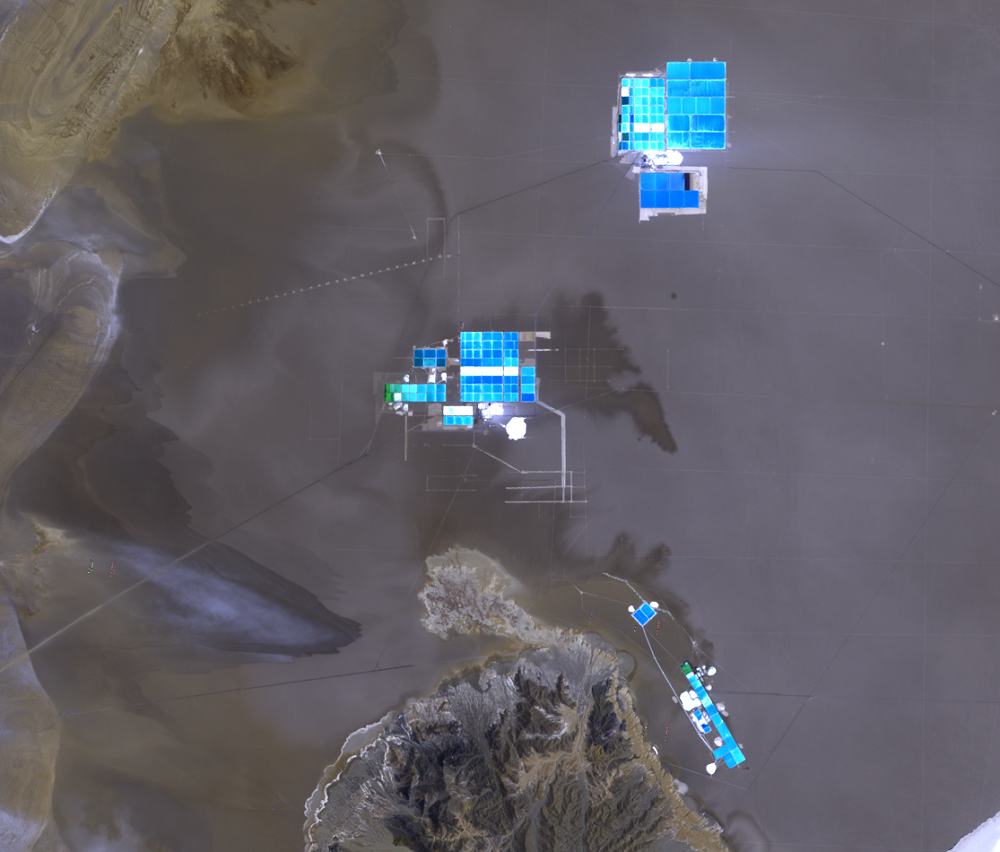
The ecological stakes are high. Salt flats and nearby lagoons support flamingos and other species adapted to these unusual environments. Changes in water levels, along with roads, industrial facilities and other disturbance, are recognized pressures on those habitats (see Figure 1). The available evidence identifies credible ecological risks, rather than confirming population losses or other specific damage at every mine 2.
There is also a question of who receives the benefits. Communities and ecosystems in lithium-producing regions bear the immediate effects of water use, land disturbance and disputes over monitoring and control. Yet lithium’s biggest benefits — cleaner transport and energy storage — are largely felt elsewhere, through products used in global markets 3. Those wider gains do not automatically amount to a local environmental benefit.
A lack of consistent monitoring adds to the concern. Researchers do not yet have a common, region-wide set of measurements showing how each operation affects water, wildlife and cumulative impacts. That uncertainty cuts both ways: it prevents a definitive finding of harm everywhere, but also makes claims of negligible impact hard to verify 4.
The case against
Lithium has an important environmental upside beyond the mining regions. Batteries used in electric vehicles and energy storage can reduce fossil-fuel use and greenhouse-gas emissions over their life cycles compared with fossil-fuel alternatives 5. On a global basis, those climate benefits matter substantially.
But these studies do not show that reduced emissions elsewhere directly cancel water or biodiversity damage at a South American salar. The answer therefore changes depending on the boundary used: a global life-cycle calculation gives more weight to electrification, while a local assessment focuses on nearby water and habitats.
Nor is all lithium extraction alike. Brine production can avoid the blasting and large volumes of waste rock associated with some hard-rock mines. Its impact depends on the energy and chemicals used, how water is counted, the operating design and local regulation 6.
There are also potential ways to reduce harm. Chile already requires water-balance reporting, and newer direct lithium extraction methods could shrink evaporation ponds and reinject brine underground. These approaches may reduce some land and water pressures 7. However, their performance at commercial scale, chemical and energy needs, and long-term effects on aquifers remain uncertain. They are potential safeguards, not a proven solution across the region.
The bottom line
On a strictly local environmental test, the evidence modestly favors the claim. Conventional lithium extraction in sensitive, poorly monitored salt-flat basins can create credible risks to scarce water and fragile habitats, while clear local environmental benefits have not been established.
That is not a verdict on every mine or every salar in South America. Outcomes vary by site, water system, regulation and technology, and the evidence is still too incomplete to make a universal regional judgment. Confidence is moderate: the risks are well grounded, and lithium’s global climate benefits are real, but neither has yet been translated into a reliable, like-for-like accounting of local impacts at every operation.
Figures & data
All contributions are reviewed for clarity, balance, and evidence. The strongest insights are elevated into the argument graph — with credit to you.
Help improve this analysis →