Degrowth is necessary for environmental sustainability
What's this about?
People disagree about whether rich nations must shrink their economies to protect Earth. Degrowth means choosing less buying, making, and using instead of endless growth.
What supporters say
- People now take huge amounts of goods from Earth, which harms the climate, water, land, and wildlife.
- Earth has already passed some safe limits, so supporters say we must use far less.
- Some nations cut local climate gases while growing, but they may move harm to other nations through imports.
- Using less energy and fewer goods could reduce need for risky machines that pull carbon dioxide from the air.
What critics say
- We do not have proof that every nation needs a planned drop in GDP, or total money made.
- Some places have grown while cutting climate gases made inside their own borders.
- The data gives less clear proof that growth can never work with lower use of goods.
- Major cuts should focus first on luxury buying and high-energy lives in rich nations.
The bottom line
The evidence shows that rich nations need big cuts in resource use and high-harm buying. But we do not know that every nation must shrink its GDP to protect Earth.
Degrowth — deliberately moving away from endless economic expansion — is often presented as essential to protecting the planet. The evidence points to a more qualified conclusion: rich countries need major cuts in resource use and high-impact consumption, but a planned fall in GDP everywhere has not been shown to be necessary.
The case for
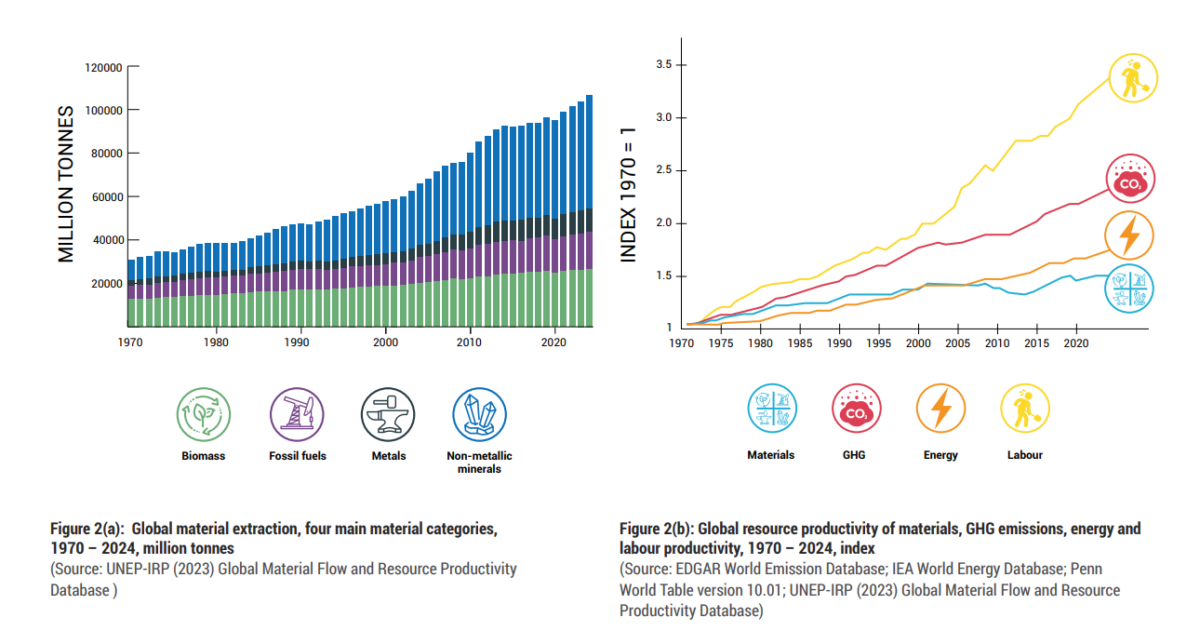
The strongest argument for degrowth is that today’s economic model is pushing beyond ecological limits. Global extraction and use of materials have risen sharply and, without major policy changes, are expected to keep growing. That matters because extracting and processing resources drives climate change, biodiversity loss, pollution and water stress. Research on planetary boundaries also finds that several of the Earth’s safe limits have already been crossed. 1
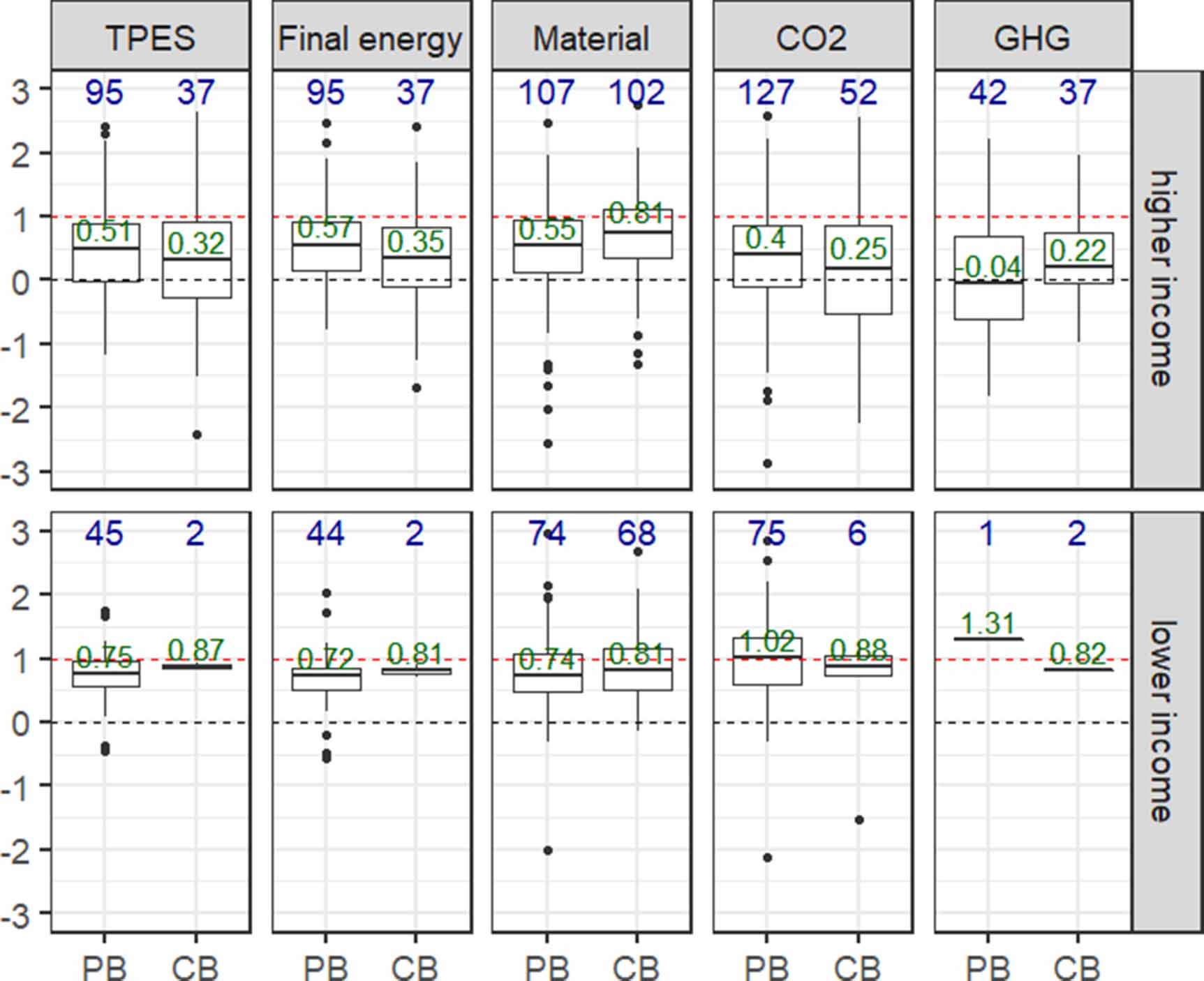
Supporters argue that efficiency alone has not solved this problem. Some countries have grown their economies while cutting emissions produced within their borders, but the evidence is weaker for reductions in material use, consumption-based emissions and other environmental damage. Imports can shift pollution abroad, while cheaper or more efficient products can sometimes lead people to consume more — known as a rebound effect.
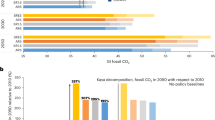
Degrowth advocates also say that lowering demand makes climate action less dependent on unproven or risky fixes. A study of pathways consistent with limiting warming to 1.5°C found that scenarios built around lower energy demand, sufficiency and slower growth required less carbon dioxide removal than more growth-focused alternatives (see Figure 1). 2 In other words, using less energy and fewer materials could reduce the need to rely on large-scale technologies designed to pull carbon from the atmosphere.
This does not necessarily mean reducing living standards for everyone. The pro-degrowth case is aimed chiefly at affluent consumption: luxury goods, energy-intensive lifestyles and other high-impact spending in wealthy countries. Modeling suggests that a more equal distribution of resources could allow universal decent living standards with far less energy, because the richest households account for a disproportionate share of demand. 3
The case against
The main objection is that economic growth and environmental progress are not always incompatible. Studies have identified countries where GDP increased while territorial carbon dioxide emissions fell, showing that absolute decoupling — cutting emissions in real terms while the economy grows — can happen. 4
Major international agencies also describe routes to net-zero emissions that do not require broad economic contraction. The IPCC says measures such as energy efficiency, better infrastructure, changes in behaviour and consumption, and cleaner technology can sharply reduce emissions while improving wellbeing. Its climate pathways include both low-growth and growth-compatible options. The International Energy Agency likewise sets out a net-zero path based on renewables, electrification, efficiency, innovation and government policy that can coexist with continued economic development, particularly in countries still building basic services and infrastructure. 5
Still, this evidence has limits. Most documented decoupling concerns carbon emissions produced inside a country’s borders, not the full environmental footprint of its consumption. It says less about materials, land use, biodiversity and pollution embedded in imported goods. So it disproves the idea that growth can never coincide with falling territorial emissions, but it does not prove that growth can be made compatible with every environmental limit quickly enough.
There are also social and political concerns. Modern economies — from jobs and tax revenues to pensions and public services — are often built around growth. Reviews of degrowth research find limited real-world testing of large-scale degrowth policies, leaving major questions about governance, inequality and public wellbeing unresolved. A planned economic contraction could carry serious risks unless institutions were redesigned first. 6
The bottom line
The evidence strongly supports reducing environmental throughput, curbing high-impact consumption and sharing resources more fairly, especially in wealthy economies. It also supports using demand reduction alongside clean energy, electrification, efficiency and innovation rather than treating these approaches as rivals.
But the evidence does not show that deliberate GDP contraction in every country or sector is required for sustainability. A more defensible approach is differentiated: affluent countries should pursue sufficiency and lower-impact consumption, while poorer countries retain room to expand essential services and meet basic needs.
Confidence in this qualified conclusion is high. The central uncertainty is whether growth-compatible policies can cut the full range of environmental harms fast enough — and whether a large-scale transition beyond growth could be achieved without unacceptable social costs.
Figures & data
All contributions are reviewed for clarity, balance, and evidence. The strongest insights are elevated into the argument graph — with credit to you.
Help improve this analysis →