Surveillance capitalism is the defining economic threat of our time
What's this about?
People disagree about whether big tech firms’ use of our data poses today’s main threat to money and jobs.
“Data tracking” means firms gather facts about us to guess and shape what we do.
What supporters say
- Big firms like Google and Facebook can use huge data stores to stay ahead of smaller rivals.
- Their size, data, and control of key tech tools can make fair fights with rivals hard.
- Most people cannot see, fix, or bargain over how firms use facts about them.
- Watchdogs found cases of trickery, weak safety, harm to kids’ privacy, and misuse of health data.
What critics say
- We do not know how often firms use detailed data to charge each person a different price.
- We also do not know the full harm that such price plans cause across the whole market.
- The proof shows real risks, but it does not prove data tracking causes every market problem.
- The proof does not show that this danger ranks above all other threats to money and jobs.
The bottom line
Data tracking creates real risks for fair choice, privacy, and fair fights between firms.
Still, the proof does not show it is the one main money threat of our time.
Surveillance capitalism—the large-scale collection and use of personal data to predict and influence behavior—is a serious economic concern. But the available evidence does not show that it is the single defining economic threat of the modern era.
The case for
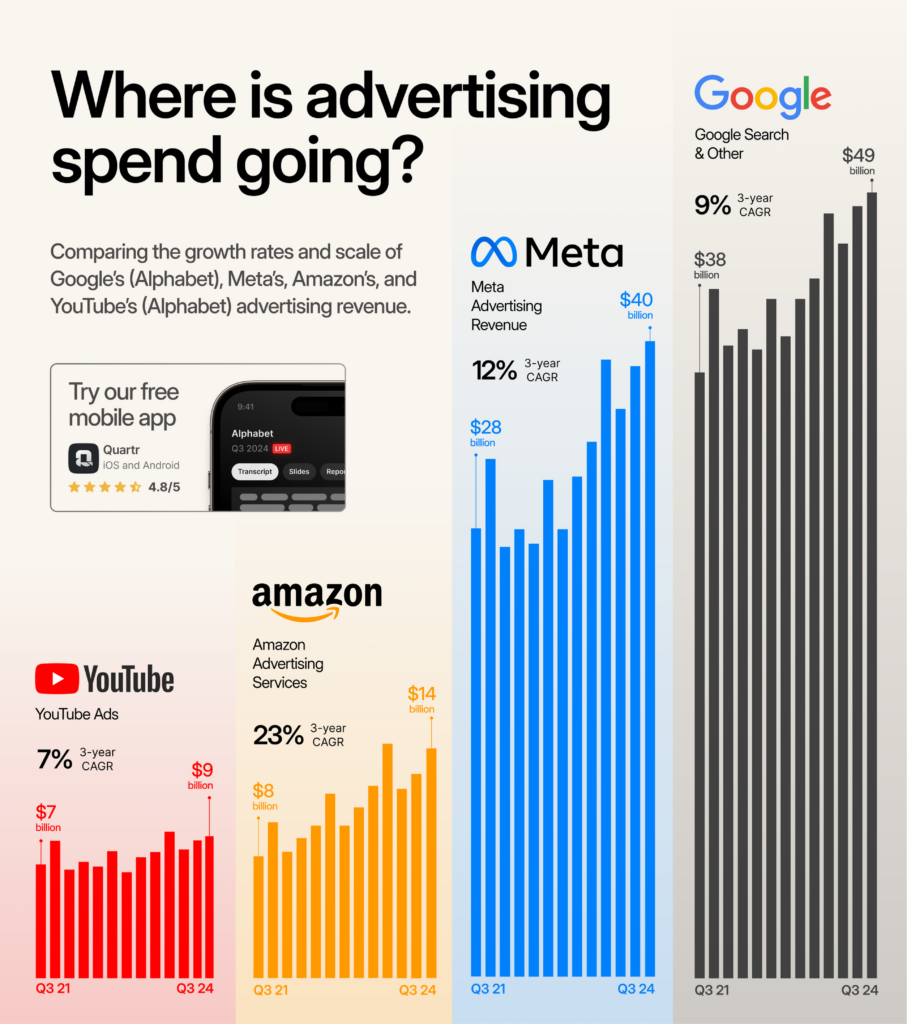
The strongest argument is that commercial data collection can deepen the power of already dominant technology platforms. Britain’s Competition and Markets Authority has found that advantages in data, scale and access to infrastructure can strengthen the positions of companies such as Google and Facebook in digital advertising. It also points to conflicts of interest and dependence on platform infrastructure, which can make it harder for rivals to compete. European Commission experts have similarly linked data advantages to gatekeeper power, self-preferencing and barriers to interoperability. 2
This matters because the issue is not simply that companies know a great deal about consumers. It is that firms can use behavioral data in markets where users often cannot see, correct or negotiate how that information is used. That creates a lasting information imbalance between businesses and the people they track. 1
US regulators have documented recurring concerns involving deceptive data practices, weak security, children’s privacy, health information and unlawful collection or use of personal data. The Federal Trade Commission’s recent work suggests these are not merely theoretical risks. The agency has also examined how companies may use detailed personal and behavioral data, algorithms and artificial intelligence to set individualized prices or promotions. 3
Such “surveillance pricing” could raise broader fairness concerns. If consumers receive different offers based on information they cannot inspect or challenge, pricing may reward those with more bargaining power or better data profiles while leaving others worse off. The evidence does not establish how common these practices are, or their overall effect on prices, but it identifies a plausible consumer-protection and inequality risk. 4
The harms can also reach beyond traditional privacy debates. Research on tracking and digital advertising links extensive monitoring to discomfort, mistrust and a sense of lost control. Large stores of personal data may also increase security risks, since more collection creates more opportunities for misuse or breaches. 3
The case against
The key weakness in the claim is the word “defining.” Evidence shows that surveillance-based business models can damage competition, privacy, security and consumer autonomy. But it does not provide a common measure for comparing those harms with climate change, financial crises, war, automation, inequality or public-health threats. 5
That gap is important. The available studies and regulatory findings focus mainly on digital advertising, online tracking and large platforms. They can show that these practices create serious risks, but they cannot establish that surveillance capitalism outweighs every other major danger to the economy.
Data-driven services also bring real, if uneven, benefits. Research finds that targeted advertising can make offers more relevant and reduce the time people spend searching for products. Those gains vary by person and setting, and they sit alongside the discomfort and loss of control caused by extensive tracking. Meta-sponsored research reports benefits for small businesses and economic output from its advertising tools, although its commercial interest means that evidence carries less independent weight. 6
There are tradeoffs in regulation as well. Research on privacy rules has found adjustment costs and declines in some data-enabled activities. The National Institute of Standards and Technology recommends managing privacy risks while allowing legitimate uses of data to continue. In other words, the choice is not simply between protecting people and preserving economic activity; policymakers must decide which uses are transparent, proportionate and open to challenge. 7
The evidence is strongest against the combination of opaque data collection, dominant platform control, network effects and vertical integration—not against every use of personal information. The broader theory of surveillance capitalism remains influential, but research more directly supports specific pathways of harm than a complete diagnosis of the whole economy.
The bottom line
The evidence strongly supports treating surveillance capitalism as a major, cross-cutting digital-economic threat. It is linked to concentrated platform power, opaque consumer treatment, privacy and security risks, and possible unfair pricing.
But the evidence does not justify saying it is definitively the defining economic threat of our time. The central missing piece is a credible comparison of its total harms and benefits with those of other global economic risks. That makes “defining” an evaluative judgment, not an empirically proven ranking.
Figures & data
All contributions are reviewed for clarity, balance, and evidence. The strongest insights are elevated into the argument graph — with credit to you.
Help improve this analysis →