Criminal justice should prioritize rehabilitation over punishment
What's this about?
People disagree about whether courts should focus more on rehab (helping people change) than on harsh punishment. The key question asks what best stops future crime while keeping people safe.
What supporters say
- Well-run talk and thinking programs can cut repeat crime, especially when they fit each person's needs.
- School, job help, housing, and health care can help people build safer lives after prison.
- Being caught seems to stop crime more than making a sentence much harsher.
- Prison can harm some people by breaking family and job ties and linking them with more crime.
What critics say
- Rehab programs do not all work well, and staff must run them with care.
- Some people may still need prison to protect the public from serious harm.
- Courts should not drop blame or fair results when someone breaks the law.
- We do not know if every rehab program saves money, since costs differ from place to place.
The bottom line
The evidence suggests justice systems should put more weight on rehab because good programs can lower repeat crime. Still, prison and firm rules may matter when they protect the public.
Criminal justice should put more emphasis on helping people avoid future crime than on making punishments harsher, the evidence suggests. But that does not mean abandoning prison, accountability or deterrence where they are needed to protect the public.
The case for
The strongest argument for rehabilitation is straightforward: well-designed programs can reduce reoffending. Reviews of the evidence find that cognitive-behavioral therapy and related psychological programs often work better than standard justice responses, particularly when they are matched to a person’s level of risk and the factors driving their offending. That supports focusing on changing behavior and circumstances, rather than assuming harsher treatment will bring lasting change. 1
Education and support after release can also address some of the practical roots of crime. Studies link correctional education with lower reoffending and better employment prospects, while programs that help with health, housing, social support and day-to-day reintegration can improve post-release outcomes (see Figure 1). 2 The quality of delivery varies, but the broad lesson is that people are less likely to return to crime when they have realistic ways to rebuild their lives.
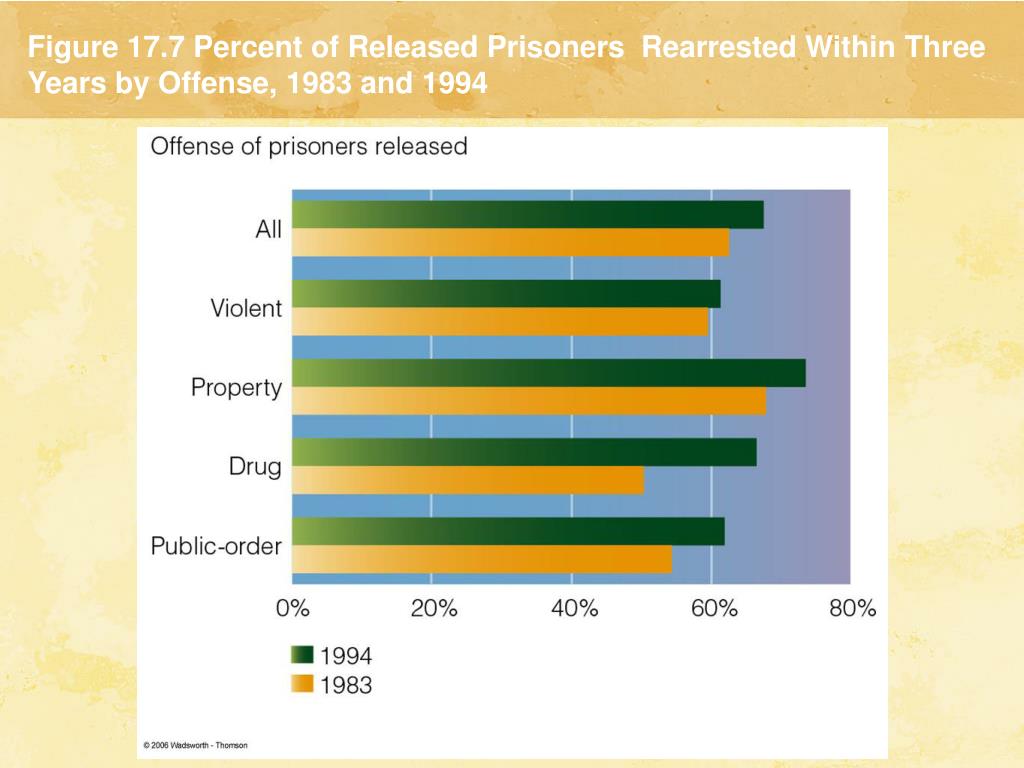
The evidence for relying on punishment severity is weaker. Research generally finds that the certainty of being caught matters more for deterrence than the harshness of the penalty. More severe sentences do not necessarily produce proportionately stronger deterrence. 3 Meanwhile, prison does not consistently reduce later offending and may make it worse for some people, by breaking employment and family ties, adding stigma and exposing prisoners to criminal networks (see Figure 2). 5
Rehabilitation may also save money in some cases. Programs that reduce future contact with police, courts and prisons, while improving work or health outcomes, can lower costs over time. 4 But this is not a guarantee: whether a program is cost-effective depends on how it is designed and delivered.
The case against
Punishment has purposes that rehabilitation cannot fully replace. Prison can immediately protect the public by preventing people from committing crimes in the community while they are confined. 6 For people who pose a serious near-term risk, secure custody and careful risk management remain necessary.
There is also a moral case for proportionate punishment. Criminal justice must recognize the harm done to victims, express society’s condemnation of wrongdoing and hold offenders accountable. 7 Research on reoffending cannot decide how much weight a society should give to those values. They remain matters of public and political judgment, not simply questions that data can settle.
Nor is every program called “rehabilitation” effective. Results vary widely depending on the type of intervention, the people selected, the quality of supervision, the length of follow-up and how faithfully the program is carried out. 8 Replacing punishment broadly with vague or poorly run treatment programs would not be supported by the evidence.
Deterrence also still matters. Predictable, proportionate sanctions can influence behavior in some settings, even if escalating severity has limited additional effect. 9 Community alternatives and diversion programs can work under the right conditions, but the supporting evidence is often specific to particular groups—for example, property offenders with drug-use problems—and should not be treated as a universal solution.
The bottom line
The evidence favors giving greater priority to targeted rehabilitation over punishment severity when the goal is to reduce future offending. There is high confidence in that qualified conclusion: several reviews point in the same direction, showing that interventions addressing behavior, education, mental health, substance use and reentry needs can improve outcomes when they fit the person and are properly delivered.
But the best-supported model is not an all-treatment system. It is a hybrid approach: proportionate punishment and, where necessary, secure confinement to protect the public, combined with rehabilitation aimed at the changeable causes of offending. Success should be measured not only by reoffending rates—which vary by definition and local practice—but also by victim outcomes, employment, health, family stability, fairness and cost (see Figure 3).
The biggest uncertainty is implementation. Rehabilitation works neither automatically nor equally for everyone. Its benefits depend on matching the right program to the right person, at the right level of intensity, and delivering it well.
Figures & data

All contributions are reviewed for clarity, balance, and evidence. The strongest insights are elevated into the argument graph — with credit to you.
Help improve this analysis →