Remote learning during the COVID-19 pandemic has exacerbated educational inequalities, resulting in long-term achievement gaps
What's this about?
People disagree about whether online school during COVID made school gaps worse for a long time.
Many signs show that poor students lost more learning, but online school was not the only cause.
What supporters say
- Test scores in reading and math fell most for students who already faced hard times.
- Students lost more ground when schools stayed closed for longer periods.
- Some children had fast internet, their own devices, quiet rooms, and adult help at home.
- Other children lacked these tools, which made it harder to join lessons and keep up.
- Missed schoolwork also linked with low attendance, stress, poor mental health, and family problems.
What critics say
- We should not blame online school alone for all learning loss during the pandemic.
- COVID brought many other hard events, such as illness, money worries, and family stress.
- Different schools gave different kinds of online help, so children did not all have the same experience.
- Some students can catch up after schools reopen, so long-term harm does not have to happen.
The bottom line
The best proof shows that COVID school changes widened gaps, mainly for students with fewer supports.
We are not sure how long every gap will last, but some children may need extra help to catch up.
Remote learning during COVID-19 appears to have widened existing educational gaps, particularly for disadvantaged students. But the evidence also shows that online schooling was only one part of a much broader pandemic disruption, and that lasting damage is not inevitable.
The case for
The strongest evidence points to larger learning losses among students who were already disadvantaged. In the United States, national assessments found major declines in reading and mathematics during the pandemic, with lower-performing, high-poverty and historically underserved groups often facing the greatest unfinished learning. International studies similarly link school disruption to lower achievement and rising “learning poverty,” especially in poorer households and countries 1 (see Figure 2).
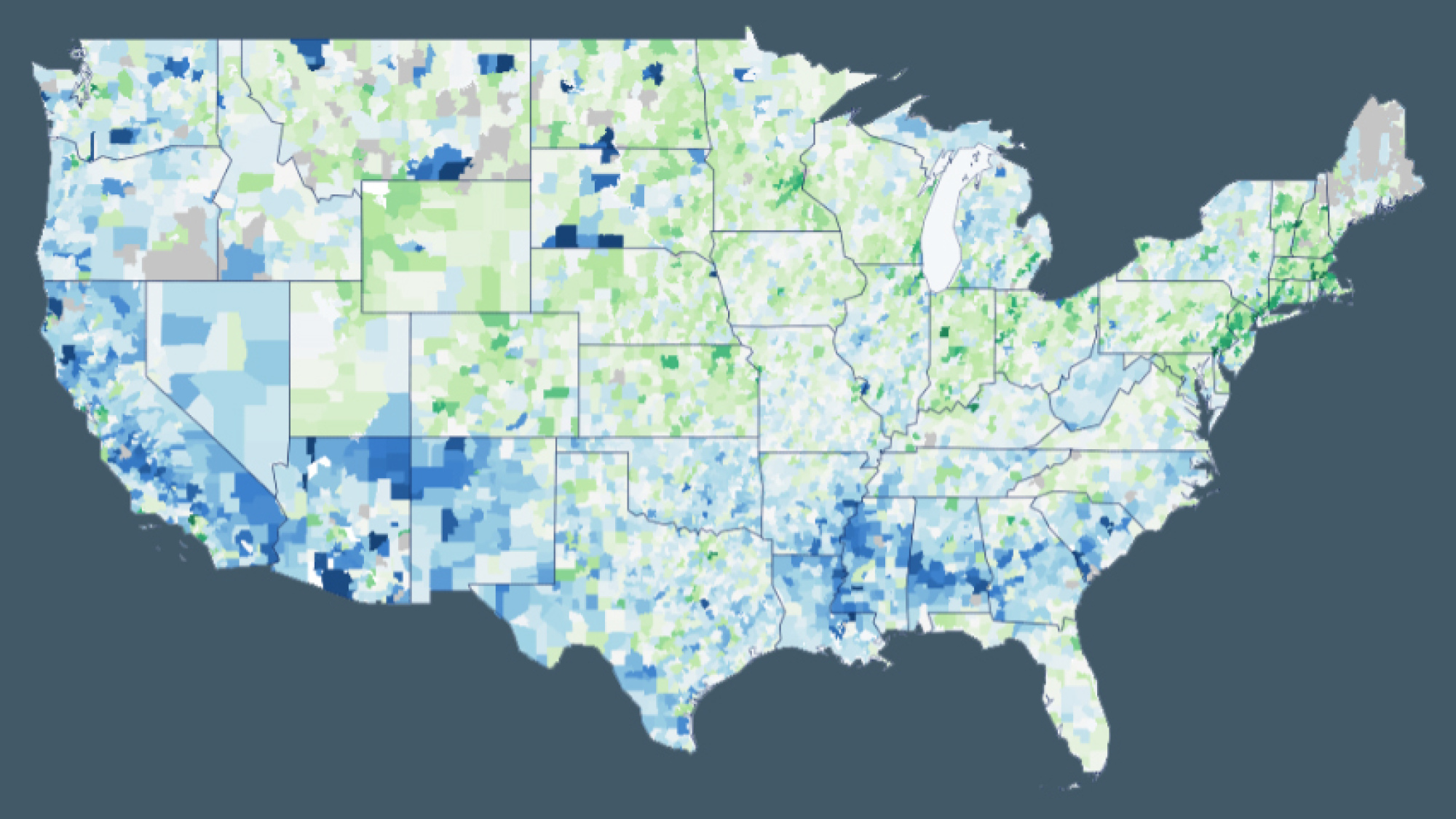
Longer periods away from normal classrooms were generally linked to greater losses. Where schools stayed closed for longer, and where students had weaker access to effective remote teaching, achievement fell further. This pattern suggests that unequal exposure to disruption — and unequal support during it — helped widen gaps between groups 2 (see Figure 1).
The reasons are not hard to identify. Some students had reliable broadband, personal devices, quiet places to work and adults available to help. Others did not. Research and reviews connect these unequal resources to differences in participation and learning during remote schooling. Families and schools with fewer resources were less able to replace what students lost when classrooms closed.
The effects also went beyond missed lessons. Longitudinal research found that academic struggles were tied to poorer attendance, mental-health difficulties, wellbeing problems and family disruption during the pandemic 3. Those problems can make it harder for students to catch up even after schools reopen, raising the risk that some achievement gaps will persist.
The case against
It would be misleading, however, to portray remote learning as uniformly harmful. Reviews of the evidence find mixed results. In settings with well-planned online lessons, frequent contact with teachers and adequate technology, some students experienced neutral or even positive outcomes 4.
Results depended heavily on the circumstances. Student age, the subject being taught, parental support, quality of instruction and access to technology all mattered. The evidence therefore does not show that online learning itself is an inherently damaging form of education.
Nor can the observed drop in test scores be blamed on remote learning alone. Online instruction took place alongside school closures, illness, bereavement, economic hardship, disrupted family life and widespread mental-health pressures. National assessment results show that scores fell, but they cannot isolate one single cause 5.
Evidence from different countries also complicates a simple explanation. Places with stronger digital infrastructure and faster academic recovery were better able to limit losses. That suggests policy choices — including access to broadband, devices, tutoring and targeted support — can shape both the size of the setback and how long it lasts.
There is also no basis for saying that pandemic-era gaps are permanently fixed. Targeted measures such as tutoring and extended learning time may help students recover. Research on high-dosage tutoring, in particular, indicates that intensive academic support can speed recovery when it is available to the students who need it most.
The bottom line
The evidence strongly supports the conclusion that pandemic-era educational disruption, including poorly supported remote learning, was linked to substantial learning losses and wider disadvantage. The harm was often greatest for students with the fewest resources, and it may persist in some groups and places 1.
But the claim needs an important qualification. Researchers cannot fully separate the effect of remote learning from the wider social, health and economic shocks of the pandemic. They also cannot yet say how far recovery efforts will close the gaps.
The most defensible conclusion is that COVID-era remote schooling contributed to unequal educational harm under many conditions, rather than inevitably creating permanent gaps everywhere. What happens next will depend greatly on the resources, support and recovery policies provided to students.
Pros — Supporting Arguments
Cons — Opposing Arguments
Figures & data


All contributions are reviewed for clarity, balance, and evidence. The strongest insights are elevated into the argument graph — with credit to you.
Help improve this analysis →