Antibiotic resistance is a greater threat than pandemics
What's this about?
People disagree about whether drug-proof germs pose a bigger danger than pandemics. Both can harm many people, but they cause harm in different ways.
What supporters say
- Drug-proof germs directly killed about 1.27 million people in 2019.
- These germs can make surgery, cancer care, transplants, and hospital care much more risky.
- Germs can spread between homes, clinics, farms, and countries all the time.
- Better cleaning, safe water, vaccines, and careful drug use can cut this risk.
What critics say
- A pandemic can kill far more people than drug-proof germs in a short time.
- Pandemics can shut schools, jobs, travel, and whole parts of daily life.
- Drug-proof germs cause a long-term problem, while pandemics can create sudden disaster.
- We cannot rank every future pandemic against this threat, because each one differs.
The bottom line
Drug-proof germs already cause huge harm and put basic medical care at risk. But evidence does not show they always pose a greater threat than pandemics, which can cause even more deaths and chaos quickly.
Antibiotic resistance is already killing large numbers of people and putting routine medical care at risk. But the evidence does not show that it is universally a greater threat than pandemics, which can produce far larger death tolls and disruption in a short period.
The case for
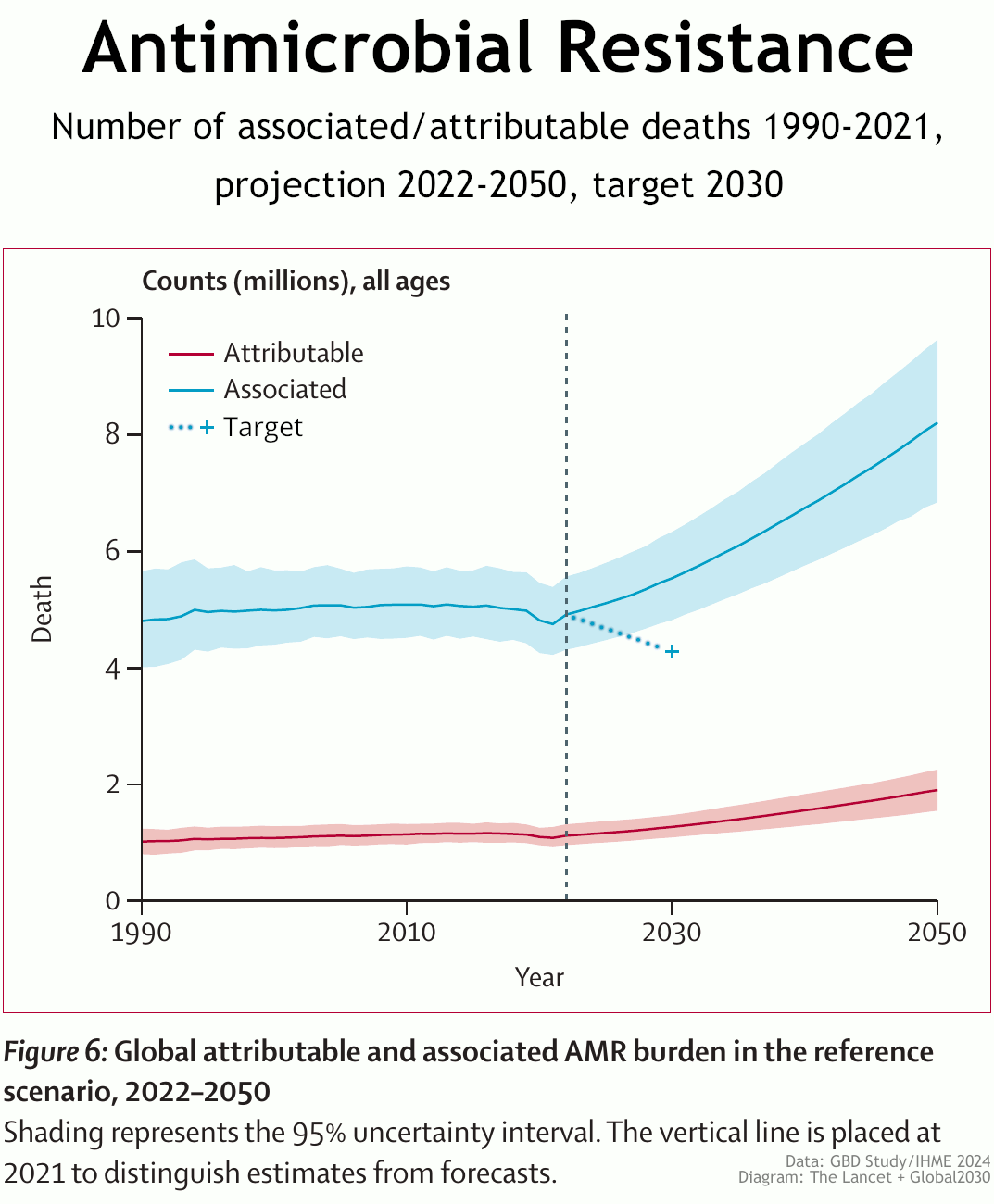
Antimicrobial resistance, often called AMR, is not a distant danger. It is a recurring global health crisis. A major GRAM analysis estimated that bacterial resistance directly caused about 1.27 million deaths in 2019, and was associated with roughly 4.95 million deaths overall (see Figure 1). 1 The heaviest burden fell on low- and middle-income countries, but resistant infections affect health systems worldwide.
The danger reaches well beyond deaths from infections alone. Modern medicine depends on antibiotics to make many treatments safer, including surgery, organ transplants, cancer chemotherapy and intensive care. As bacteria become resistant, doctors can lose the drugs needed to prevent and treat infections after these procedures. 2 Reviews also point to the rise of multidrug-resistant germs and a thin pipeline of genuinely new antibiotics.
Unlike a single outbreak, AMR is persistent and cross-border. Resistant organisms spread between health-care settings, communities and countries, while the forces that drive resistance—such as antibiotic use and gaps in sanitation—remain constant. 3 That makes it a chronic problem rather than one confined to a particular emergency.
There are ways to reduce the risk, including better hygiene, sanitation and biosecurity in animal production, which can lower infections and potentially reduce antibiotic use. Vaccines may also help by preventing infections that would otherwise require antibiotics, though their effects vary and much of the relevant vaccine pipeline is still under development.
The case against
The strongest challenge to the claim is that actual pandemics can cause death tolls that greatly exceed AMR’s annual burden. The World Health Organization estimated about 14.9 million excess deaths linked to COVID-19 in 2020 and 2021. That compares with the estimate of 1.27 million deaths directly caused by bacterial resistance in 2019 (see Figure 3). 4
The figures are not directly identical: the COVID estimate covers two years and includes excess deaths, both direct and indirect, while the AMR figure measures direct attribution in one year. Even so, the comparison shows that a pandemic can bring a much larger acute loss of life.
History offers an even starker warning. Reassessments of the 1918 influenza pandemic place its global death toll in the tens of millions. 5 Such episodes show why pandemics cannot be judged only by their average annual risk. Rare but severe events can overwhelm health systems and cause catastrophic mortality in a short time.
Pandemics also damage societies in ways that death counts alone cannot capture. They can shrink the workforce, disrupt trade, delay non-emergency health care, restrict access to services and deepen inequality. 6 The scale of future economic damage depends heavily on uncertain factors such as how often outbreaks occur, how easily a disease spreads, how severe it is and how prepared governments are.
AMR and pandemics are also connected rather than wholly separate threats. During COVID-19, antibiotics were widely used despite relatively low bacterial co-infection among many patients. Evidence from intensive-care settings found mixed changes in antibiotic use and resistant infections. That suggests pandemics can add pressure to the resistance problem, but it does not prove that either hazard is larger overall.
The bottom line
Antibiotic resistance is a major, measurable and continuing global threat. It already causes substantial annual mortality and could weaken the foundations of modern medical care. But the available evidence does not support the categorical claim that AMR is greater than pandemics overall.
Pandemics have demonstrated the ability to cause far higher death tolls in short periods, and severe historical outbreaks show their catastrophic potential. At the same time, AMR’s true burden is difficult to measure precisely because surveillance and reporting are uneven around the world.
The central problem is that there is no shared method for comparing the two risks across the same time frame, definitions of death and illness, economic harm and probability of future disasters. The evidence therefore supports a qualified conclusion with high confidence: AMR is an urgent long-term threat, but it cannot be ranked above all present and future pandemics on the evidence available.
Figures & data

All contributions are reviewed for clarity, balance, and evidence. The strongest insights are elevated into the argument graph — with credit to you.
Help improve this analysis →