Longevity research should be a top scientific priority
What's this about?
People disagree about whether research on healthy aging should get more money than other science goals.
This research aims to help people stay well, active, and able to care for themselves longer.
What supporters say
- Aging raises the risk of heart disease, memory loss, diabetes, and weakness at the same time.
- If scientists slow key aging changes, they may delay several health problems with one kind of treatment.
- More people now reach old age, so more people may need help with illness and daily tasks.
- Extra healthy years could let people help family, join their town, and need less care.
What critics say
- We do not yet know if aging research should rank above every other health and science goal.
- Longer lives help most only if people also avoid years of pain, illness, and loss of strength.
- Older groups do not always cost more, since costs depend on how long people stay sick.
- New drug tests and body health checks show promise, but they do not yet prove big gains for humans.
The bottom line
Healthy-aging research has a strong case for major support because it could fight many health problems at once.
But we still need good tests before we claim it should come before all other science and health needs.
Longevity research—more precisely, research aimed at extending healthy, independent life—has a strong case for major investment. But the evidence does not yet show it should rank above every other scientific and public-health priority.
The case for
The central argument is that aging sits behind many illnesses at once. Older people often face several chronic diseases, disability and loss of function together. Rather than treating heart disease, dementia, diabetes and frailty as wholly separate problems, geroscience asks whether shared biological processes of aging can be slowed to reduce several of them at the same time. That could make healthy-aging research unusually broad in its potential impact 1.
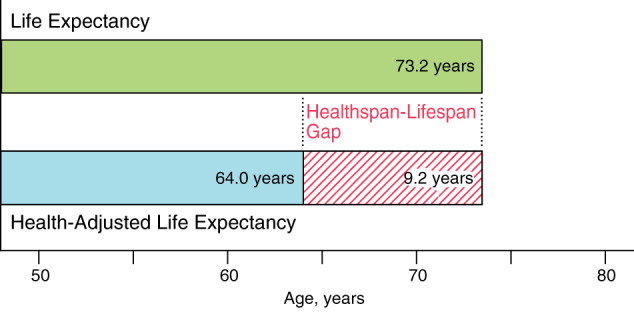
The need is growing as populations age around the world. A rising number and share of people are living into ages when multiple conditions and declining independence become more common. If research can add years of good health—not simply years of survival—it could help a large and expanding group of people remain active and avoid or delay care needs 2.
The possible social gains are also substantial. Longer periods of independence could allow more people to participate in family, community and economic life, while reducing the burden of frailty, disability and dementia. But this economic case depends on whether illness and disability are actually postponed. Population aging alone does not automatically mean higher health spending; the important outcome is whether people spend fewer years in poor health 3.
Researchers also have concrete ideas to test, rather than only distant hopes. Approaches involving rapamycin-related drugs, senolytics—which aim to remove damaged “senescent” cells—and improved biological markers are creating an early clinical pipeline. This is enough to justify serious trials and better research tools, even if it falls well short of proving that humans can now live substantially longer or avoid multiple diseases through these treatments 4.
The case against
The biggest problem is that human evidence remains limited. Studies of rapamycin and related drugs have suggested possible effects on immune function or measures linked to aging, but the studies have generally been small and varied widely in design. They have not shown that these treatments reliably slow human aging, extend human lifespan or prevent several age-related diseases at once 5.
Senolytics face similar questions. Laboratory and animal findings are promising, but researchers still need to establish which cells to target, how to deliver treatments safely, what side effects they may cause and which measures can reliably show a benefit in people. Aging research also faces difficult practical issues: there are no fully agreed biomarkers of aging, clinical trials can take a long time, and older adults differ greatly in health and risk.
These limits make a cautious funding approach more persuasive than an all-in push. Funding can support rigorous trials, validated measures of health and function, and clear milestones for deciding which ideas should move forward. It should not assume that results in animals will translate neatly into broad benefits for people 6.
There is also the question of what would be given up by making longevity research the single top priority. The burden of age-related disease is clearly large, but the available evidence does not compare the likely payoff of longevity research with every alternative use of scarce scientific and public-health funds. A major problem does not automatically make one research field the best investment 7.
Finally, access matters. People already experience large inequalities in healthy life expectancy, and expensive biomedical advances could widen those gaps. Any longevity agenda would need to address affordability, public-health delivery and the broader social conditions that shape who gets to benefit 8.
The bottom line
The evidence supports substantial, disciplined investment in healthspan-focused geroscience. Aging is a major driver of illness and loss of independence, populations are getting older, and researchers now have plausible treatments and tools worth testing.
But it does not establish that longevity research should be the single highest scientific priority. Leading interventions have not yet reliably shown that they extend human life, delay aging or prevent multiple diseases across diverse populations. Nor is there a direct comparison showing that this field offers a better return than all competing research and public-health investments.
The strongest policy approach is therefore to prioritize healthy years over maximum survival, and to fund the field through rigorous trials, better biomarkers, transparent milestones and equity safeguards.
Figures & data


All contributions are reviewed for clarity, balance, and evidence. The strongest insights are elevated into the argument graph — with credit to you.
Help improve this analysis →