Algorithmic pricing is price gouging with extra steps
What's this about?
People disagree about whether price tools run by computer rules count as price gouging, or unfair price jumps during hard times.
What supporters say
- These tools can raise prices fast when supplies run low and buyers have few other choices.
- This risk grows for basic needs, such as homes, or when only a few big sellers exist.
- Rent tools may push many landlords toward higher rents instead of letting each landlord set its own price.
- Some tools use where you live, what you view, and what you bought before to set prices.
What critics say
- Not every price change made by computer rules cheats buyers, because the market and company choices matter.
- A price rise alone does not prove gouging; we must ask if buyers had other choices.
- Courts have not yet ruled on claims about rent software, so we do not know if anyone broke laws.
- Sellers may use price tools in many ways, and some uses may not harm fair choice.
The bottom line
Computer price tools can act like price gouging when they use shortages, data, or weak rival sellers. But not every fast, computer-led price change counts as gouging.
Algorithmic pricing can look a great deal like price gouging when it exploits shortages, personal data or weak competition. But the evidence does not show that every automated price change is gouging; much depends on the market and how the system is used.
The case for
The strongest argument is that algorithms can turn a sudden shortage into rapid, steep price increases at the very moment buyers have the fewest alternatives. When demand jumps and consumers cannot easily compare offers, delay a purchase or switch sellers, frequent automated changes can resemble classic price gouging. That risk is particularly serious for necessities and in markets dominated by a small number of firms. 1
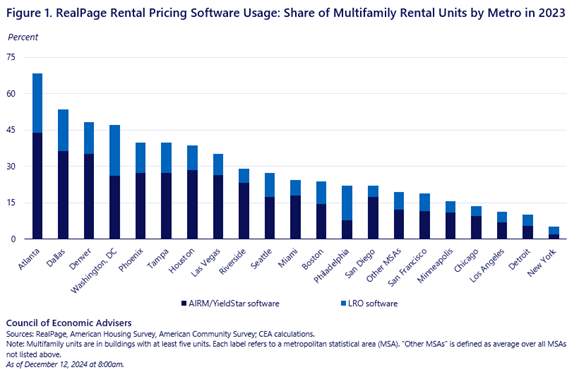
Housing offers a prominent example. The White House Council of Economic Advisers has discussed evidence that widely used rent-setting recommendations may reduce landlords’ independent pricing decisions and push rents upward. The Justice Department has also alleged that RealPage used sensitive information from competing landlords, along with pricing recommendations, to help facilitate unlawful coordination. Those allegations have not yet been finally decided in court, but they underline how shared market data and automated recommendations could weaken competition (see Figure 2).
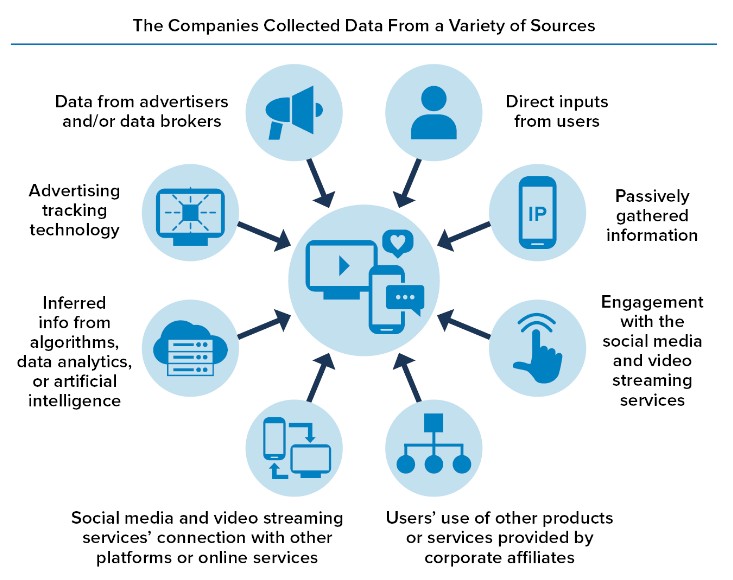
Algorithms can also use personal information to charge different people different prices or offer them different promotions. The Federal Trade Commission has reported that major pricing intermediaries may draw on location, browsing activity and purchase history when making those decisions (see Figure 3). Consumers often cannot see why their price differs from someone else’s, making such practices difficult to challenge.
This “surveillance pricing” may allow companies to capture more of what each customer is willing to pay, shifting money from consumers to firms. It also raises fairness concerns, especially where buyers depend on a service and have little idea that personal data are shaping the offer they receive. 2
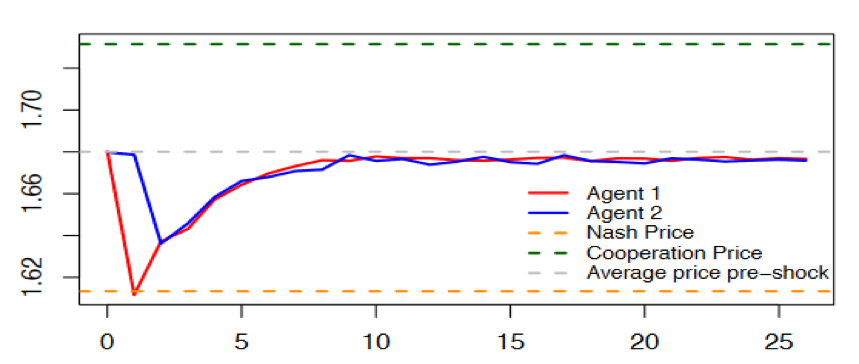
There is a further concern that algorithms could help firms reach high prices without an explicit agreement. In two computational studies, separate reinforcement-learning pricing programs settled on above-competitive prices or coordinated outcomes even without directly communicating. These were simulations, not measurements of real-world markets, but they show that the mechanism is possible (see Figure 1). The OECD and FTC have similarly warned that fast, highly visible price changes can make tacit coordination easier and amplify existing market power. 3
The case against
The phrase “price gouging with extra steps” is too sweeping because algorithmic pricing covers many ordinary business practices, including adjusting airline fares as seats fill up. Research on airline markets finds that dynamic pricing can better match limited seats to different kinds of demand. Broader studies also point to gains in forecasting, capacity use and revenue management. 4
That does not mean airline pricing is the same as charging more for emergency supplies during a crisis. But it does show that a price that changes with demand is not automatically exploitative. In markets with real competition and nonessential, capacity-limited goods, automated pricing can improve how scarce supply is allocated.
Personalized pricing also has no single effect on consumers. It can indeed extract more money from some buyers. Yet economic research finds that, under certain competitive conditions, it may increase sales, intensify competition or lower prices for especially price-sensitive customers. 5
Evidence of widespread individualized prices in everyday online shopping also remains limited and hard to verify, according to a European Parliament review. The existence of data-driven pricing tools does not prove that every tailored offer is higher, unlawful or equivalent to emergency gouging.
The bottom line
Algorithmic pricing can function like price gouging in high-risk settings, especially where goods are necessary, shortages or shocks drive prices up, consumers lack alternatives, pricing is opaque, and firms use common competitor information. The risks are real and supported by peer-reviewed research, government investigations and institutional warnings.
But the evidence does not support treating algorithmic pricing as inherently gouging across the economy. Its effects depend on market power, the design of the algorithm, the data it uses and whether it reduces independent competition. The clearest remaining uncertainty is prevalence: researchers can identify plausible and serious harms, but cannot yet say how often those harmful mechanisms succeed in live markets.
Figures & data
All contributions are reviewed for clarity, balance, and evidence. The strongest insights are elevated into the argument graph — with credit to you.
Help improve this analysis →