Major tech companies should invest in building nuclear power plants to meet AI energy demands
What's this about?
People disagree about whether big tech firms should build nuclear plants for AI power.
AI data centers may need much more clean, steady power soon.
What supporters say
- AI data centers need power all day and night, even when wind or sun power drops.
- Nuclear plants make steady power and create little climate-warming gas over their full lives.
- Nuclear power could stop data centers from using more gas or coal when grids feel stressed.
- Long power-buying deals from tech firms could help nuclear builders get loans and plan new plants.
What critics say
- New nuclear plants can cost huge sums and take many years to plan and build.
- Rules, safety checks, and grid links can cause long delays for new plants.
- Tech firms know software, not plant building, safety work, or waste care.
- Tech firms may help more by buying nuclear power than by owning and running plants themselves.
The bottom line
Nuclear can help meet AI’s need for clean, steady power.
But tech firms should usually support plants through long deals, restarts, or funding, rather than build and own them.
AI data centers are expected to require far more electricity in the coming years, raising a blunt question: should the world’s largest technology companies build nuclear plants themselves? The evidence points to nuclear as a useful part of the answer, but not to direct construction and ownership as the default strategy.
The case for
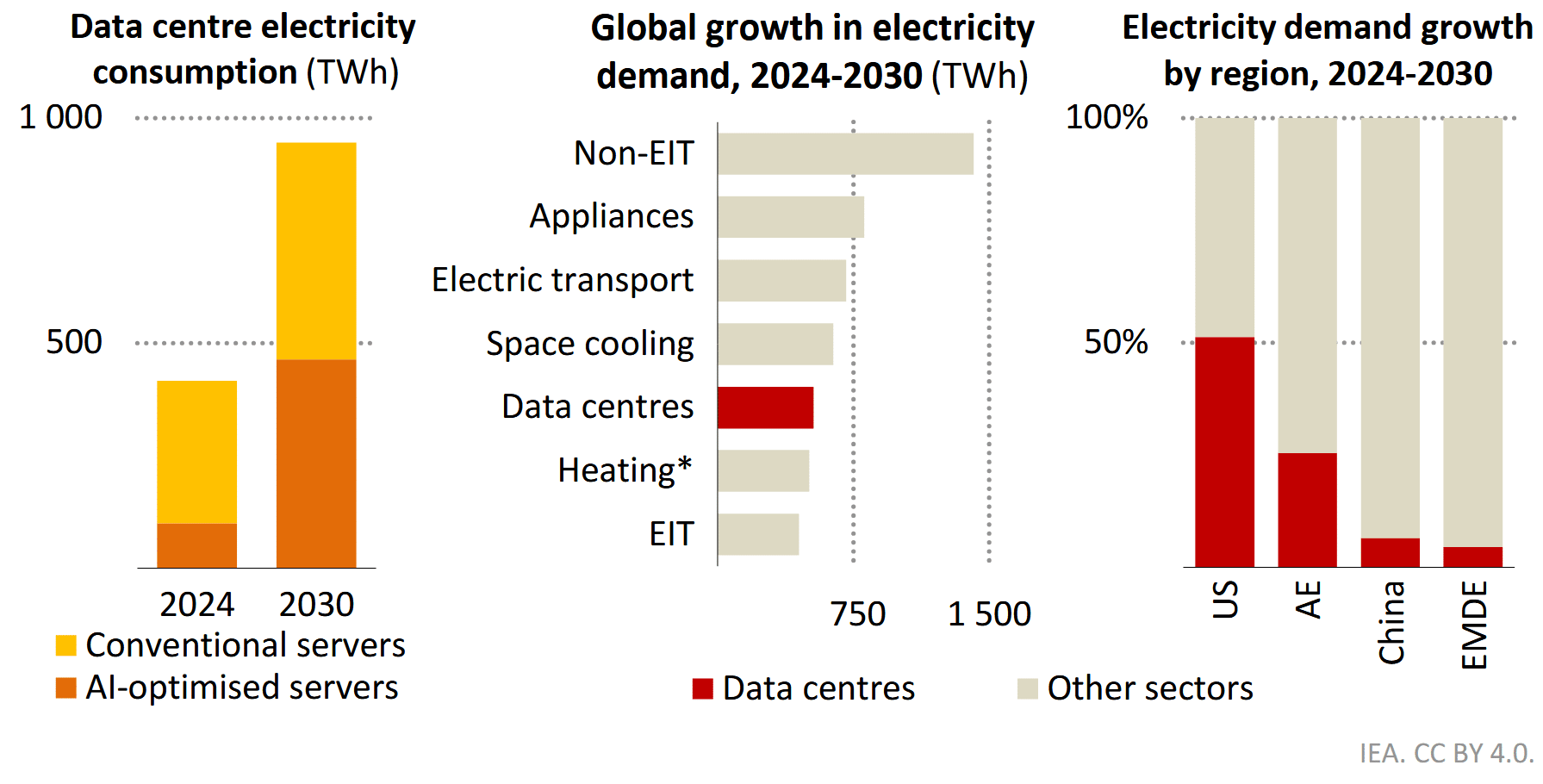
The surge in AI computing could create a major need for electricity that is both clean and available around the clock. The International Energy Agency says global data-center power use could more than double by 2030. In the United States, Lawrence Berkeley National Laboratory estimates consumption could rise from about 176 terawatt-hours in 2023 to 325–580 terawatt-hours by 2028, depending on AI growth and efficiency.
That makes nuclear attractive. Unlike wind and solar, nuclear plants can provide steady output regardless of weather, and their lifecycle emissions are generally comparable with those of other low-carbon technologies. For data centers that cannot easily tolerate interruptions, nuclear could help reduce the need to fall back on gas- or coal-fired power when renewable output is low, especially in areas where the grid is already strained. AI’s growing demand for reliable power is a real argument for firm, low-emissions generation 1.
Corporate money could also help revive a difficult industry. Long-term contracts from technology companies can give nuclear developers more predictable revenue, making it easier to raise financing and build supply chains. Microsoft’s deal to buy power linked to the planned restart of Three Mile Island Unit 1, and Google’s agreement to purchase electricity from a proposed fleet of Kairos reactors, show that major buyers see value in nuclear power 3.
There may be a more immediate opportunity in existing nuclear facilities. Restarting or extending the life of a plant could avoid some of the risks involved in building, licensing and connecting an entirely new station. The Three Mile Island arrangement is an example of a restart-and-purchase model, though it still depends on regulatory approval and successful project delivery 4.
The case against
The strongest objection is simple: new nuclear plants are expensive, slow and uncertain. Studies from MIT and the OECD identify high upfront costs, financing challenges, supply-chain limits, regulatory barriers and weak project performance as persistent obstacles. Such projects often require public support to spread the financial risk 6.
Timing is another serious concern. AI-related electricity demand is expected to rise sharply before 2030, while advanced reactors still face extensive licensing and demonstration steps. Google’s Kairos agreement signals confidence in the technology’s potential, but it also highlights that these reactors have not yet proved they can be deployed at commercial scale, on time and at an acceptable cost 5.
Other clean-power options may be easier to expand quickly. Wind and solar are generally estimated to cost less than new nuclear plants, although those comparisons do not capture every expense involved in storage, transmission or backup capacity. Research suggests data centers can also be served by combinations of clean generation, batteries, grid power and more flexible operations. Some AI workloads may be shifted in time or between locations, while cooling and electrical systems can help reduce pressure during peak demand periods 7.
A company-owned nuclear plant would not automatically solve wider grid problems. Local connections can take years, and a dedicated project could shift costs or emissions onto other customers if it does not add genuinely new clean power or fit into broader grid planning. Nuclear also brings long-term duties involving spent fuel, waste storage, safety, public acceptance and institutional responsibility 8 9.
The bottom line
Major technology companies have a strong case for supporting nuclear power, but not for routinely building new plants themselves. Nuclear can provide valuable round-the-clock, low-emissions electricity for AI data centers, particularly where reliable clean power is scarce.
But direct ownership of new reactors is not clearly the best response to fast-growing demand. Cost overruns, construction delays, licensing uncertainty and the possibility that alternative portfolios can expand faster all weaken the case. For many companies, long-term power contracts, investment in existing plants, or agreements to buy electricity from future reactors may be more practical than becoming a nuclear developer or operator.
The best choice will depend on local grid conditions, the location and growth of data centers, and how flexible AI workloads can become. The evidence strongly supports a mixed strategy—with renewables, storage, grid upgrades, efficiency and nuclear all playing roles—rather than a blanket push for every major technology company to build nuclear plants.
Pros — Supporting Arguments
Cons — Opposing Arguments
Figures & data
All contributions are reviewed for clarity, balance, and evidence. The strongest insights are elevated into the argument graph — with credit to you.
Help improve this analysis →