AI-powered content moderation by social media platforms effectively reduces harmful content online
What's this about?
People disagree about whether AI tools on social apps truly cut down harm on the whole web.
What supporters say
- AI can spot and hide some banned posts, so fewer people see them right away.
- AI can scan huge piles of posts much faster than human staff can.
- These tools work best when harmful posts show clear, repeated signs.
- AI can help human staff focus on hard cases that need careful thought.
What critics say
- High take-down rates do not prove that total harm has gone down.
- People who want to spread harm can change their words to fool AI checks.
- AI can miss the meaning of a post and wrongly remove safe speech.
- Different apps count harm in different ways, so their numbers do not match well.
How to read this
The number of points on each side does not show who is right; strong proof matters more.
The bottom line
AI can cut people’s contact with some harmful posts it finds. But we are not sure it cuts harm across the whole web.
The proof strongly supports better detection, not lower total harm.
AI-powered moderation can identify and remove some harmful material at a speed human reviewers cannot match. But the evidence does not show, with similar confidence, that these systems reduce harmful content across the internet as a whole.
The case for
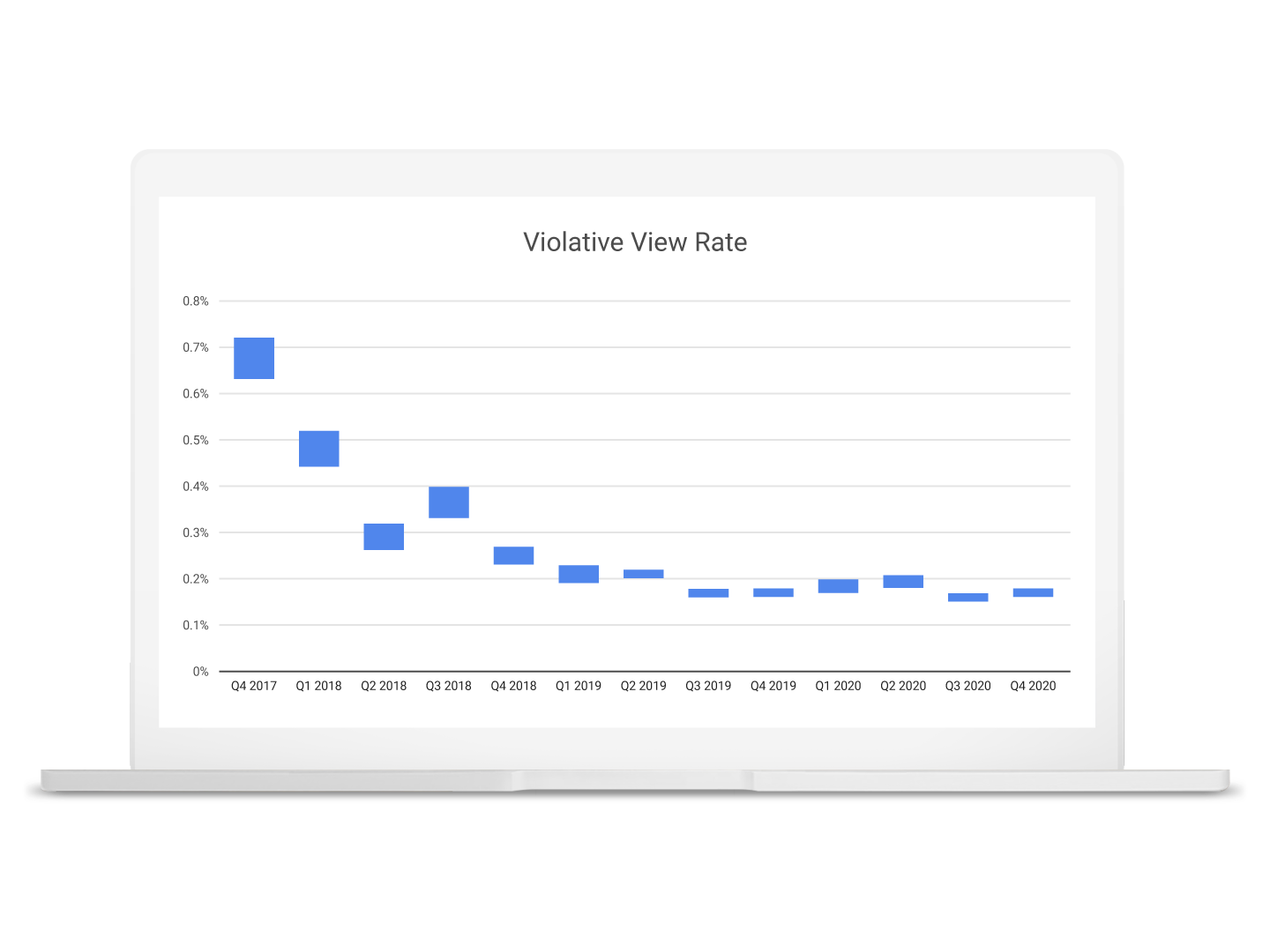
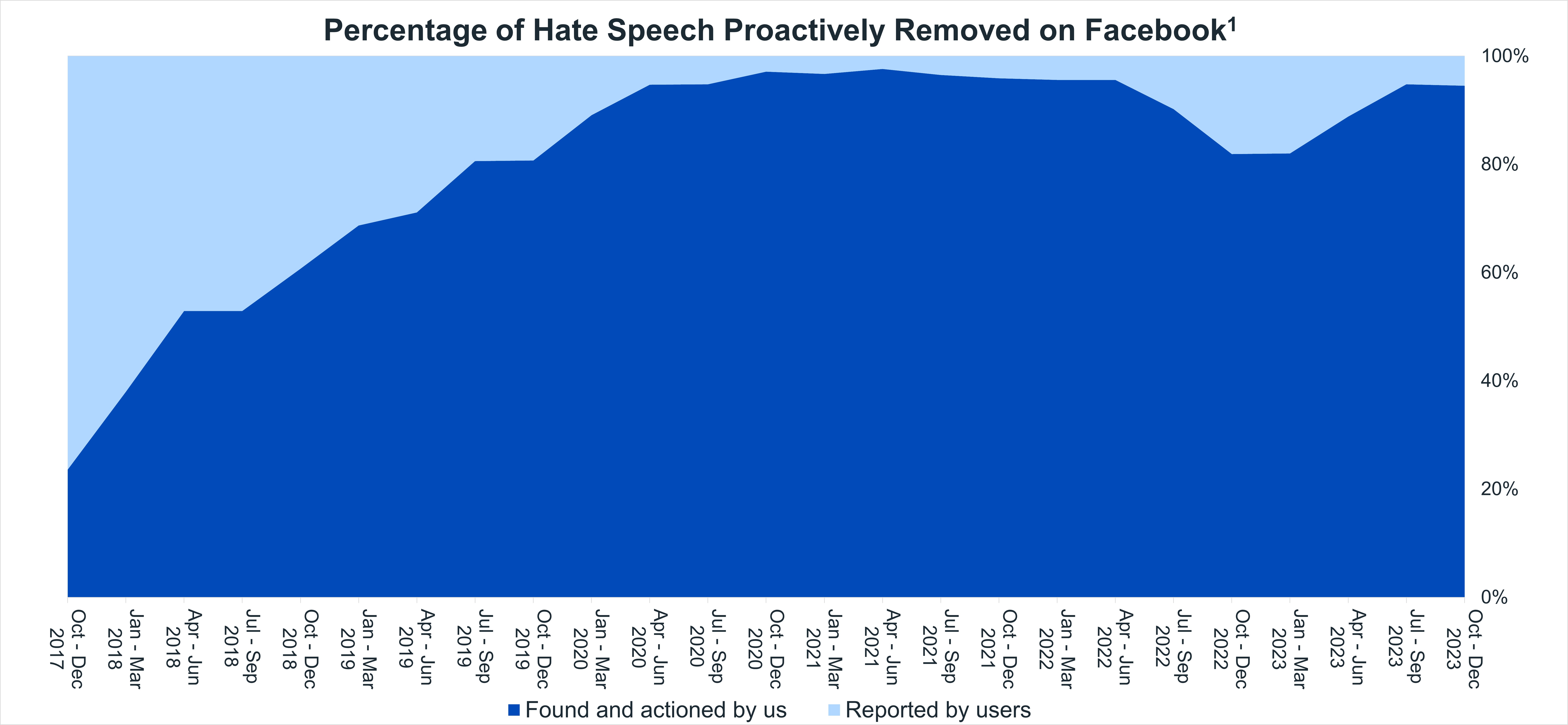
Automation gives platforms reach and speed that human review alone cannot provide. AI systems can scan enormous volumes of posts and identify recurring patterns in relatively well-defined categories such as some forms of hate speech. Research on classifiers and platform transparency reports show substantial proactive detection and enforcement before users report content. 1 (see Figure 3)
Removing or limiting the visibility of detected posts can also reduce people’s immediate exposure to some prohibited material. A systematic review found that moderation can make such content less visible in particular settings, while platform reports indicate that automated systems sometimes act before user complaints. 2 These findings support a narrower claim: AI can reduce exposure to some harmful material that it successfully detects.
The technology is therefore more convincing for content with clear, repeated signals than for harms that depend heavily on context. In high-volume environments, automated tools can help platforms focus human reviewers on difficult cases, rather than attempting to examine every post manually.
The case against
The strongest objection is that detection and removal figures do not prove that overall harm has fallen. The available research often measures how much content systems identify or take down, not how much harmful content would exist, or how much harm users would experience, without AI moderation. Reviews find mixed effects on participation, evasion, movement between platforms and broader harm. 3
The numbers are also difficult to compare. Platforms use different definitions and reporting practices, while exposure depends on recommendation systems, reshares, social networks and repeated attempts to repost harmful material. Company-reported figures may show that moderation systems are active, but they do not independently establish a cause-and-effect link between those actions and lower harm. The central question—what would have happened without AI moderation—remains largely unanswered.
Automated systems can also make contextual mistakes. Research and Oversight Board cases document wrongful or inconsistent removals involving quotations, satire, political speech, identity and other forms of context. Moderation experiences and removal patterns can differ across political, gender and racial groups, raising concerns about fairness as well as accuracy. 4 A system that removes some harmful posts but wrongly suppresses legitimate speech cannot be judged effective on detection alone.
Finally, harmful actors adapt. They can change spelling, use coded language, switch to memes or images, and adopt new slang to evade classifiers. 5 Performance also varies by language, dataset, category and enforcement threshold. A tool that performs well on historical benchmark data may work less reliably in changing, multilingual or multimodal environments.
These limits point toward a hybrid approach: automated systems for high-confidence or high-volume cases, combined with human review, appeals and independent audits. Oversight frameworks emphasize error-rate reporting, notice, protections for vulnerable groups and human involvement in sensitive decisions.
The bottom line
The evidence strongly supports the narrower conclusion that AI moderation can detect and reduce the visibility of some harmful material. It does not establish with comparable confidence that AI effectively reduces harmful content online in aggregate.
Overall, the evidence is balanced but leans against the broader claim. Confidence is high that these systems have substantial detection capability and that they can limit exposure in some cases. Confidence is lower in any claim of reduced overall harm because measurement is inconsistent, adversaries change tactics, fairness problems remain and the crucial comparison with a world without AI moderation has not been adequately made.
Pros — Supporting Arguments
Figures & data
All contributions are reviewed for clarity, balance, and evidence. The strongest insights are elevated into the argument graph — with credit to you.
Help improve this analysis →