Universal Basic Income (UBI) should be permanently implemented in regions where it has shown positive outcomes
What's this about?
People disagree about whether places should keep basic income, or UBI, after a test shows good results.
UBI gives people regular money without making them prove they need it.
What supporters say
- Cash payments can help families buy food, pay rent, and feel less stress.
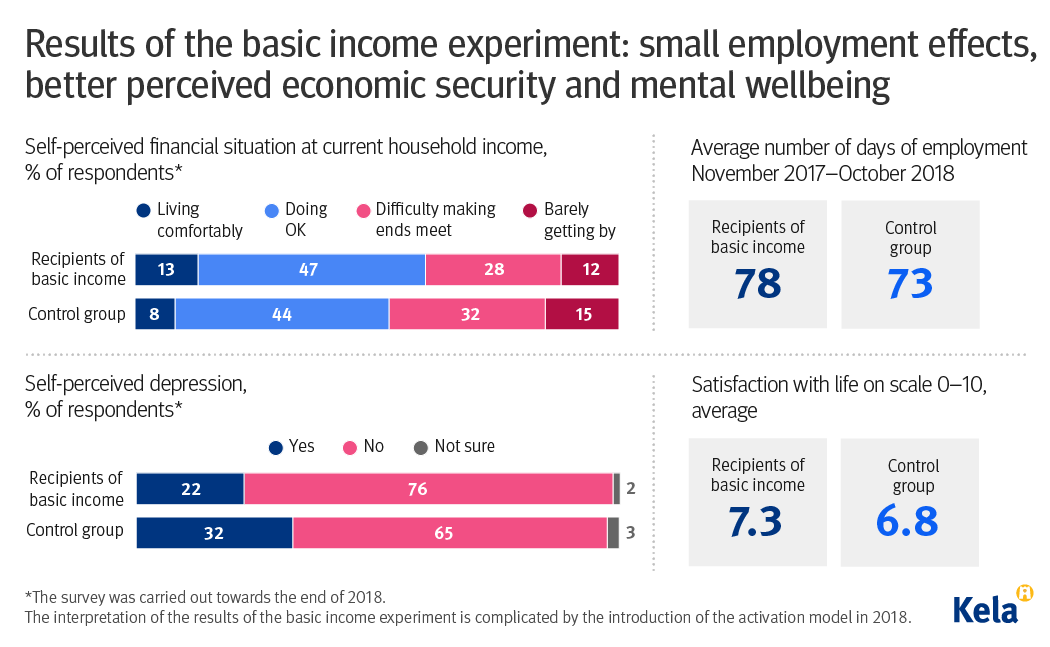
- In Finland, people with payments felt safer about money and had better mental health.
- Giving everyone help can cut forms, missed aid, and shame about asking for support.
- In Kenya, cash payments helped homes and gave nearby shops more customers.
What critics say
- Good results from a short test do not prove the plan will work well for many years.
- Leaders must show they can pay for UBI without cutting needed help for people at risk.
- A plan that gives money to all people may spend less on those with the greatest needs.
- Work results do not show that UBI always makes people stop working, but the full effect remains unclear.
The bottom line
Good UBI tests give strong reasons to keep or grow payments.
But places should not make UBI permanent just because one test went well.
Universal Basic Income should not become permanent automatically just because a local trial produced good results. But successful pilots can provide a strong reason to continue or expand payments—if governments can show the program is affordable, protects vulnerable people and works over the long term.
The case for
The strongest evidence for basic-income-style payments is that they can improve people’s day-to-day lives. Studies of cash-transfer programs have linked them to better financial security, less stress and improved wellbeing. Finland’s 2017–18 randomized experiment found that recipients felt more economically secure and reported better mental wellbeing, while employment effects were small. Reviews of US guaranteed-income pilots have also found improvements in hardship, housing stability, food security and wellbeing. Cash payments clearly can help people meet basic needs and feel more secure 1.
A universal system may also be easier for people to use than a patchwork of means-tested benefits. Because everyone is eligible, it can reduce paperwork, missed claims and the stigma sometimes attached to applying for assistance. It may also avoid mistakes in which people who qualify for help are wrongly left out. That means universality trades some precision for broader access and simpler administration 2.
There is evidence that the benefits may reach beyond the people receiving the money. Research in Kenya found that large cash transfers improved household welfare and resilience while also increasing local demand and economic activity. When recipients spend more in nearby shops and services, other residents and businesses can benefit as well. This suggests that a basic income can have wider community effects, not just private gains for recipients 3.
Employment evidence is mixed, but it does not show that universal payments inevitably cause a broad withdrawal from work. Alaska’s long-running, resource-funded universal dividend was linked to no significant fall in overall employment, although part-time work increased. That experience shows a permanent universal payment can coexist with stable aggregate employment, at least in one particular setting (see Figure 2).
The case against
The central problem is that a successful pilot does not prove a full, permanent UBI can be paid for fairly. Trials are often temporary, limited to certain groups or financed outside the normal tax-and-benefit system. A region moving to a meaningful permanent payment may need higher taxes, cuts to existing benefits, or both. The impact depends on the entire package, not on the payment alone (see Figure 1) 4.
That matters especially for lower-income households. If governments fund UBI by withdrawing targeted benefits or raising taxes, some people with low incomes could end up with less disposable income than before. Under tight budgets, targeted programs generally reduce poverty more for each dollar spent. Universal payments may bring higher take-up and less stigma, but they also send money to people who may not need it 6.
The evidence on work is also too mixed to offer a firm assurance. A recent US randomized study found lower employment and fewer hours worked over its first two years. Finland recorded only small employment effects, while Alaska found no significant overall employment decline. These programs differed greatly: the US intervention was targeted and temporary, Finland’s involved unemployed participants, and Alaska’s payment was a modest resource dividend. None settles what would happen under a permanent, poverty-level UBI funded across an entire region 5.
The biggest unanswered question is whether the gains seen in pilots survive when a program becomes permanent, broader and fully financed. There is no long-term study of a region-wide UBI at a meaningful level that simultaneously tracks taxes, benefit changes, employment, prices, inequality and the wider economy. Existing research often has short follow-up periods, small samples or non-universal eligibility. Ontario’s cancelled pilot is a reminder that incomplete follow-up can leave major long-term questions unresolved.
The bottom line
Positive UBI results are a reason to consider expansion, not a blank cheque for permanent adoption. The evidence is strong that cash transfers can improve financial security and wellbeing, and that the way a program is financed is crucial. But it remains uncertain whether those gains will persist—and who will gain or lose—once payments are universal, permanent and paid for through a region’s tax and benefit system.
A region could reasonably pursue a modest universal dividend, a guaranteed-income plan or a hybrid that keeps targeted support. But a defensible permanent policy would need clear financing, safeguards for people relying on existing benefits, multi-year monitoring and a built-in process to revise the scheme if outcomes worsen.
Figures & data
All contributions are reviewed for clarity, balance, and evidence. The strongest insights are elevated into the argument graph — with credit to you.
Help improve this analysis →