State-level divergence in legislation on social issues undermines the uniformity of civil rights across the United States
What's this about?
People disagree about whether state laws make civil rights less equal across the United States. Federal law gives some rights everywhere, but state rules can change daily life greatly.
What supporters say
- After the Dobbs court ruling, abortion access now changes a lot from one state to another.
- Some people can travel for care, but money, jobs, and transport stop many others.
- LGBTQ people get different help with jobs, homes, health care, and family rules in different states.
- Pregnant people can face very different legal trouble for drug use, based on state laws.
What critics say
- Federal law still gives people some key rights no matter which state they live in.
- States can make different rules because they serve people with different local views.
- A person may still find care or help by traveling to another state.
- Not every state difference means a person loses all legal rights.
The bottom line
The evidence shows that state law gaps make civil rights less equal in real life. Where someone lives can shape their access to care, safety, and legal help.
Across the United States, rights tied to social policy can depend heavily on where a person lives. Federal law still sets important nationwide protections, but the evidence indicates that state differences have made civil rights less uniform in practice in several major areas.
The case for
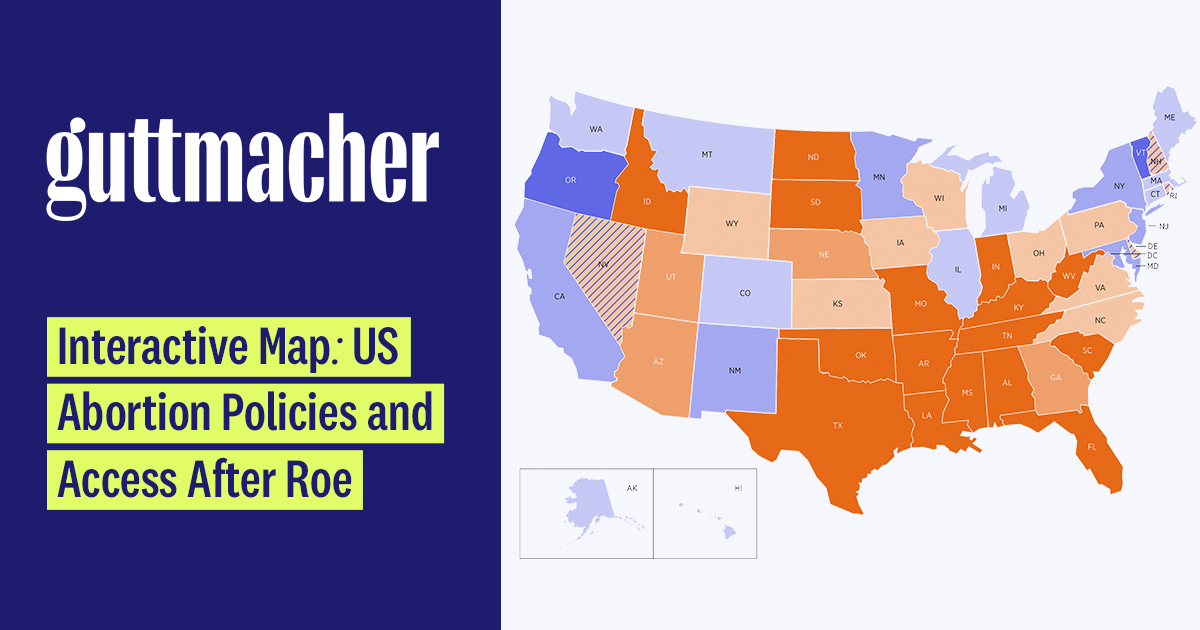
The clearest example is abortion policy after the Supreme Court’s *Dobbs* decision. Access to abortion now varies sharply from state to state, meaning that a person’s options can depend on their ability to travel, pay for care elsewhere, take time off work, and navigate possible legal risks (see Figure 1). Research identifies state law and a person’s capacity to travel as central factors in whether reproductive care is actually available. 2
This is not simply a question of different local rules. When one state bans or tightly restricts a service that another protects, people face unequal practical burdens based on geography. Those with money, transportation and flexible jobs may be able to cross state lines; others may not. That creates what amounts to a different level of rights in daily life, even when some legal protections remain available elsewhere. 5
LGBTQ protections offer another major example. States differ on protections involving employment, housing, public accommodations, family law, health care, young people, and identity documents (see Figure 2). In some places, legal protections overlap or conflict; in others, they may be missing. As a result, the basic protections a person can rely on may depend on their state of residence. 1
State laws can also create sharply different legal risks for similar conduct. Policies on prenatal substance use range from punitive approaches, which can involve investigation or sanctions, to more supportive and nonpunitive ones. Reviews of these policies find substantial variation across states, meaning that pregnant people can face very different levels of legal exposure depending on where they live. 3
These differences may not disappear quickly. Research on state politics points to increasingly separate policy paths and greater polarization, making it plausible that states will continue moving in different directions rather than converging on common standards (see Figure 3). 4 States can use this system to expand protections beyond a federal minimum, but that same structure leaves people elsewhere with fewer safeguards.
The case against
The United States does not leave civil rights entirely to the states. The Constitution and valid federal laws can establish a national floor that states may not violate. The Supreme Court’s decision in *Obergefell*, for example, required every state to license and recognize same-sex marriages. Under the Supremacy Clause, federal law can override conflicting state rules, although that depends on the law Congress passed and how courts interpret it. 6
Federal enforcement can also step in when state or local institutions violate constitutional rights. The Justice Department can investigate patterns of unconstitutional conduct and seek court-ordered remedies. This provides an important check on state abuses and can reduce disparities where violations are proven. 7
There is also a broader argument for federalism itself. Allowing states to set some policies can encourage experimentation, make government more responsive to local conditions, and support cooperation between state and federal authorities. Such coordination can sometimes soften uneven implementation, even though federalism also carries risks of unequal treatment and weaker accountability. 8
Still, these safeguards do not guarantee identical laws or identical real-world access in every state. Federal remedies are selective, case-specific and dependent on resources. A formal nationwide right can therefore coexist with uneven enforcement, administration and practical access.
The bottom line
The evidence strongly supports the claim that state-level divergence undermines the practical uniformity of civil rights in important social-policy areas. Reproductive rights, LGBTQ protections and policies on prenatal substance use all show documented differences in legal protection, access and exposure to punishment across state lines.
Federal constitutional rights, federal statutes, court rulings and Justice Department enforcement preserve an important national baseline. But they are incomplete safeguards: they do not always produce the same protections, enforcement or lived experience everywhere. The main uncertainty is not whether significant state differences exist, but how far the pattern extends across the full range of civil rights and how reliably federal action closes the gap.
Figures & data


All contributions are reviewed for clarity, balance, and evidence. The strongest insights are elevated into the argument graph — with credit to you.
Help improve this analysis →