Renewable energy surpassing fossil fuels in U.S. electricity generation is beneficial for the nation's future
What's this about?
People disagree about whether renewable (sun and wind) power should make more U.S. power than fossil fuels. This change could help the future, if leaders plan it well.
What supporters say
- Wind and solar make much less heat-trapping gas than coal and gas over their full lives.
- Clean power helps most when it replaces coal or gas plants, rather than other clean power.
- Closing dirty plants can improve air near towns that have faced power-plant smoke for years.
- Wind and sunlight come from the United States, so fuel price jumps matter less.
What critics say
- Wind and solar only help fully if the power system works when the sun does not shine.
- New power lines, batteries, and other tools may cost money and raise total system costs.
- Cheap new wind or solar sites do not always mean lower power bills for every family.
- Fossil fuel workers and towns could lose jobs, and we do not know if new jobs will reach them.
The bottom line
The facts suggest that more renewable power would likely help the United States by cutting climate harm and dirty air. Leaders must also keep power steady, low-cost, and fair for workers and towns.
Renewable energy is on track to play a larger role in America’s power supply than fossil fuels. The evidence suggests this would likely benefit the country’s future—but only if the shift is managed to keep electricity reliable, affordable and fair.
The case for
The clearest advantage is climate change. Wind and solar power produce far less greenhouse-gas pollution over their lifetimes than coal and natural gas. Their biggest benefit comes when they replace electricity from fossil-fuel plants, rather than simply meeting new demand or displacing already low-carbon power. A renewable-majority grid could therefore make a substantial cut in power-sector emissions 1.
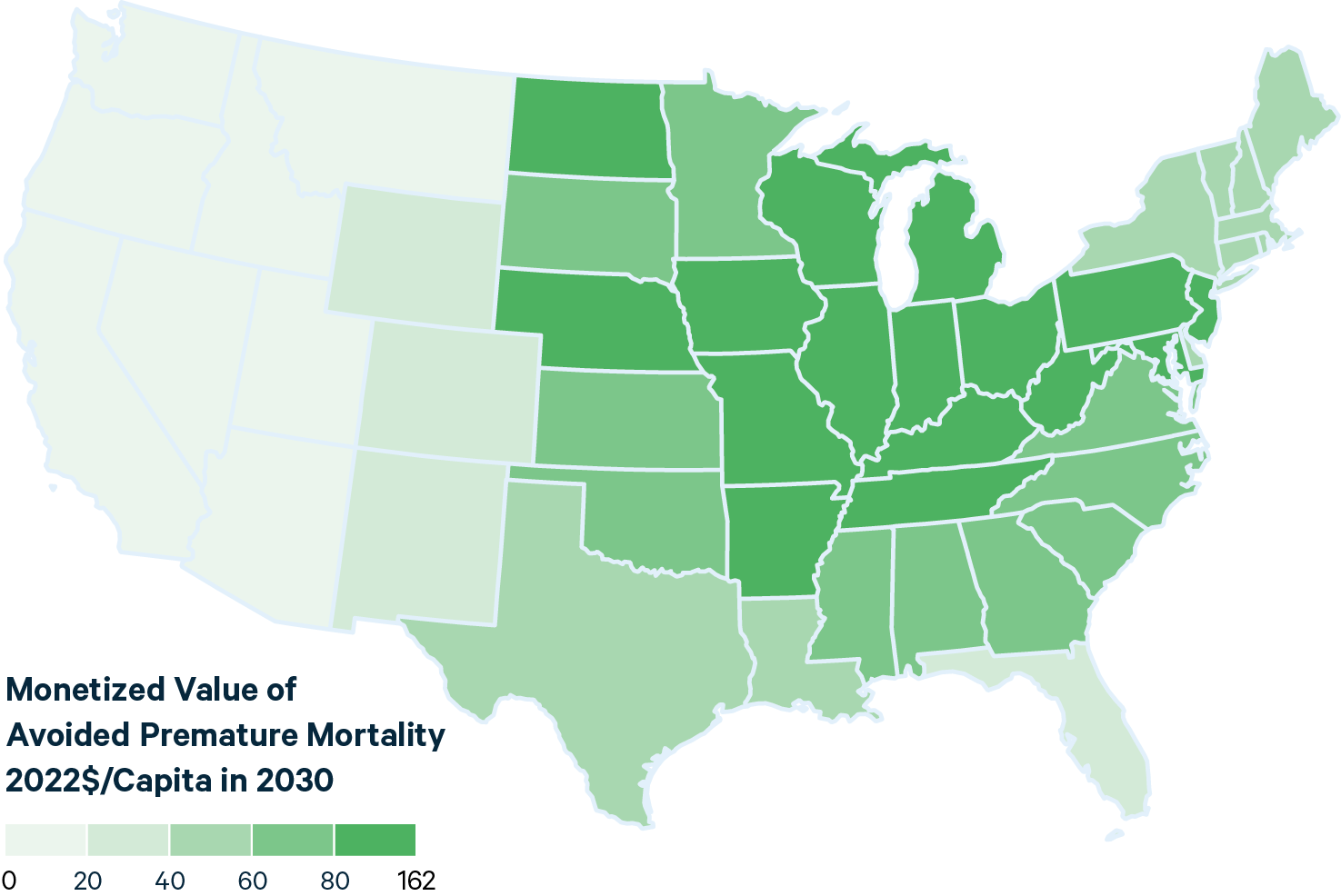
There is also a direct public-health case. Coal and gas plants release not only climate-warming gases but also pollutants that harm human health. Wind and solar do not burn fuel while operating, so replacing highly polluting plants can reduce local air pollution. The gains are likely to be greatest in communities that have long faced heavy exposure from nearby power plants (see Figure 3) 2.
Economically, utility-scale wind and solar are often among the cheapest options for building new power plants. They draw on domestic resources—sunlight and wind—rather than fuels whose prices can swing sharply. That could strengthen U.S. energy security, though low prices for individual projects do not automatically mean the entire electricity system will be cheaper 3.
A large clean-energy buildout could also support jobs in power generation, energy efficiency, battery storage and grid construction. But the available evidence measures gross job creation, not whether the country gains jobs overall or whether the benefits are shared evenly. Some workers and regions dependent on fossil fuels could face serious losses.
High levels of renewable power are not inherently impossible. National Renewable Energy Laboratory scenarios find they can be achieved with a mix of wider transmission networks, energy storage, flexible electricity use, geographically diverse projects and other power sources that can run when needed (see Figure 2) 5. Those studies do not guarantee a particular outcome, but they show that a renewable-heavy system is technically within reach.
The case against
The largest concern is reliability. More renewable capacity alone does not ensure that the lights stay on during extreme weather, rapid growth in electricity demand, transmission bottlenecks or the retirement of power plants that can run on command. Reliable clean power requires supporting investments: transmission lines, storage, flexible demand, dependable backup capacity and systems that can safely integrate inverter-based wind and solar power 6.
Costs are another unresolved question. Comparisons between the price of building a new solar or wind farm and a new fossil plant can leave out major system expenses. A grid with very high renewable shares may also need spending on transmission, storage, backup power, financing, curtailment and other reliability services 7. As a result, cheap renewable projects alone cannot prove that every region will have lower total electricity costs.
The clean-energy shift could replace some old energy-security concerns with new ones. Minerals, processing facilities and manufacturing for renewable technologies are concentrated in a limited number of places. That creates risks of supply disruptions, foreign dependence and environmental or labor abuses in mining. Still, the evidence does not show that renewables are necessarily less secure overall than fossil-fuel systems 8.
Renewable infrastructure also has local environmental costs. New projects can transform land, affect wildlife, require transmission corridors and drive mineral extraction and manufacturing. Lower climate emissions do not make renewable expansion environmentally harmless; the effects depend on the technology, location and scale of development 9.
Transmission illustrates the wider challenge. It can connect the best renewable resources, reduce wasted power and make the grid more resilient. Yet new lines can be expensive, slow to permit and strongly opposed by affected communities. National gains could also come with concentrated burdens for utility customers, fossil-fuel communities and places hosting mines, power plants or transmission routes.
The bottom line
On balance, the evidence supports a qualified but high-confidence conclusion: renewable generation surpassing fossil fuels in U.S. electricity production is likely beneficial for the nation’s future. The main reasons are lower climate pollution and less harmful air pollution from fuel combustion 12.
But the milestone itself is not enough. Its value depends on whether renewable power actually replaces fossil generation, and whether the country builds the transmission, storage, flexible demand and reliable backup needed to operate the grid well. It also depends on controlling system costs, addressing supply-chain risks and ensuring that workers and communities do not bear an unfair share of the transition’s costs.
Pros — Supporting Arguments
Figures & data


All contributions are reviewed for clarity, balance, and evidence. The strongest insights are elevated into the argument graph — with credit to you.
Help improve this analysis →