Local AI models running on consumer GPUs can achieve quality comparable to cloud-based models
What's this about?
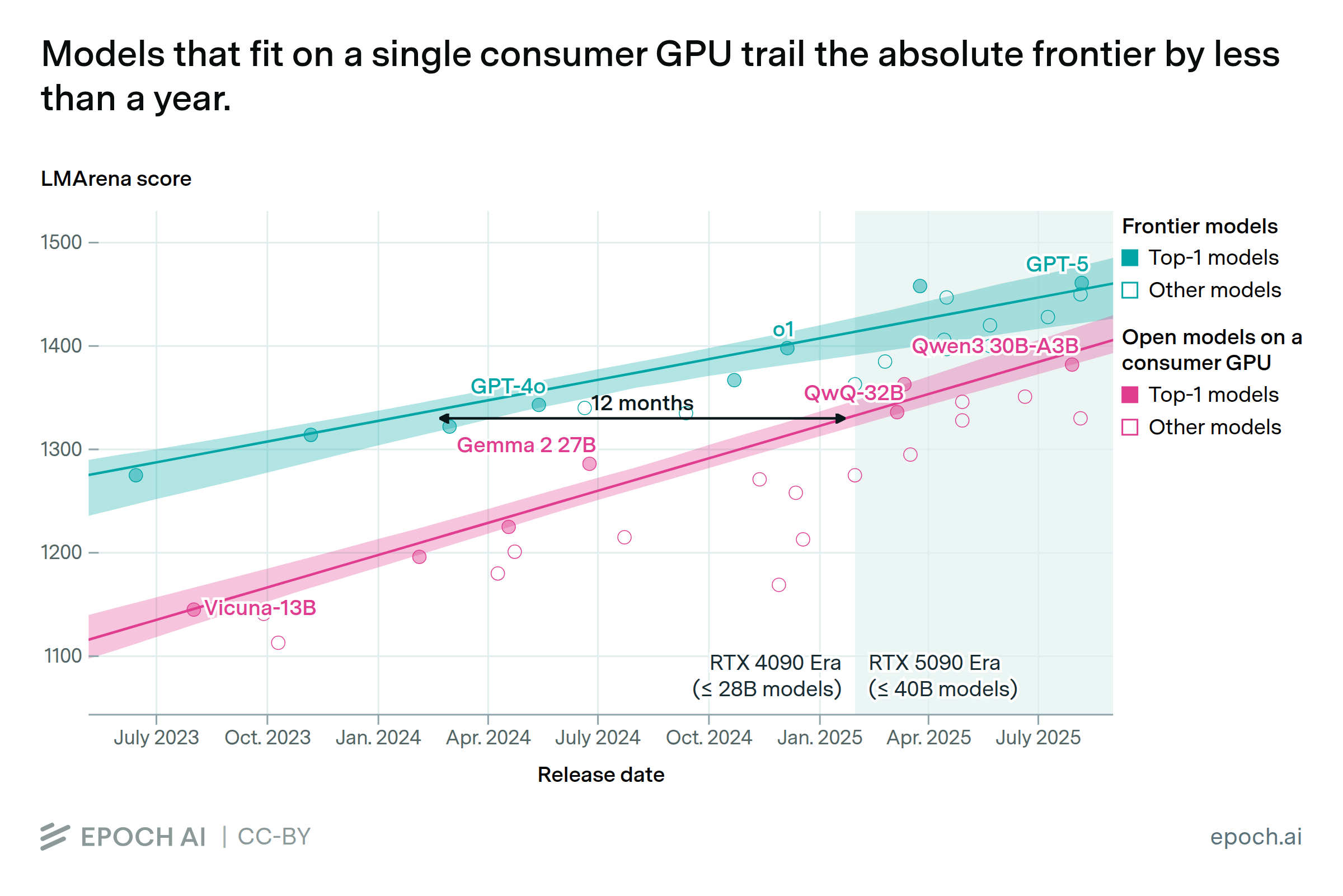
People disagree about whether AI that runs on a home computer can match strong AI tools online. Local AI works well for some jobs, but it does not match the best cloud AI in every way.
What supporters say
- Small local AI models can write, shorten text, code, and answer clear questions well.
- Some newer open models match or beat older, larger AI models on some tests.
- People sometimes pick local AI answers over answers from paid online AI tools.
- Local AI can keep private data on your own computer and work without the internet.
What critics say
- Local AI only seems close to cloud AI for simple, clear, and repeat jobs.
- The best open AI models may not fit on one normal home graphics card.
- User votes show which answers people like, not which answers are always right.
- Buying hardware, fixing it, and updating it can cost enough to remove savings.
The bottom line
Local AI can feel much like cloud AI for some daily tasks, especially when privacy matters. But it does not yet match the strongest cloud AI across all hard tasks.
Local AI models that run on a home computer can now handle many everyday tasks well. But the evidence suggests they are comparable to cloud models only in specific, limited settings—not across the full range of demanding work handled by the strongest online systems.
The case for
Smaller open-weight models have become capable enough for many common writing, summarising, coding and question-answering tasks. Mistral 7B, for example, reported results matching or beating some earlier, larger models, including Llama 2 13B. Meta’s Llama 3 results also show that useful knowledge, coding and instruction-following abilities are no longer confined to the biggest systems. That makes local use realistic on consumer hardware, especially when models are compressed to use less memory. For routine, well-defined work, a local model can sometimes feel close to a cloud service. 1
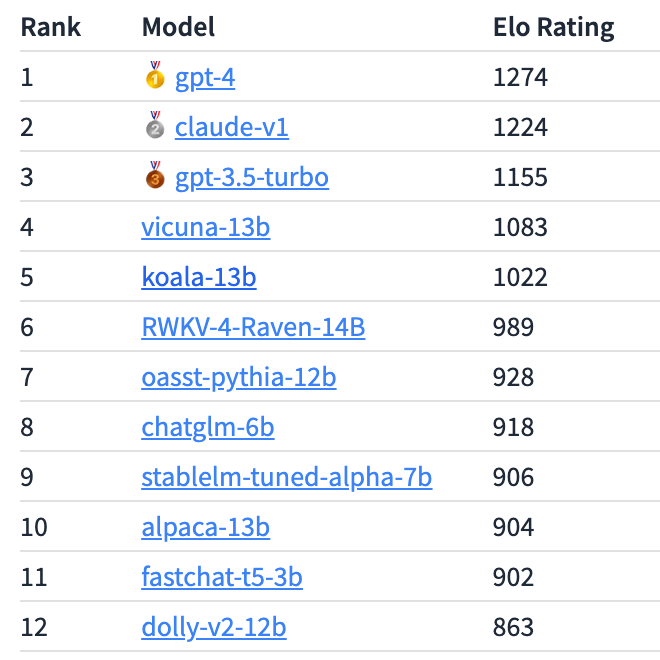
Some evidence from users backs that up. Chatbot Arena, which asks people to compare anonymous model responses, has found that open-weight models can compete with proprietary systems in conversational quality (see Figure 2). These ratings do not prove that models are equally accurate or reliable, and the best-performing open models may not fit on a typical single graphics card. Still, they show that people sometimes prefer responses from open models over those from commercial rivals. 2
Local deployment can also improve the practical value of a model even when it is not the most powerful available. Running a model on a personal computer or company server can keep sensitive data under the user’s control, avoid dependence on an internet connection and reduce delays. For stable, private workloads, those advantages may outweigh a gap in raw model capability. Local systems can also be economical in some cases, though hardware, maintenance, updates and low utilization can erase those savings. 3
The case against
The strongest evidence against the broad claim is that consumer-GPU models usually remain behind frontier cloud systems on hard tasks. Smaller models have recurring weaknesses in complex reasoning, unfamiliar problems, broad factual knowledge and long-context work. Training and prompting can improve their results, but they do not remove those limitations. Meta’s own results draw a clear distinction between Llama 3’s 8B and 70B versions: the smaller model is substantially more limited, while the larger one is far less practical on a single consumer GPU. 4
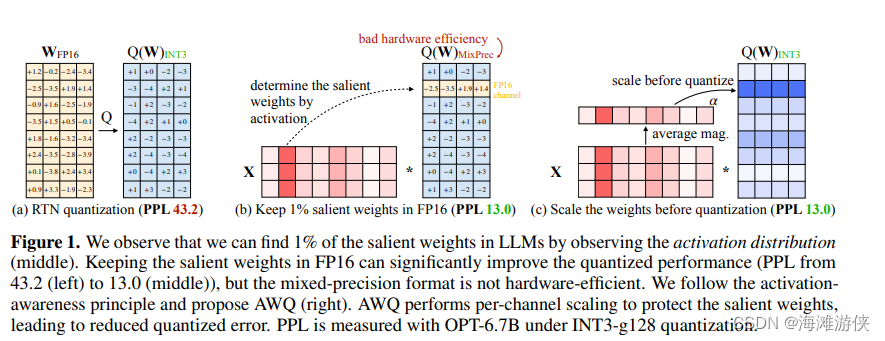
Compression is another trade-off. Quantization—reducing the precision of a model so it fits into less memory—is often essential for local use. But research finds that low-bit quantization can hurt performance unevenly, with mathematical reasoning especially vulnerable (see Figure 3). A 4-bit version of Llama 3 8B illustrates how local deployment can work, but its own documentation notes that compression and hardware limits can affect output quality, speed and context length. 5
Benchmark scores and preference rankings should also be treated cautiously. A model that performs well on selected tests may still struggle with factual accuracy, specialized work, reliability or genuinely new tasks. Chatbot Arena’s prompts come from users and are unevenly distributed, while preference votes do not directly measure truthfulness. Research reviews have also found that benchmark contamination can make reported scores look stronger than a model’s ability on novel problems. 6
The bottom line
The claim is true in a qualified sense. Local models on consumer GPUs can match some cloud-based models for bounded, ordinary workloads, particularly where privacy, predictable tasks and low latency matter. But they do not reliably equal the best proprietary cloud systems across broad, difficult or fast-changing workloads.
The right comparison depends on the specific task, the cloud model being used as a baseline, and the available hardware. Broad claims based on a leaderboard are not enough: users should test matched prompts, model versions, context lengths and real operating conditions. The evidence for this narrower conclusion is strong, though the precise boundary keeps moving as both local and cloud models improve.
Figures & data
All contributions are reviewed for clarity, balance, and evidence. The strongest insights are elevated into the argument graph — with credit to you.
Help improve this analysis →