AI-driven software development enhances productivity and innovation in tech companies
What's this about?
People disagree about whether AI-led software work greatly raises productivity (how much work gets done) and innovation (new useful ideas) in tech firms.
What supporters say
- AI coding tools can help coders finish clear, limited tasks much faster.
- These tools may help with dull code, tests, and parts of a code base that feel new.
- Teams may try more ideas when AI helps them build quick test versions.
- Newer coders may gain more help, if their teams check the AI's work closely.
What critics say
- Writing code faster does not always mean teams finish whole software projects faster.
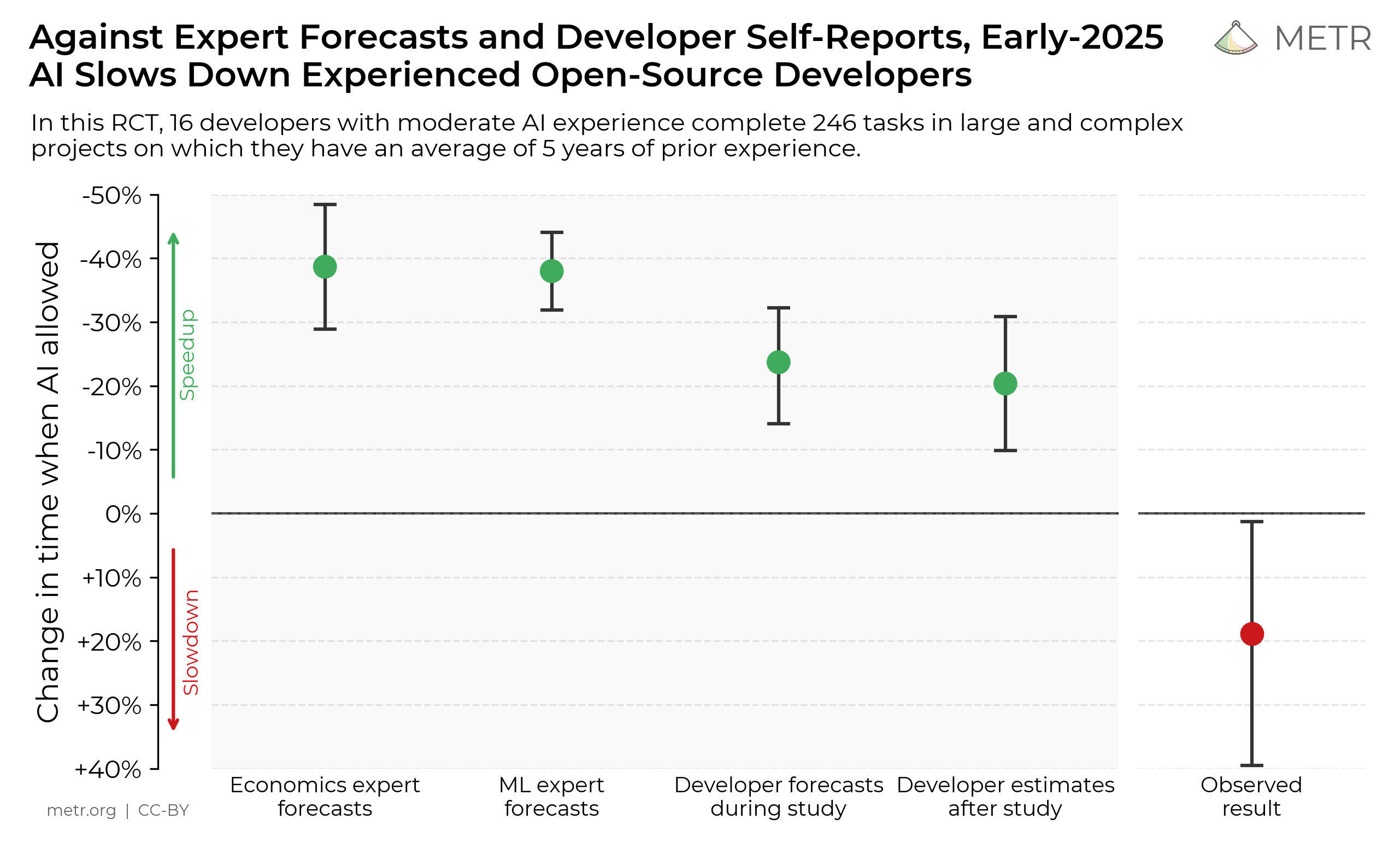
- A METR test found skilled open-source coders took longer with early-2025 AI tools.
- Those coders knew their code bases well, yet they still thought AI would help.
- Teams must check AI work closely, because wrong code can erase time gains.
The bottom line
AI can speed up some clear coding jobs, mainly routine work. But we do not yet know if it boosts both work output and new ideas across all tech firms.
AI-driven software development can make some programming work faster, especially routine tasks. But the evidence does not yet show that it reliably boosts both productivity and innovation across tech companies as a whole.
The case for
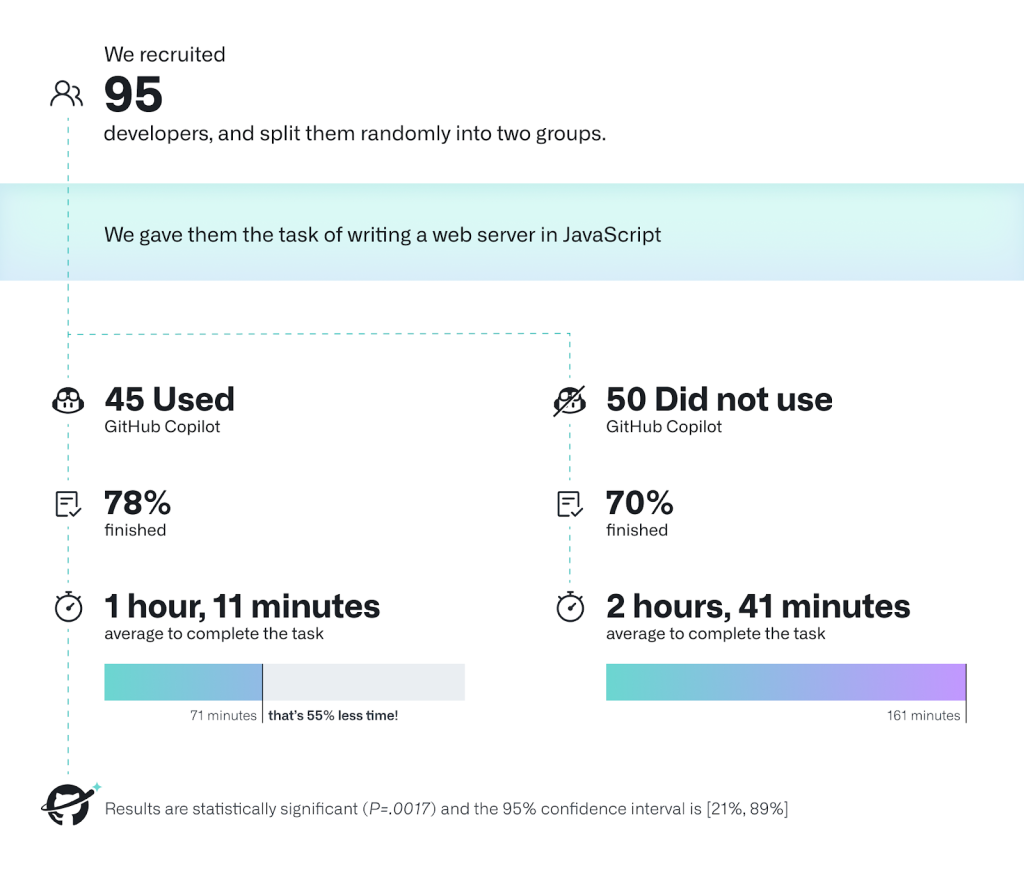
The clearest evidence for AI coding tools is at the task level. In a randomized experiment involving GitHub Copilot, developers using the assistant finished a selected programming task substantially faster than those without it (see Figure 2). That supports the view that AI can speed up bounded, well-defined coding work. 1
Workplace studies have also found that developers use AI tools more and, in some settings, complete more work. The effects vary by worker and workplace, but the pattern suggests that AI can help with routine implementation, boilerplate code, tests and unfamiliar software interfaces.
AI may also make experimentation cheaper. If teams can build prototypes, test alternatives and automate repetitive work more quickly, they may be able to try more ideas than before. Research on development workflows suggests AI shifts more attention toward setting specifications, reviewing output, testing and coordinating work. That does not prove more successful products will result, but it offers a plausible route by which AI could support innovation. 2
Less-experienced developers may see especially large gains. Field evidence indicates that lower-performing or newer workers can benefit more from AI assistance, potentially reducing knowledge barriers and helping people get up to speed. That benefit depends on teams catching inaccurate AI-generated output through careful review. 3
The case against
Faster code generation does not always mean faster software development. A randomized study by METR found that experienced open-source developers working in repositories they already knew well took longer when using early-2025 AI tools than when working without them, even though they expected the tools to help (see Figure 1). The finding suggests that checking AI output, switching context and correcting mistakes can outweigh any time saved writing code. 4
That result has limits: it involved a particular group of developers, selected tasks and tools that are changing quickly. Still, it is an important warning that AI’s effects differ sharply by task and context. It appears most useful for routine, clearly specified or unfamiliar work, and less predictably useful when developers need deep knowledge of a complex codebase.
The broader cost may also arrive later. Studies have identified security weaknesses in Copilot-generated code when developers accept it without close review. Other research points to possible problems with maintainability, architecture, integration and governance. A team may write code faster initially but pay for it later in testing, reviews, maintenance and repairs. 5
More activity is also not the same as more innovation. Much of the research measures task completion time, developer activity, code output or developer sentiment. It rarely measures whether companies create better products, find successful markets, gain lasting advantages or improve delivery over time. Lower-cost experimentation could lead to innovation, but it is not proof that it does. 6
Some prominent positive findings require extra caution because they involve vendor-made tools or vendor-affiliated research, often using limited tasks. Such studies are still useful evidence that AI can help in certain situations. But they are not enough to establish broad, company-wide gains without more independent workplace research. 7
The bottom line
The evidence supports a balanced but firm conclusion: AI-driven development can significantly improve productivity in some settings, particularly for routine and well-specified tasks. Yet it has not been shown to reliably improve productivity and innovation across tech companies.
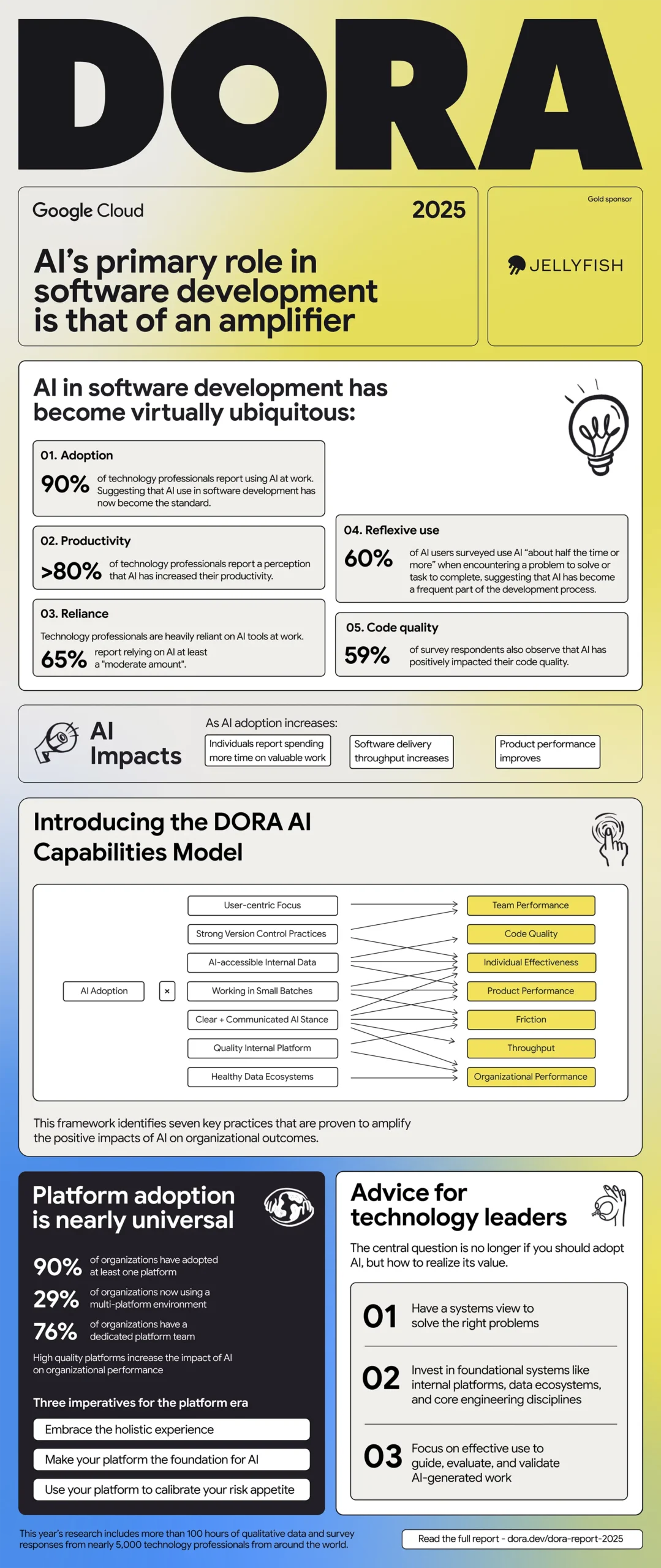
The main uncertainty is what happens after the first draft of code is produced. Individual developers may work faster while organizations still struggle with code quality, security, review workloads, maintenance, delivery stability and architectural coordination. Organization-level evidence similarly warns that individual gains can coexist with wider problems in throughput and delivery systems (see Figure 3).
AI’s innovation potential is real, mainly because it may let teams experiment more cheaply and quickly. But the available evidence does not show that those experiments consistently become high-quality products or durable competitive advantages. Longer-term, firm-level research is needed before task-level speedups can be treated as proof of lasting company-wide productivity or innovation gains.
Figures & data
All contributions are reviewed for clarity, balance, and evidence. The strongest insights are elevated into the argument graph — with credit to you.
Help improve this analysis →