Climate migration will be the defining crisis of the 2030s
What's this about?
People disagree about whether climate migration will be the main crisis of the 2030s. Climate migration means people move because climate harm makes home unsafe or hard to live in.
What supporters say
- Floods, storms, droughts, and other events already force many people from their homes each year.
- Climate harm can mix with poverty, weak public help, and war, making it harder to stay home.
- Most people who flee disasters move within their own country, not across a border.
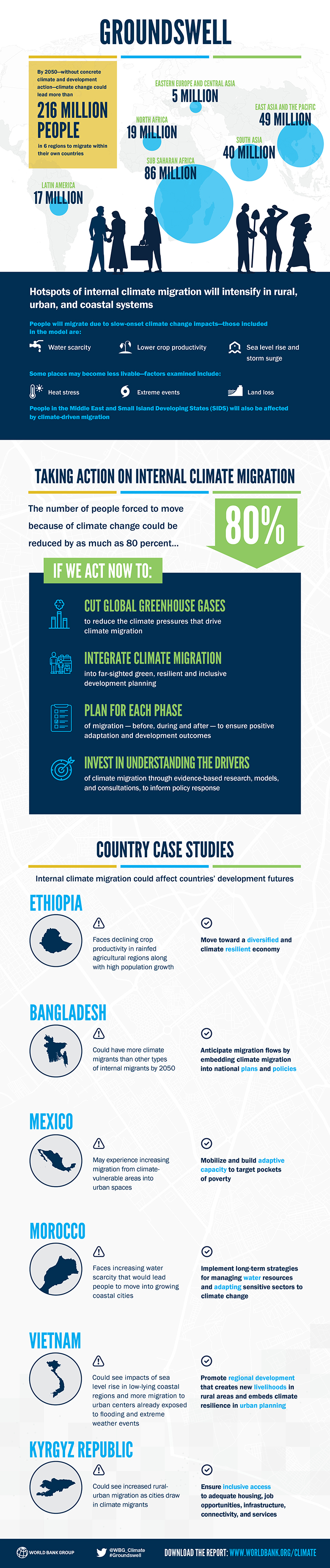
- One World Bank study says up to 216 million people may move within six world regions by 2050.
What critics say
- Climate change does not cause all moves, since jobs, war, family needs, and poverty also matter.
- Move counts can include the same person more than once after several disasters.
- These counts cannot show exactly how much movement human-caused climate change creates.
- Wars, disease outbreaks, and money crashes could cause bigger problems during the 2030s.
The bottom line
Climate migration will likely become a major challenge in the 2030s. But we cannot say it will be the decade’s single main crisis.
Climate migration is likely to become a major humanitarian and political challenge in the 2030s. But the evidence does not show that it will surpass wars, pandemics, economic shocks and other threats to become the decade’s single “defining” crisis.
The case for
Climate-related displacement is already putting serious pressure on vulnerable communities and aid systems. Floods, storms, droughts and other hazards force large numbers of people from their homes each year, often in places already affected by poverty, weak government services or conflict. The IPCC and UNHCR say climate hazards are increasingly interacting with fragility and violence, making it harder for people to remain safely in their communities. Climate change is not the only cause of migration, but it is becoming an important force that worsens existing risks 1.
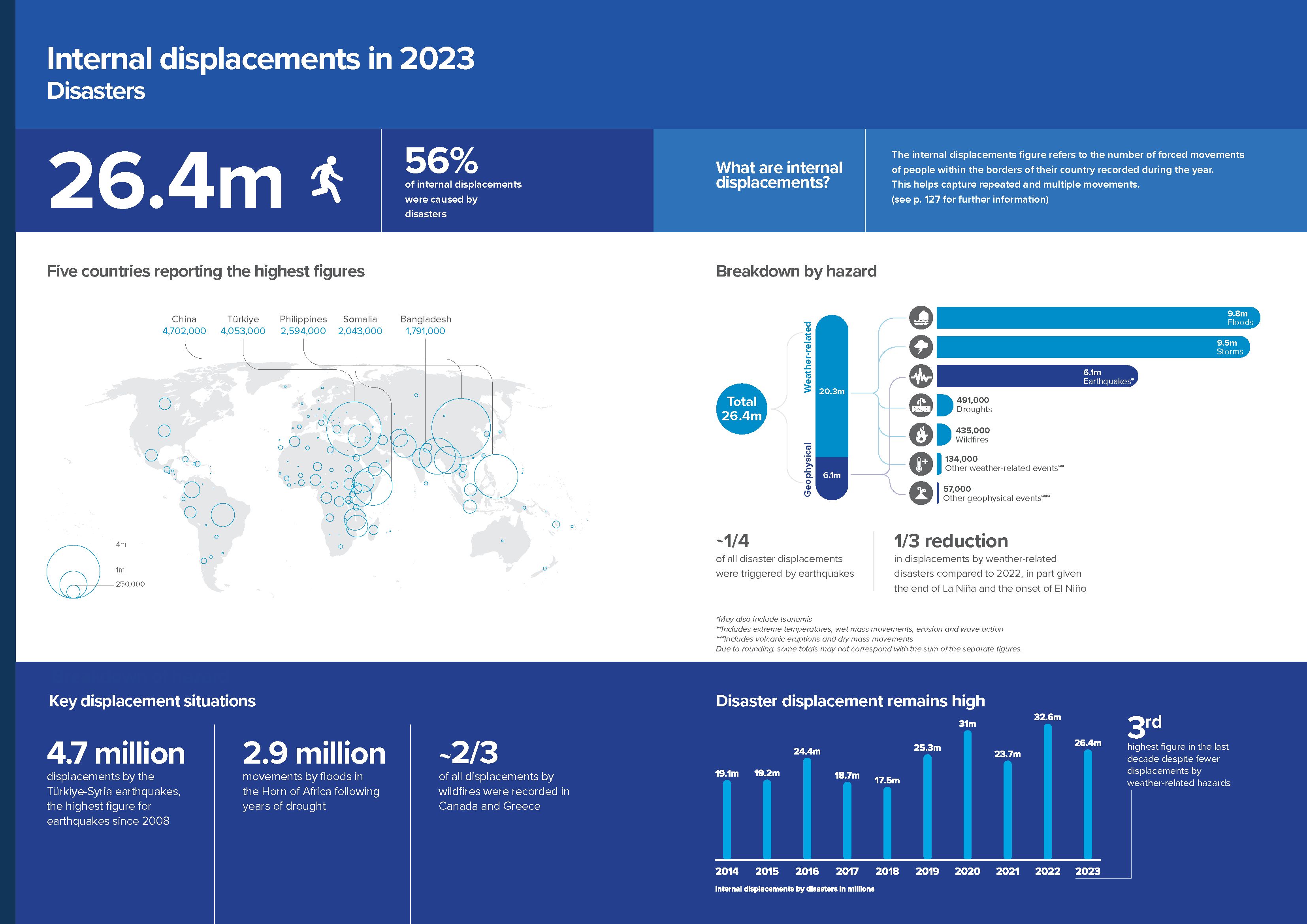
Much of this movement happens within countries rather than across international borders. The Internal Displacement Monitoring Centre records large annual totals of disaster-related internal displacement. Those figures can include people forced to move more than once, and they do not isolate the share caused specifically by human-driven climate change. Still, they show that disasters can produce mobility pressures on a vast scale in exposed areas.
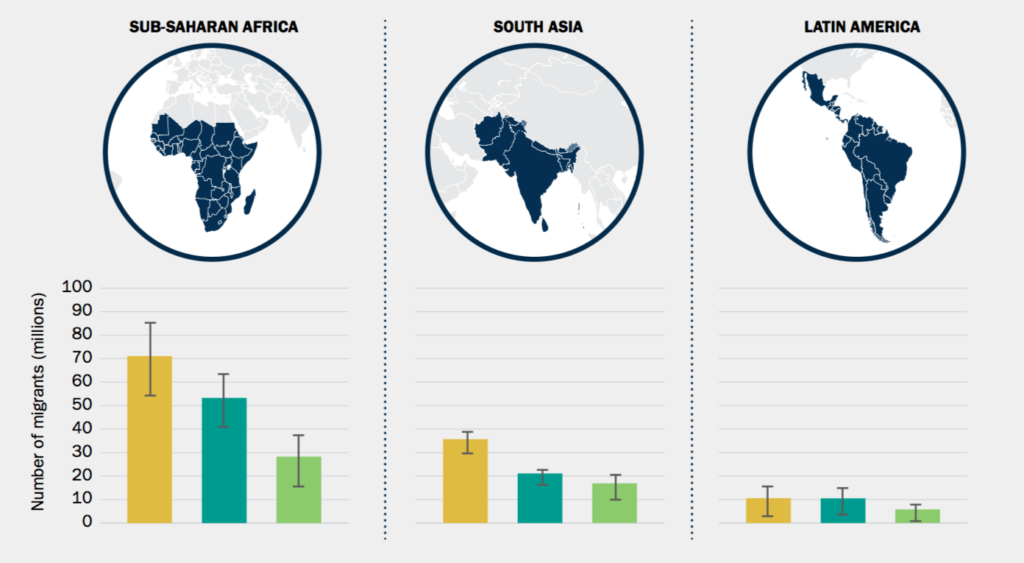
Longer-term projections also suggest that slow environmental change could reshape where people live and work. The World Bank’s Groundswell study estimates that, under adverse climate and development conditions, as many as 216 million people could become internal climate migrants by 2050 across six world regions. It identifies possible migration “hotspots” emerging as early as 2030, driven by declining crop yields, water shortages, sea-level rise and lost livelihoods (see Figure 1) 2. These are not only sudden evacuations after disasters; they may include gradual moves as households seek work, food security and safer living conditions.
The consequences could extend far beyond the people who move. Arrivals can put pressure on housing, jobs, schools, health care and city services. In fragile regions, population movement can also deepen political tensions or stretch humanitarian agencies. Climate stress, conflict, governance failures and economic hardship can reinforce one another, meaning that mobility may amplify wider crises rather than stand apart from them 3.
The case against
The strongest problem with the claim is its word “defining.” The available research supports the view that climate-linked mobility will be a serious and growing risk. It does not provide a reliable basis for saying it will outrank every other global challenge in the 2030s, including armed conflict, disease outbreaks, financial crises or unforeseen security shocks 4.
The biggest numbers often cited are also conditional scenarios, not firm predictions. The World Bank’s 216 million figure refers to internal migrants by 2050 under unfavorable assumptions about both climate change and development. It is not a forecast that this many people will move by 2030, and it largely leaves out international migration. Studies produce widely different estimates because they use different definitions, data and assumptions, making precise claims about the coming decade especially uncertain 5.
The popular image of a single, permanent wave of people crossing borders as “climate refugees” does not match much of the evidence. Climate-related movement is often internal, temporary, circular or tied to seasonal work and household decisions. It usually has several causes at once: weather risks may matter, but so do jobs, family networks, conflict, public services and government policy. Some people may even use migration as a way to adapt, sending remittances home or spreading a household’s income across locations.
At the same time, not everyone threatened by climate change can move. The poorest or most isolated people may lack the money, networks or legal routes needed to leave. That means migrant totals can miss another form of climate harm: people trapped in increasingly unsafe places 6.
The bottom line
The evidence strongly supports a narrower conclusion: climate-related displacement and migration will be a major, potentially crisis-worsening humanitarian and governance challenge in the 2030s. Its impact will be greatest where environmental shocks meet conflict, poverty and weak institutions.
But the evidence does not establish that climate migration will be the decade’s defining global crisis. Outcomes will depend heavily on adaptation, urban planning, legal migration routes, labor-market access and support for displaced people. Comparable levels of movement could produce severe social strain in one place and workable adaptation in another.
Figures & data
All contributions are reviewed for clarity, balance, and evidence. The strongest insights are elevated into the argument graph — with credit to you.
Help improve this analysis →