Automation will displace white-collar jobs at a faster rate than blue-collar jobs by 2026
What's this about?
People disagree about whether machines doing work will cut office jobs faster than hands-on jobs by late 2026.
New AI can do some desk tasks, but we still do not know which job group will shrink faster.
What supporters say
- AI can already help with writing, forms, research, code, and basic number work.
- Office jobs often use words and facts, which current AI tools can handle more easily.
- Many firms expect clerks and office helpers to lose jobs as they bring in AI tools.
- AI may hurt new office workers most because they often draft, search, and sort facts.
What critics say
- Doing part of a job does not mean AI will remove the whole job.
- Many jobs need human care, good sense, trust, and talks with other people.
- Firms may change office jobs instead of cutting them, so workers use AI as a helper.
- We do not yet have enough real job data to show office jobs will fall faster by 2026.
The bottom line
AI puts many office tasks at risk sooner than many hands-on tasks.
But the facts do not yet show that office jobs will disappear faster than hands-on jobs by 2026.
Automation is expected to reshape both office and manual work. But the evidence does not yet show that white-collar jobs will be eliminated faster than blue-collar jobs by the end of 2026.
The case for
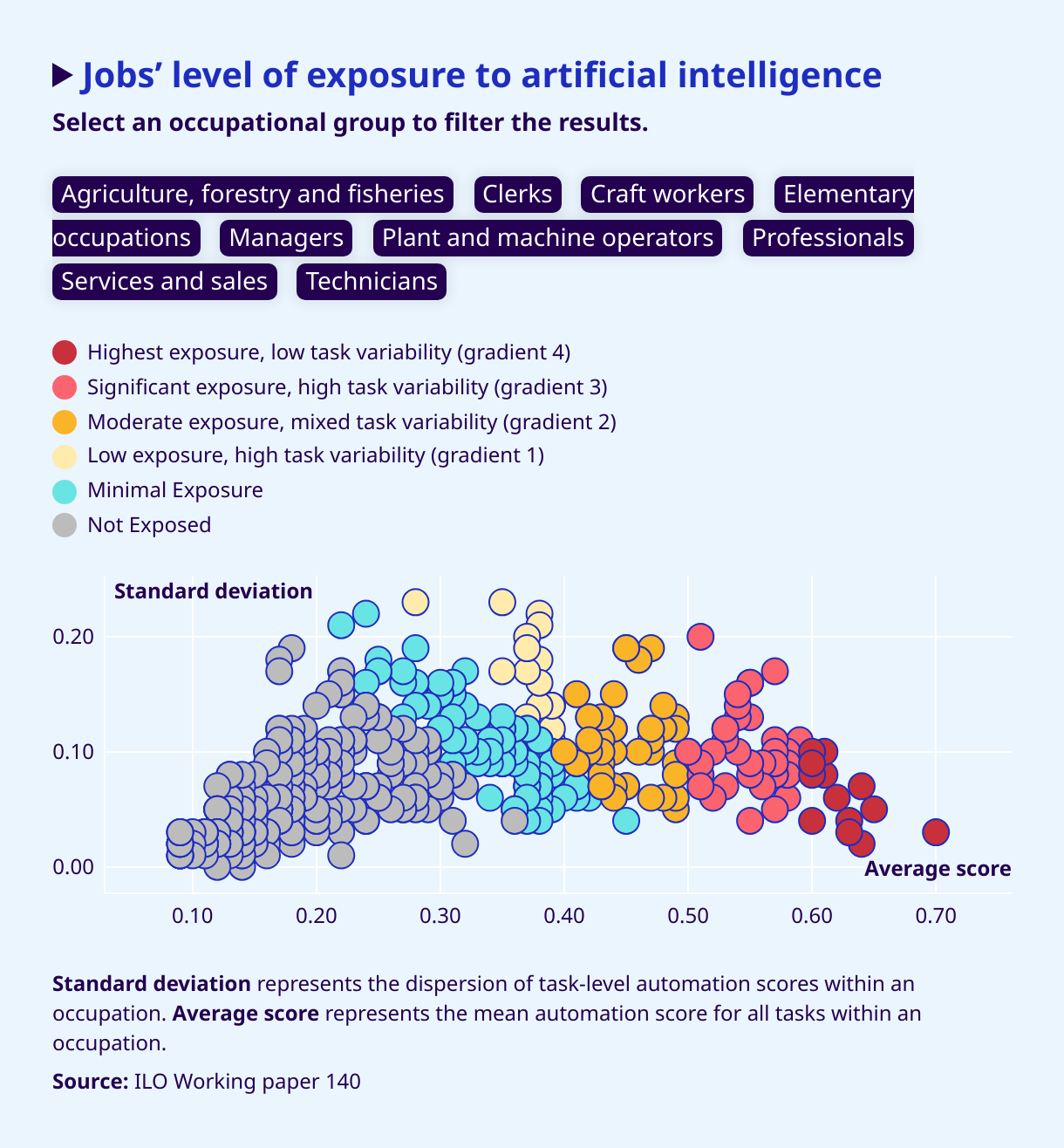
The strongest argument for the claim is that today’s generative AI tools are aimed most directly at work common in offices. Clerical, administrative, writing, analysis and programming tasks can often be handled, at least in part, by large language models. The International Labour Organization has identified clerical work as especially exposed, while other studies find that language-heavy and cognitive jobs face greater direct exposure than many physically demanding roles (see Figure 1). White-collar tasks are therefore more immediately within reach of current AI systems. 1
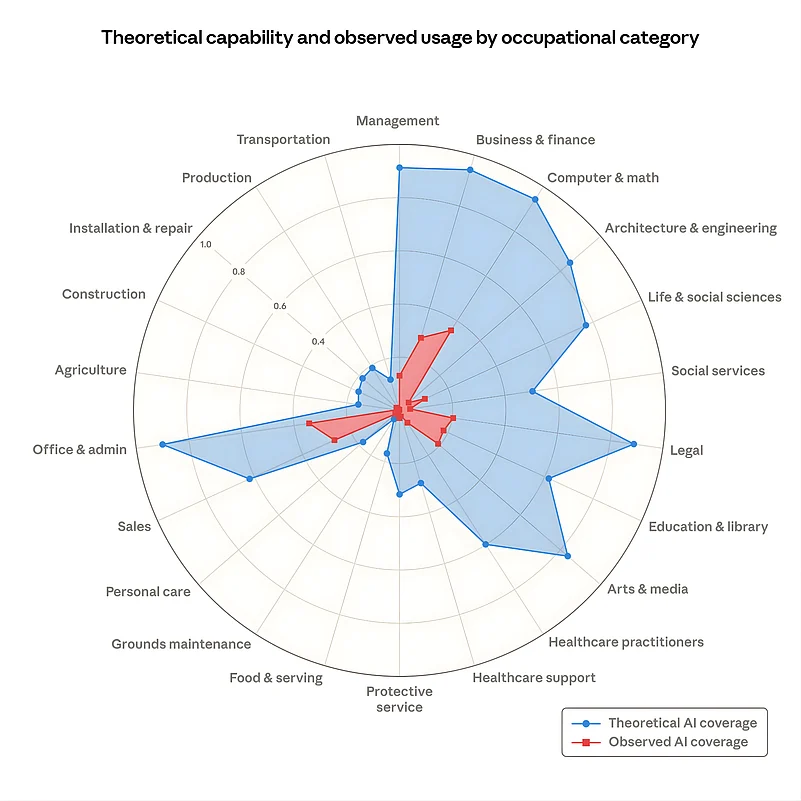
Research by the IMF and occupational studies reaches a similar conclusion: professional, administrative and other knowledge-based jobs have more direct contact with generative AI than many manual occupations. This does not mean every such job will disappear, but it does mean employers have more opportunities to redesign or reduce certain office tasks. The potential effect is particularly notable in routine paperwork, drafting, research and basic analytical work (see Figure 3). 1
Employer expectations add to the case. In the World Economic Forum’s 2025 survey, employers ranked clerical and administrative jobs among the fastest-declining occupations through 2030 as companies bring in AI and other technologies. Research on job vacancies and AI use also suggests that the technology is already concentrated in knowledge work, changing skill requirements and the mix of jobs firms seek. 2
That creates a plausible risk for entry-level white-collar roles. If AI can perform some of the drafting, information gathering and routine analysis traditionally assigned to junior staff, companies may hire fewer people for those positions or expect fewer workers to do the same amount of work. 3
The case against
The main problem with the claim is that exposure is not the same as job loss. A job can contain tasks that AI can do without the job itself disappearing. The ILO and IMF both stress the difference between technology replacing workers and technology helping workers do their jobs more efficiently. The ILO’s view is that, in the near term, many affected jobs are more likely to be changed or augmented than automatically eliminated. 4
Past automation also shows why a direct link from technical capability to employment losses can be misleading. Automation may replace some tasks but create others, raise productivity, increase demand for a company’s products or lead firms to reorganize without cutting total headcount. Whether employment falls depends on how quickly technology is adopted, how businesses redesign work and whether workers move into new roles.
Blue-collar work also remains far from safe when automation is defined broadly enough to include industrial robots and other physical technologies. Research on US labor markets has found that places more exposed to industrial robots saw lower employment and wages. That provides direct evidence that traditional automation can hurt labor markets with large numbers of manual workers. 5
Robotics could make more physical work automatable over time. Existing evidence does not prove that blue-collar losses will be larger than white-collar losses by 2026, but it does show that manual work cannot be treated as a minor automation risk. 6
The bottom line
The evidence supports a high-confidence conclusion that generative AI is more directly exposed to many white-collar tasks—especially clerical and cognitive work—than to many blue-collar tasks. If the question were about AI task exposure alone, the case would favor white-collar workers.
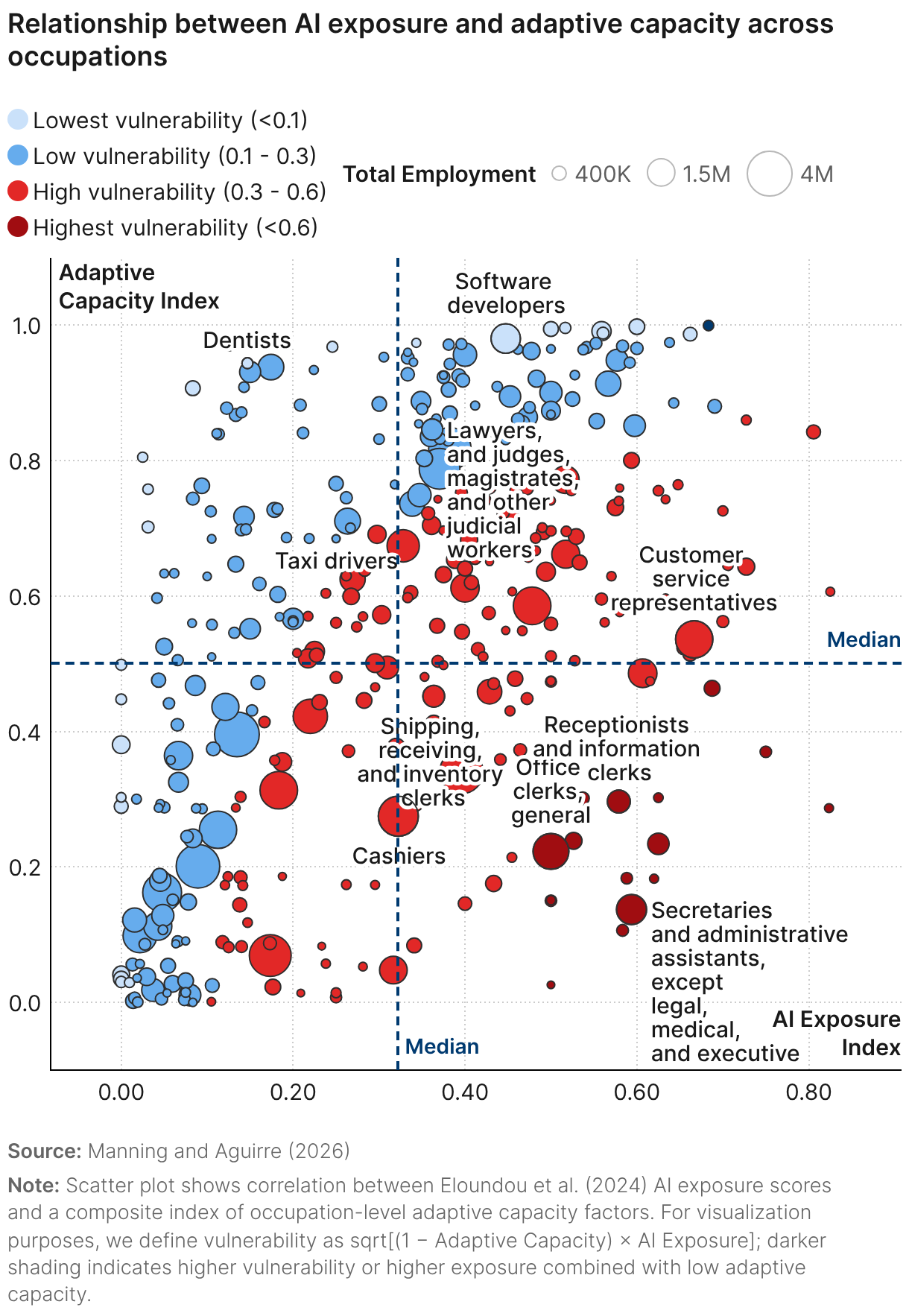
But the claim is about something more demanding: which group will suffer faster net employment declines by the end of 2026. On that question, the evidence is limited. Available research combines estimates of AI exposure, employer forecasts extending to 2030, studies of job vacancies and earlier evidence on industrial robots. It does not provide a common, timely measure comparing actual white-collar and blue-collar displacement by the stated deadline (see Figure 2).
As a result, the claim is not established. White-collar jobs may face greater immediate pressure from generative AI, but it remains uncertain whether that pressure will translate into faster job losses than those facing blue-collar workers by the end of 2026.
Figures & data
All contributions are reviewed for clarity, balance, and evidence. The strongest insights are elevated into the argument graph — with credit to you.
Help improve this analysis →