The expansion of executive power through emergency declarations poses a threat to democratic governance
What's this about?
People disagree about whether emergency rules give national leaders too much power. These rules can help in a crisis, but they can also harm democracy.
What supporters say
- Emergency rules let leaders act fast when danger requires quick choices.
- Leaders may need to skip long debates to protect people during a health crisis or attack.
- Short-term limits can help stop harm when normal laws move too slowly.
- Not every emergency rule harms democracy, especially when other groups watch leaders closely.
What critics say
- Emergency rules can let leaders avoid lawmaking groups, public debate, and court checks.
- During the pandemic, some nations harmed rights, press freedom, and fair treatment while using these powers.
- Leaders may keep “temporary” powers for too long or use them again for political gain.
- Turkey and Hungary show how crisis powers can strengthen leaders and weaken rivals and public checks.
The bottom line
The evidence shows a real risk to democracy when emergency powers last too long or lack strong checks. These powers prove most risky where courts, news groups, and lawmaking groups already lack strength.
Emergency declarations can help governments act quickly in a crisis. But the evidence shows that when they give executives broad, lasting powers without effective oversight, they pose a real threat to democratic governance.
The case for
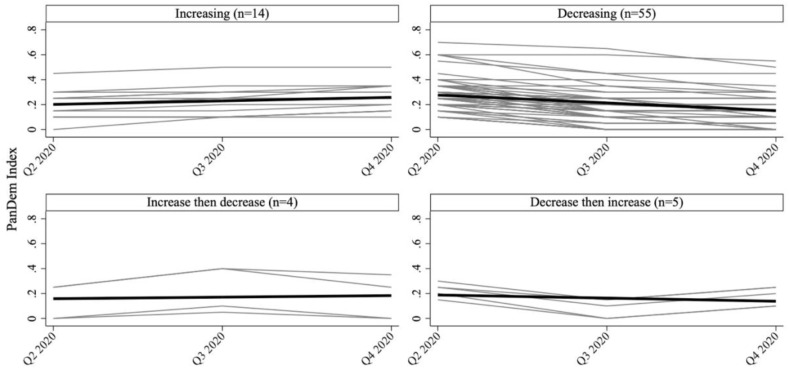
Emergency powers can concentrate decision-making in the hands of a president, prime minister or cabinet, allowing them to act outside the usual legislative process. That may mean fewer opportunities for public debate, consultation, disclosure and review. Research from the pandemic period found violations involving civil liberties, media freedom, democratic checks and discriminatory or excessive enforcement in several countries. Legal analyses also raised repeated concerns about whether measures were lawful, proportionate and open to parliamentary and judicial scrutiny (see Figure 2). 1
The danger is not limited to the immediate crisis. Powers introduced as temporary can be renewed, written into law or reused for political purposes. Emergency declarations may remain active for long periods rather than ending automatically, creating an opening for exceptional rule to become normal (see Figure 1). 2
Turkey’s 2016–2018 state of emergency and Hungary’s repeated use of emergency-law mechanisms illustrate this risk. Studies of those cases link exceptional powers to stronger executive control, weaker opposition and reduced everyday accountability. They do not prove that every emergency declaration produces the same result, but they show a plausible path by which temporary crisis measures can help entrench political power.
Crises can also make it harder for the public and institutions to hold leaders to account. When governments cite urgency, restrictions on rights or limits on scrutiny may face less resistance than they would under ordinary procedures. That makes emergency authority particularly hazardous in countries where legislatures, courts, media and opposition groups are already weak or vulnerable. 3
The case against
Emergency powers are not automatically anti-democratic. Governments may need to coordinate rapidly during a pandemic, natural disaster or security emergency, and ordinary lawmaking can be too slow for some urgent decisions. During COVID-19, countries used a range of legal approaches, including constitutional emergencies, ordinary legislation and executive orders. In many systems, courts, legislatures and elections continued to operate while restrictions remained open to challenge. 4
The key protection is a “bound executive”: one constrained by courts, legislatures, administrative law, federal arrangements, elections and public scrutiny. These institutions limited executive action in many countries during the pandemic, showing that fast action and democratic control can coexist.
Legal and human-rights standards also set conditions for legitimate emergency action. Measures should be lawful, necessary, proportionate, temporary, non-discriminatory and subject to review by lawmakers and judges. European standards for emergency derogations treat restrictions on rights not as a blank check, but as actions still governed by time limits and legal supervision. 5
Formal safeguards can help, but they work only when they are meaningful in practice. Sunset clauses and post-legislative review can force governments to seek renewed authority. Yet those tools offer little protection if the legislature cannot independently challenge the executive, or if courts and other watchdogs are unable to act.
The bottom line
The evidence strongly supports the claim that expanding executive power through emergency declarations poses a genuine threat to democratic governance. The risk is not inevitable, however. It depends less on the emergency label itself than on how broad the powers are, how long they last, and whether independent oversight remains effective.
Cross-national research shows wide differences in emergency procedures, executive authority, legislative involvement and time limits. The available evidence includes comparative studies, legal analysis, national datasets and detailed country cases, giving high confidence in the central finding. But it does not provide a single universal measure proving that every emergency declaration causes democratic decline.
The strongest conclusion is therefore conditional: emergency rule is most dangerous where safeguards are weak, rights restrictions are hard to challenge, and exceptional powers can be extended or repurposed. Where courts, legislatures, elections and public scrutiny remain operational, emergency action can respond to a crisis without suspending democratic control.
Figures & data

All contributions are reviewed for clarity, balance, and evidence. The strongest insights are elevated into the argument graph — with credit to you.
Help improve this analysis →