The declining trend in college enrollments is primarily due to the growing acceptance of alternative credentials by employers
What's this about?
People disagree about whether more job paths without a degree cause fewer people to start college. These paths include short courses, paid training, and work samples.
What supporters say
- More companies now look at job skills, not only college degrees, when they hire.
- Some companies no longer ask for degrees in some job ads.
- Short courses can cost less and finish faster than a four-year degree.
- Students may skip college if they think another path can lead to a good job.
What critics say
- Short courses and other job proofs do not work equally well in every kind of job.
- Some programs have weak rules, little respect from firms, or poor job results.
- We do not have proof that these paths caused a big drop in college sign-ups.
- Fewer young people now reach college age, so fewer people can sign up in the first place.
The bottom line
Other job paths may affect some students, mainly in certain jobs. But the facts do not show they cause most of the drop in college sign-ups.
College enrollment has fallen in recent years, and alternative credentials such as certificates, apprenticeships and portfolios have gained attention. But the evidence does not show that growing employer acceptance of these options is the main reason students are enrolling in college less often.
The case for
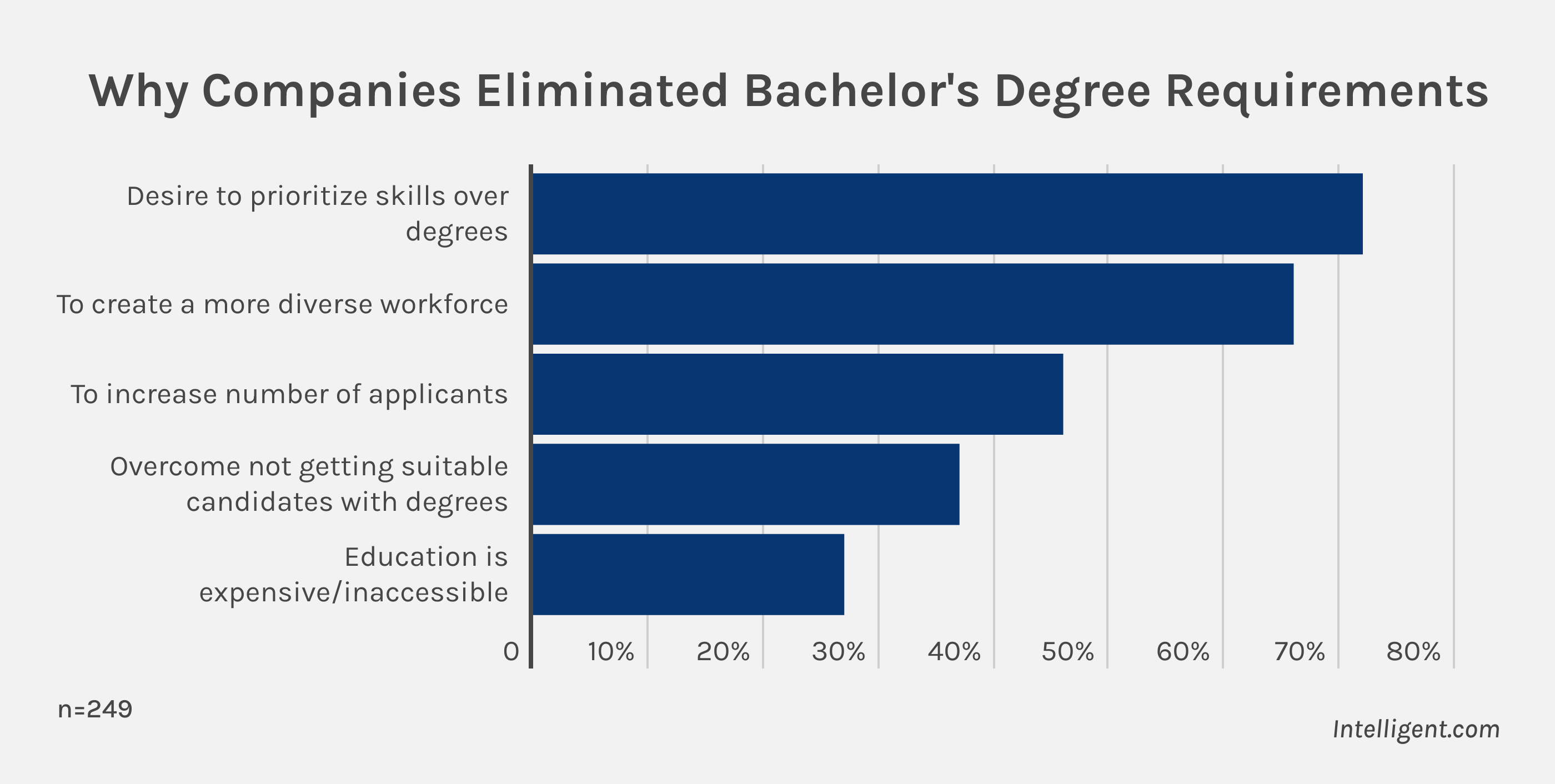
There is a credible reason to think alternative credentials play some role. More employers have publicly embraced skills-based hiring, looking beyond degrees to applicants’ demonstrated abilities. In some occupations, companies have removed degree requirements from job postings, making non-degree paths appear more realistic for people seeking work. 1
For prospective students, these alternatives can have obvious appeal. A certificate or targeted training program may take less time and cost less than a four-year degree, while still offering a signal of job-ready skills. That can be particularly attractive to people who see college as expensive, slow or uncertain in its payoff. 2
This shift creates a plausible pathway from employer behavior to enrollment choices. If students believe they can reach a good job through a shorter credential, a portfolio or an apprenticeship, some may decide against a traditional degree.
But that case has important limits. The value of alternative credentials varies sharply by industry, provider and type of program. Their standards, employer recognition and track record on employment outcomes are uneven. The evidence shows that these options can matter for particular workers and occupations; it does not establish that they have driven a broad national move away from college.
The case against
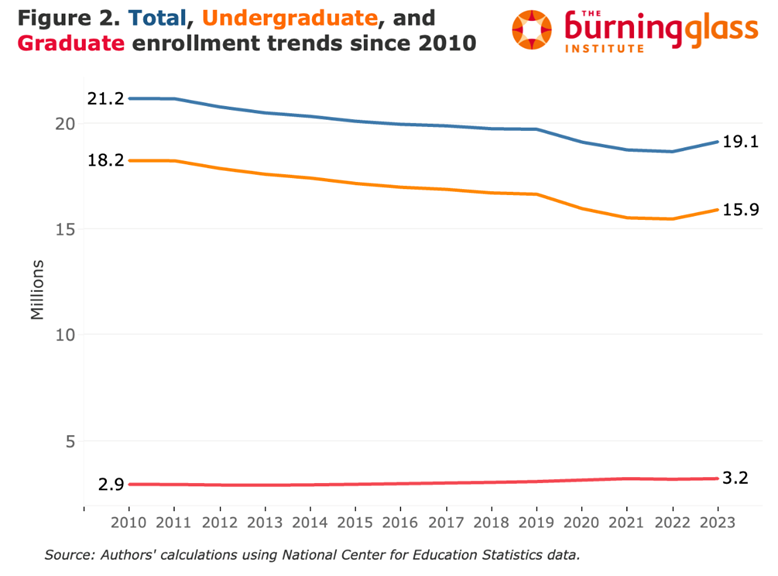
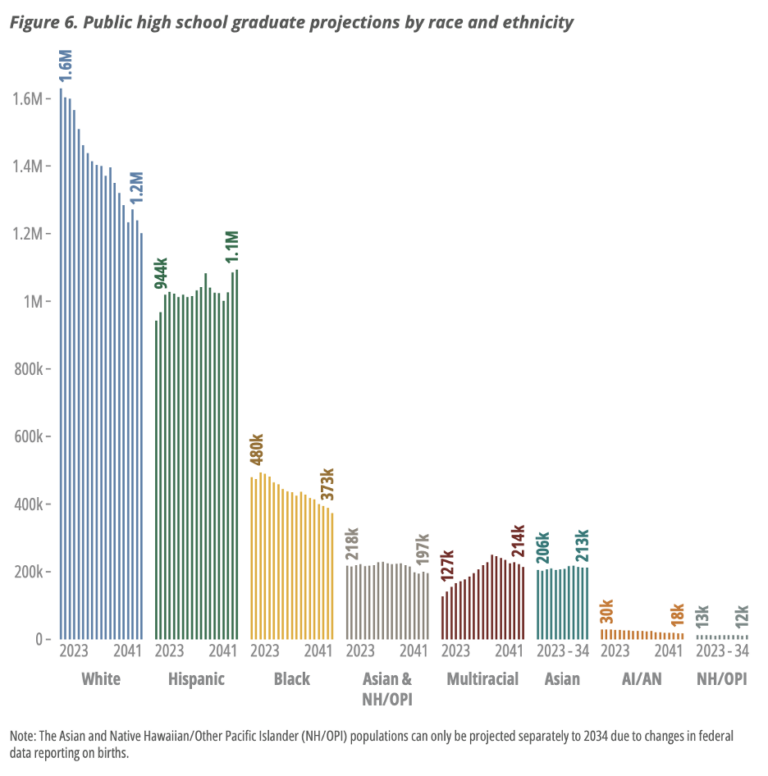
The strongest challenge is demographic change. Federal and higher-education analyses point to smaller groups of traditional college-age people and high-school graduates, shrinking the pool of potential students in the first place (see Figure 2). 3 This pressure has nothing to do with whether employers accept certificates or other alternatives, and it is a major independent explanation for lower enrollment.
The pandemic also caused substantial enrollment disruption. Students faced job-market shocks, financial stress, caregiving demands and abrupt changes in how classes were delivered. Enrollment recovery has been uneven across types of institutions and groups of students. 4 These factors clearly affected attendance decisions, but the available evidence does not tie those losses to employer adoption of alternative credentials.
Nor is there evidence that degrees have broadly lost their place in the labor market. College completion still carries a substantial average earnings advantage, though that advantage varies by field of study, institution and individual circumstances (see Figure 3). 5 Employers also continue to screen for degrees in many cases.
Public statements about skills-based hiring should be treated cautiously. Research indicates that companies’ commitments to remove degree barriers do not always translate into comparable changes in their actual hiring. 6 That gap limits the claim that employers have generally made non-degree credentials equal substitutes for college degrees.
Finally, falling enrollment does not automatically mean students are leaving college for alternative programs. The enrollment evidence documents declines and uneven recovery patterns, not a direct swap from degree programs to certificates, apprenticeships or similar options (see Figure 1).
The bottom line
The claim is not supported as stated. Employer acceptance of alternative credentials is a plausible contributing factor for some students and in selected occupations. Shorter, cheaper programs can offer attractive routes into work, especially where employers genuinely value proven skills over formal degrees.
But the stronger evidence points to demographic pressure and pandemic-related disruption as substantial, independent causes of declining enrollment. Affordability concerns and uneven returns from college may also shape students’ decisions through routes separate from employer preferences.
The key unanswered question is scale: there is no clear causal accounting showing how much of the national enrollment decline comes from employers accepting alternative credentials, compared with demographics, pandemic effects and cost-return concerns. Confidence is high that alternative credentials are not the primary explanation, because several large competing forces are well established and broad replacement of degrees remains incomplete.
Figures & data
All contributions are reviewed for clarity, balance, and evidence. The strongest insights are elevated into the argument graph — with credit to you.
Help improve this analysis →