Misinformation undermines voter confidence in democratic elections
What's this about?
People disagree about whether false info about elections greatly harms trust in fair voting.
The best proof says it can lower trust, but it does not affect all voters alike.
What supporters say
- Tests show that false fraud claims can make people trust vote counts less.
- False stories can make normal steps, like mail voting, seem unsafe or secret.
- Many false fraud beliefs spread after the 2020 U.S. vote and lowered trust in vote staff.
- Reviews found no large fraud that could have changed that vote result.
What critics say
- Not every voter believes false claims or loses trust after seeing them.
- Effects can change based on a person's views, news use, and trust before the vote.
- Different nations run elections in different ways, so results may not match everywhere.
- Some polls only show links between distrust and news habits, not clear cause and effect.
The bottom line
The strongest proof shows that false election claims can harm trust in fair vote counts.
Still, we are not sure how much harm happens for every voter or every voting system.
Misinformation about elections—especially false claims of voter fraud—can significantly weaken public confidence that votes are counted fairly. The strongest evidence supports that conclusion, though the effects are not the same for every voter or every political system.
The case for
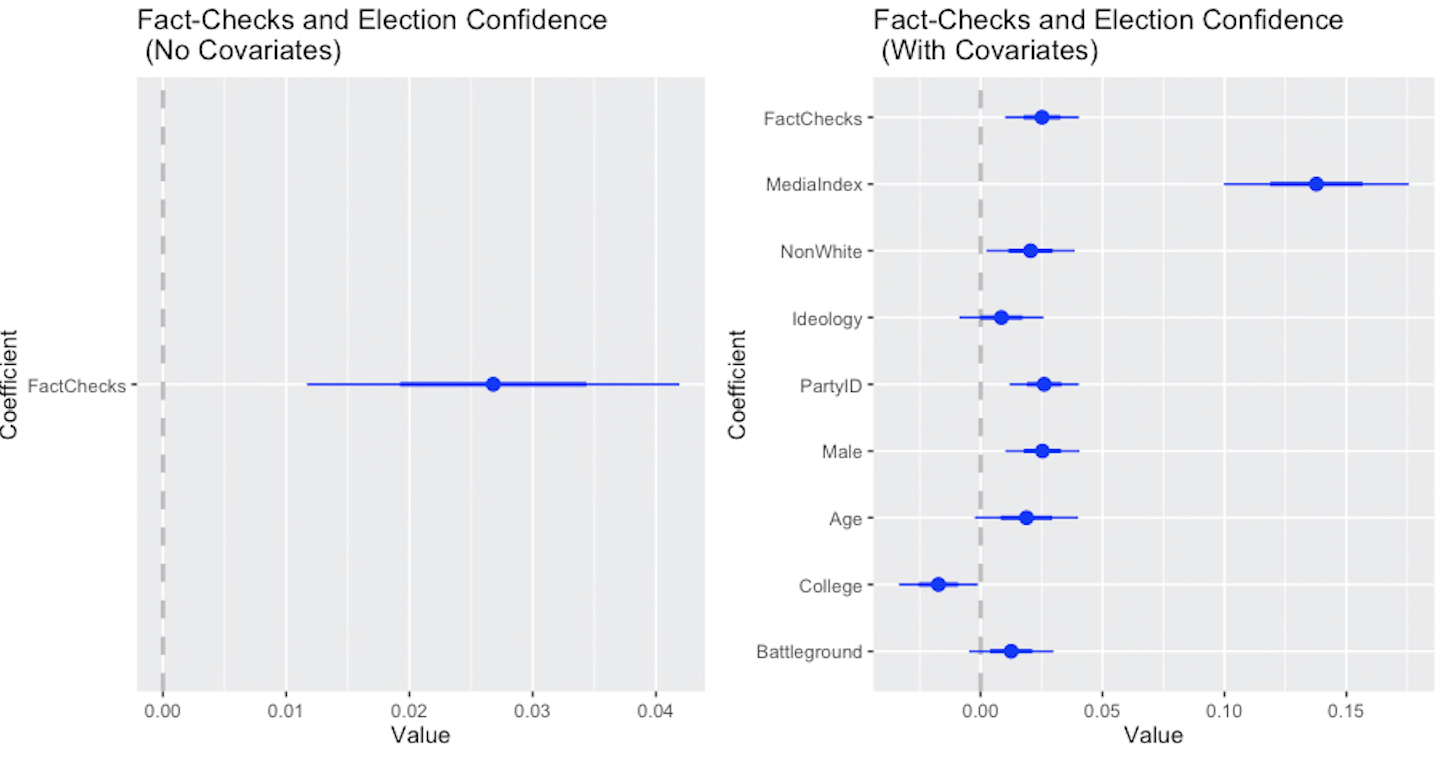
The clearest evidence comes from experiments in which researchers exposed people to unsupported allegations of election fraud. Unlike surveys that simply compare distrustful voters with their media habits, these studies can test whether seeing false claims changes attitudes. They find that exposure to such allegations reduces confidence in elections, providing direct evidence that misinformation can cause harm to perceived legitimacy. 1
False stories often work by turning normal parts of election administration into grounds for suspicion. Claims about mail voting, for example, have circulated as disinformation despite lacking support. This can make routine procedures seem secretive or unsafe, especially when voters are already uncertain about how elections operate. 2
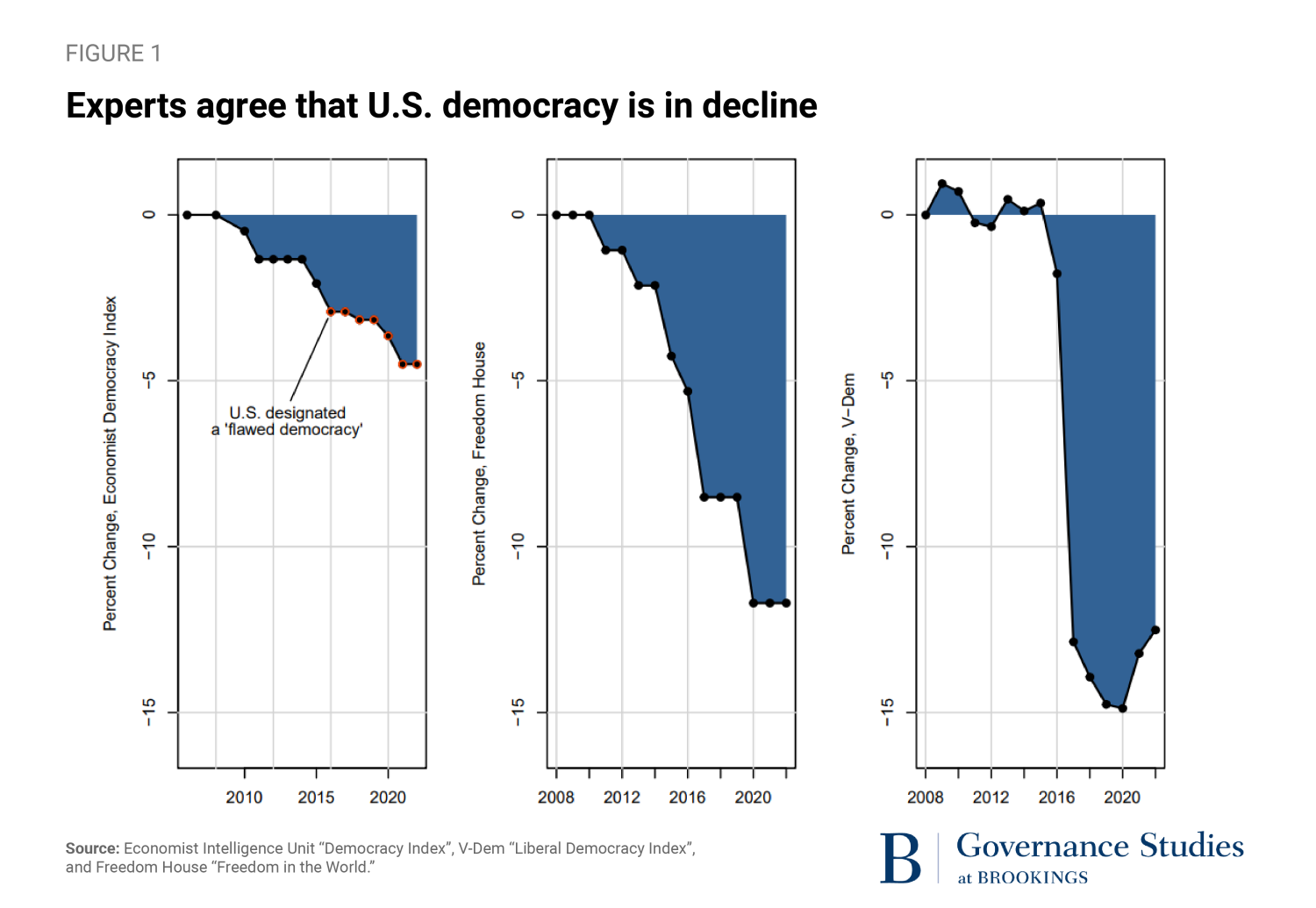
The issue matters because false beliefs about voter fraud became widespread after the 2020 U.S. election. Survey and institutional research links these mistaken beliefs with lower trust in election officials, vote counts and the fairness of the result. Broader reviews also conclude that misinformation contributes to declining trust in democratic institutions by creating uncertainty and reinforcing partisan stories (see Figure 3). 3
The fraud narratives at the heart of these concerns were not supported by the available evidence. Statistical reviews found no systematic fraud large enough to change the result of the 2020 presidential election, while other analyses identified errors in claims of massive, widespread fraud. That matters because confidence was damaged not by credible evidence of election failure, but by claims that did not stand up to scrutiny.
Repeated partisan messaging can deepen this effect. When unsupported fraud claims are echoed within political groups, they may become more durable and harder to dislodge, helping sustain distrust long after an election has ended. 4 There is also evidence that responses can help: experiments show that prebunking—warning people about misleading tactics in advance—and corrections from credible sources can improve election knowledge and trust (see Figure 2).
The case against
Misinformation is not the only reason people distrust elections. Party identity, existing views about politics, prior trust in institutions and voters’ understanding of election procedures all shape confidence. Large survey differences between political groups show the scale of the divide in views of election administration and vote counts (see Figure 1), but they do not prove that misinformation alone created it. 5
This is an important limit in much of the broad survey evidence. A connection between false fraud beliefs and distrust does not always show which came first. Some people may accept false claims because they already distrust elections or hold strong partisan commitments, rather than becoming distrustful only after seeing misinformation.
The impact also varies substantially across people and circumstances. A major review of online misinformation research finds that individual traits and context affect who is most likely to believe or spread false information. That means it would be wrong to assume that every voter, country or election is equally vulnerable to a loss of confidence. 6
Corrections may not always last. Some experiments find that warnings can improve accuracy in the short term, but partisan bias can return over time. And while research directly measures changes in reported confidence, it offers less certainty about whether misinformation leads to lower turnout, election boycotts or broader democratic breakdown.
The bottom line
The evidence strongly supports the conclusion that unsupported election-fraud claims can significantly reduce voter confidence in elections. The strongest finding is causal: experimental studies show that exposure to such claims lowers reported trust.
But the conclusion has clear boundaries. Misinformation is one important driver of distrust, not the sole cause, and its effects depend on partisanship, prior beliefs, individual susceptibility and the kind of false claim involved. The evidence is strongest for specific fraud allegations, particularly in the U.S. context, rather than for every form of political misinformation in every democracy.
Pros — Supporting Arguments
Cons — Opposing Arguments
Figures & data

All contributions are reviewed for clarity, balance, and evidence. The strongest insights are elevated into the argument graph — with credit to you.
Help improve this analysis →